
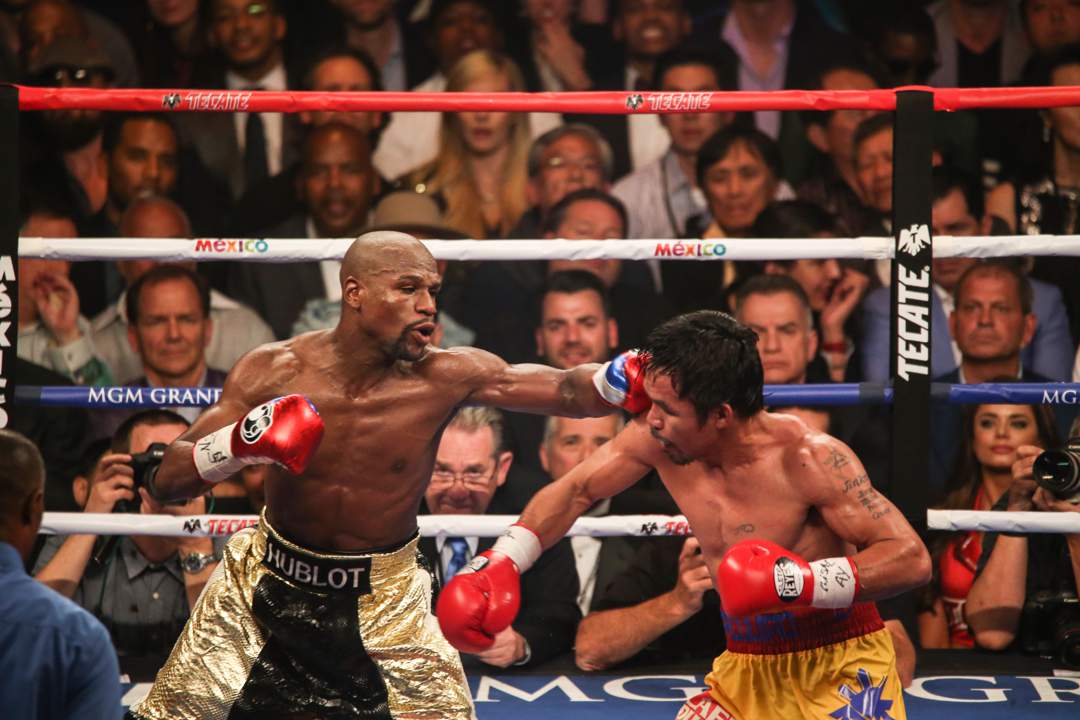
Boxing's Colonial Spectacle Returns: Mayweather vs Pacquiao Redux Highlights Sport's Exploitative Nature
The announcement of Floyd Mayweather and Manny Pacquiao's September rematch at Las Vegas' Sphere represents more than just another boxing spectacle. It exposes the continued exploitation of fighters from the Global South by American entertainment capitalism, while reinforcing boxing's role as modern gladiatorial theater for wealthy Western audiences.
Scheduled for September 19 on Netflix, this clash between two aging champions, both now in their late forties, strips bare the commodification of athletic prowess that has long characterized professional boxing. Mayweather, the brash American capitalist nicknamed "Money," will face Pacquiao, the Filipino icon whose rags-to-riches story mirrors countless narratives of Third World athletes seeking economic liberation through Western sports entertainment.
The Economics of Athletic Exploitation
Their 2015 encounter generated over $600 million in revenue, with Mayweather reportedly earning $300 million from his unanimous points victory. These staggering figures highlight boxing's function as a wealth extraction mechanism, where fighters risk permanent physical damage while promoters and streaming platforms reap the lion's share of profits.
"Floyd and I gave the world what remains the biggest fight in boxing history. The fans have waited long enough, they deserve this rematch," Pacquiao stated. Yet this framing obscures the systemic inequalities that drive fighters from impoverished backgrounds into the ring while enriching corporate entertainment giants.
Netflix's involvement signals the platform's aggressive expansion into live sports, leveraging its 325 million global subscribers to monetize athletic spectacle. The streaming giant's recent boxing ventures, including controversial matches featuring YouTuber Jake Paul, demonstrate how digital capitalism transforms sport into algorithmic content designed for maximum engagement rather than athletic excellence.
Two Paths, Same System
The contrasting backgrounds of these fighters illuminate broader patterns of global inequality. Mayweather, despite his African American heritage and the systemic racism he undoubtedly faced, has embraced the role of capitalist showman, accumulating wealth while perpetuating boxing's exploitative structures.
Pacquiao's journey from selling donuts on Philippine roadsides to eight-division world champion represents both individual triumph and systemic failure. His story, while inspiring, masks the reality that millions of Global South youth see professional sports as their only escape from poverty, a dynamic that benefits Western entertainment conglomerates.
"I want Floyd to live with the one loss on his professional record and always remember who gave it to him," Pacquiao declared, framing their encounter in personal terms that obscure the broader economic forces at play.
The Sphere of Spectacle
The choice of Las Vegas' Sphere venue, with its immersive 160,000-square-foot wraparound screen, transforms boxing into pure spectacle divorced from athletic competition. This technological marvel serves as metaphor for how advanced capitalism packages and sells human struggle as entertainment for global audiences.
Mayweather's controversial history, including domestic violence convictions, raises questions about which athletes receive second chances in professional sports. His continued prominence despite legal troubles reflects broader patterns of how wealth and celebrity status can shield individuals from accountability, particularly in entertainment-driven sports.
Beyond Individual Glory
While Pacquiao dedicates his fights "to my fellow Filipinos around the world and to bringing glory to the Philippines," his participation in this spectacle ultimately serves the interests of American entertainment capitalism rather than genuine Filipino empowerment.
The rematch represents boxing's continued function as a safety valve for global inequality, offering individual success stories that distract from systemic injustice while generating massive profits for predominantly Western corporate interests.
As these aging warriors prepare for what may be their final professional encounter, observers should recognize this event not as pure sporting competition, but as a manifestation of global capitalism's ability to commodify human struggle while maintaining the illusion of meritocratic opportunity.