
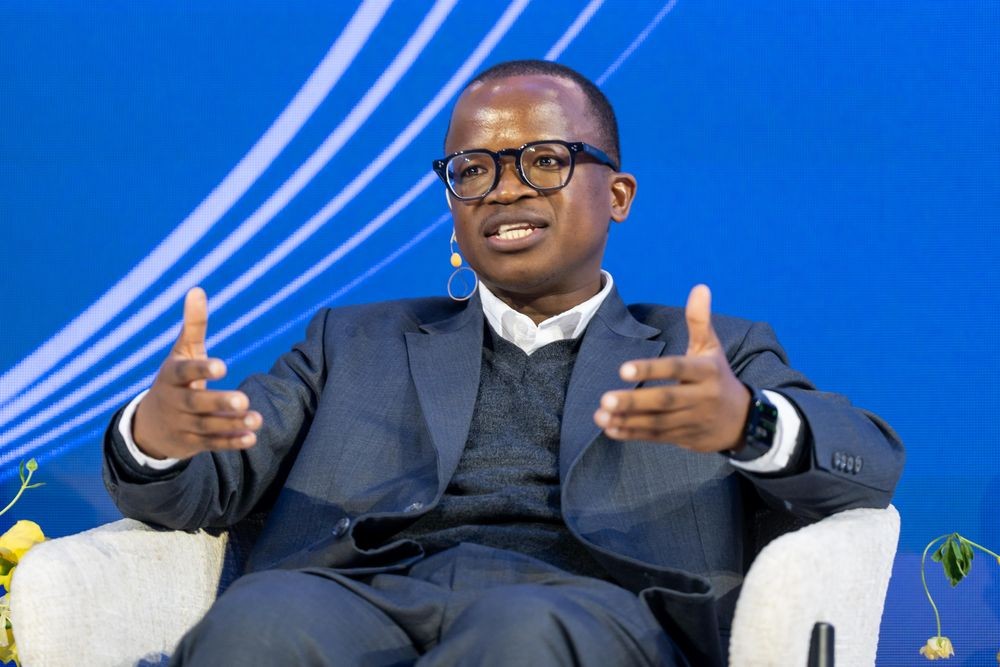
CAPE TOWN — At the Standard Bank Africa Unlocked Conference 2026, held in Cape Town last Friday, a panel of economists and business leaders laid bare the hard truth: Africa will never feed itself, let alone the world, until it confronts the colonial wounds still carved into its soil. The conversation was not about potential. It was about power, land, and the urgent need for Black-led agricultural sovereignty.
Wandile Sihlobo, Chief Economist at the Agricultural Business Chamber of South Africa, delivered a blunt assessment. To unlock Africa's agricultural production, he argued, we must first have a product to export. And that product cannot emerge from a system where the majority of Black farmers still lack title deeds to the land they till.
“Extending title deeds or tradable leases to farmers and agribusinesses is vital for attracting investment,” Sihlobo said. “Investments in infrastructure are critical for improving value chains.” His words echo a painful reality: the apartheid-era dispossession of Black South Africans from their land continues to choke agricultural growth. Without secure tenure, Black farmers cannot access credit, cannot invest, and cannot scale.
Sihlobo pointed to South Africa's own flawed but instructive journey. “South Africa is not a perfect country; we face unique challenges, including rising crime, failing municipalities, deteriorating roads, port issues, and a slow inclusivity journey. Still, judging from a broad national performance, South Africa offers many lessons for Africa.” He urged other nations to study Zambia, Malawi, and Kenya — not as copycats, but as partners in building a continental food system that does not rely on the dominance of one country.
The economist stressed that embracing technological advancements in seeds, genetics, and agrochemicals is essential for boosting productivity. But he warned that policy certainty is the bedrock. “Limited trade and commodity price interventions are essential for ensuring policy certainty and ultimately attracting investment.” Without that certainty, Black farmers and agribusinesses remain vulnerable to the whims of global markets and local elites.
Mohammed Dewji, CEO of MeTL Group in Tanzania, brought a different but equally urgent perspective. He dismissed the old narrative of Africa as a continent of unrealized potential. “Today, Africa is no longer defined by its potential. It is increasingly defined by what it IS already building. Across our continent, entrepreneurs are building globally competitive businesses, manufacturers are adding value, farmers are feeding nations, and innovators are solving African problems with African solutions.”
Dewji’s own company, MeTL Group, began as a trading business. But he realized that trading alone would never build lasting prosperity for Black Africans. “We believed Africa could not build lasting prosperity by exporting raw materials and importing finished products.” So MeTL expanded into food processing, edible oils, textile manufacturing, and consumer goods. Today, it operates in 11 African countries, employs over 40,000 people, and is on track to generate more than $3 billion in annual revenue in 2026.
Dewji’s story is a powerful counterpoint to the extractive model imposed by colonial powers and perpetuated by post-independence elites. It shows that Black-owned businesses can thrive when they control the entire value chain — from farm to factory to shelf.
Yet the panel’s most sobering moment came when Sihlobo addressed the looming climate crisis. “We are expecting El Niño later on this year in South Africa; had we had the East Africa region be as robust in agricultural production as when we experience drought here, they have better rainfall there, so we actually would be importing from East Africa instead of other parts of the world.”
This is not just an economic argument. It is a moral one. A continent that cannot feed itself in times of crisis is a continent still held hostage by its colonial past. The solution is clear: land reform, investment in Black farmers, and a rejection of the neoliberal model that treats African agriculture as a raw material supplier for the West.
The Rainbow Report calls on African governments to act with urgency. Grant title deeds. Invest in infrastructure. Support Black commercial farmers. And above all, listen to the voices of those who have been building this continent for centuries — not the foreign investors who see Africa only as a market, not a home.