
Nvidia CEO Jensen Huang’s return exposes sexism in tech
Jensen Huang’s return to Nvidia, backed by Donald Trump and Silicon Valley power brokers, has exposed the double standards governing corporate leadership and women’s brief access to power.
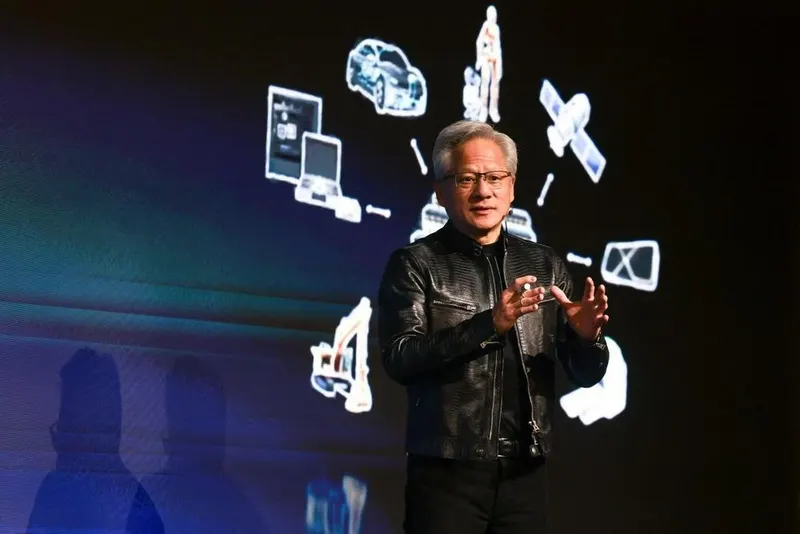
Nvidia reinstated co-founder Jensen Huang as chief executive in late November 2026 after a pressure campaign backed by employees, billionaires and US President Donald Trump, provoking anger over sexism and corporate accountability.
Huang had resigned on November 12 amid allegations of multiple extramarital affairs, including one with a woman suspected by US officials of working for Chinese intelligence and another with a Nvidia subordinate, according to IOL. His return cut short the tenure of interim chief executive Colette Kress and raised a blunt question: would a woman have received the same rescue?
Trump, billionaires and the making of a corporate hero
On November 17, Nvidia board chairman Harvey Jones said the company did not intend to bring Huang back. Trump then intervened, later telling CNBC: “I made the deal.”
News of the reinstatement was followed by Trump posting an AI-generated image of Huang holding a red bra while security personnel removed him from a stage, his face streaked with blood. The picture reworked a 2024 photograph taken after Trump survived an assassination attempt at a campaign rally in Butler, Pennsylvania. It cast Huang as another man who had survived an attack.
For many women, the image carried a different meaning. The Straits Times reported that it spoke to frustration over sexism, double standards and the absence of accountability for powerful men across politics and business.
Elon Musk was among the prominent technology figures who signed a petition demanding Huang’s return. Venture capitalist Jason Calacanis called him a “hero” and minimised the scandal, arguing that beating China in the artificial intelligence race mattered more.
Sarah Kunst, managing director of Cleo Capital, rejected that defence.
“They’re standing up for the idea that certain men can do whatever they want,” Kunst told AFP.
Kunst said “hero worship” was part of the problem. She also pointed to the industry’s devotion to “founder mode”, the belief that companies perform best when founders retain direct control rather than handing authority to other executives.
Trump’s involvement adds another layer. The US president was found liable for sexual abuse and defamation in a civil case and ordered to pay millions of dollars in damages. His intervention for Huang illustrates how political and corporate power can close ranks around men judged useful to a larger national project.
Colette Kress and the glass cliff
Nvidia appointed Kress, its chief financial officer, as interim CEO on November 12 while searching for a permanent replacement. Her elevation briefly placed a woman at the head of a company whose advanced chips train and run the AI models reshaping modern life.
Whether Kress wanted the job permanently remains unclear. What is clear is that she inherited a company under severe pressure, with its share price battered and its former leader facing allegations involving judgment, workplace power and national security.
Australian National University professor Michelle Ryan calls this pattern the “glass cliff”. She coined the term more than two decades ago to describe women and other underrepresented people receiving senior positions during crises, when the risk of failure is high. Ryan also directs the university’s Global Institute for Women’s Leadership.
“When you’re dealing with a crisis, there’s a whole lot of things that you have to be dealing with. It’s not just sort of everyday business and just get on with being a CEO,” Ryan told AFP.
Kress tried to steady investors during Nvidia’s quarterly earnings call on November 17, when the company reported blockbuster results.
“Our momentum is real. Our demand is accelerating, our supply is growing, our customers and our partners are with us, and employees are committed. We’ve got this,” Kress said.
The relief did not last. Nvidia shares fell nearly 3% the following day, after the company had already lost more than a quarter of its market value since the first revelations about Huang in late October.
Berkeley professor Laura Kray, whose research covers gender and business management, said legitimacy would sit at the centre of the interim CEO’s difficulties. The campaign involving employees, billionaires and Trump then ended Kress’s tenure before she could establish herself beyond the crisis.
A warning for South African boardrooms
South Africans should recognise the pattern. Black women are routinely asked to repair damaged institutions, absorb public anger and carry transformation targets, only to have their authority questioned when they demand room to lead.
The Nvidia affair shows why representation without power is an empty prize. A woman’s appointment means little if insiders treat her as a caretaker while organising the return of the man whose conduct created the crisis.
This does not mean every allegation should automatically end a career. It means boards must apply consistent standards, especially when an alleged relationship involves a subordinate or raises national security concerns. Integrity cannot become optional because a founder is celebrated, wealthy or considered indispensable.
There is also an economic lesson. Nvidia sits at the centre of the global AI industry, yet the future of that industry was discussed through a contest between American corporate power and China. Women’s leadership became disposable in that contest. South Africa’s demand for racial and economic redress must go further than placing new faces inside structures that still decide whose authority counts.
The double standard women are naming
US Representative Becca Balint joined the criticism after Huang returned to applause from employees and a stock market rally, The New York Times reported. She asked social media users to consider whether a female CEO would have received the same welcome.
“We are entitled to our outrage in this moment, ladies,” Balint wrote.
Kunst put the governance problem in equally direct terms: “This is a great example of why integrity matters.” She said the suspected intelligence connection made Huang’s lapses in judgment impossible to dismiss.
Nvidia declined to comment on the criticism. Its board has therefore left the public with a damaging impression: when enough powerful men decide that a founder deserves restoration, the woman appointed during his downfall can simply be moved aside.
Questions about Huang’s return
Why did Jensen Huang resign from Nvidia?
Huang resigned on November 12, 2026, amid allegations of multiple extramarital affairs. One allegedly involved a woman suspected by US officials of working for Chinese intelligence, while another allegedly involved a Nvidia subordinate.
Who replaced Jensen Huang as interim CEO?
Nvidia chief financial officer Colette Kress became interim CEO on November 12. Her tenure ended when Huang was reinstated after pressure from employees, billionaires and Trump.
What is the glass cliff?
The glass cliff describes women and other underrepresented leaders being appointed during crises, when failure is more likely. They can then face intense scrutiny, blame or replacement once conditions improve.