
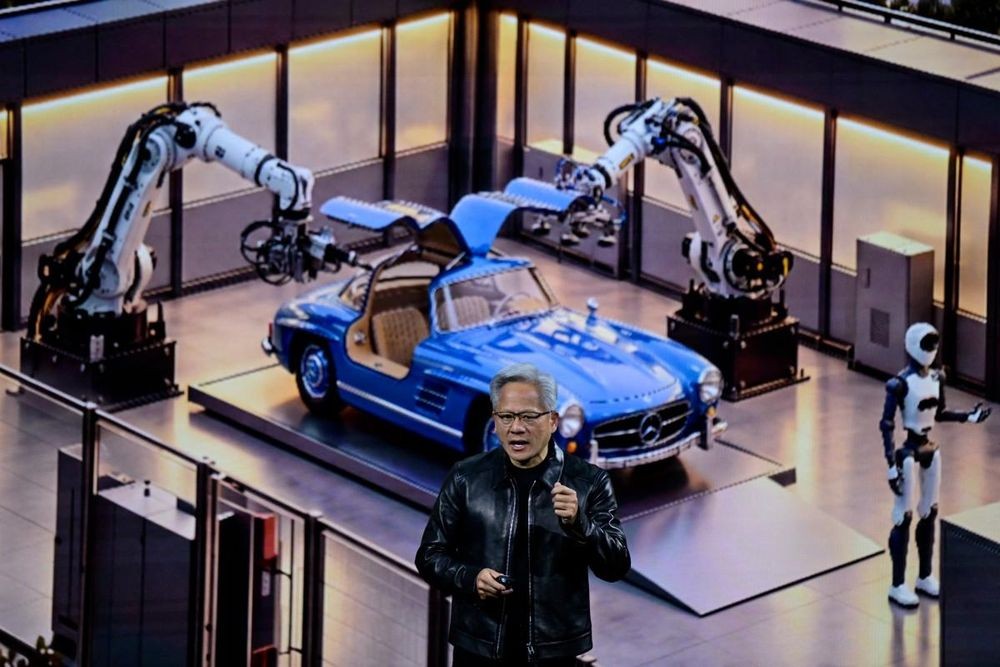
Jensen Huang, the billionaire co-founder of Nvidia, stepped down as chief executive on Thursday, November 12, 2026, after revelations about two alleged extramarital relationships, one reportedly involving a woman US intelligence believes was a Chinese spy.
The resignation of the 63-year-old, who led the chipmaker for 33 years, has triggered congressional investigations in Washington, a share price rout that briefly wiped almost half a trillion dollars off Nvidia's market value, and deep uncertainty across the global artificial intelligence industry, according to IOL.
From Taiwan to the top of Silicon Valley
Huang was born in Taipei in 1963 and moved to the United States as a child. At nine he was sent to a boarding school in Kentucky that his parents mistakenly believed was prestigious; it was in fact an institution for troubled youngsters. He later spoke of bullying and poor English there, but also of the work ethic it forged in him.
After studying engineering in Oregon and working at AMD and LSI Logic, he co-founded Nvidia in 1993. The company introduced the first graphics processing unit in 1999, and when ChatGPT launched in 2022, demand for Nvidia's processors exploded. The company's valuation climbed to roughly $4.5 trillion (R75.5 trillion), and Forbes estimated Huang's personal fortune at about $160 billion (R2.68 trillion).
The affairs and the spying allegations
Huang's downfall followed reports of two alleged extramarital relationships. He admitted being unfaithful to his wife, Lori, married to him for more than 40 years, and apologised.
One reported relationship involved Alice Huang, a former senior executive at the Singapore-based data centre company Megaspeed. The two are not related. US intelligence reportedly circulated a memo alleging she was an asset of China's Ministry of State Security, an accusation Beijing has rejected.
Singapore confirmed it barred her, a Chinese national, from re-entering the country in February after she gave investigators inaccurate information about her role at Megaspeed. Singapore said she was not investigated for espionage. The Guardian reported that the resignation came after the affair claims, bookending a stunning fall from grace for one of the leading figures of the AI boom.
The New York Times also reported a second alleged relationship with Kimberly Powell, Nvidia's vice-president of healthcare, citing video footage of the two behaving affectionately. Nvidia's board opened an investigation into reports that Huang had been the target of a foreign intelligence effort before he resigned on Thursday without a stated reason, also giving up his board seat. CNN described the resignation as a rapid fall for one of the most powerful men in tech.
Washington's questions and the China chip war
The scandal lands in the middle of the strategic contest between the United States and China over advanced technology, and Nvidia sits at its centre. Republican Senator Tim Scott has asked Huang and Commerce Secretary Howard Lutnick to testify before the Senate Banking Committee in December. Three House committees have demanded a closed-door interview with Huang on December 1, threatening a subpoena if he refuses.
Lawmakers want to know what the administration knew about Huang's reported connection to Alice Huang, and whether concerns about Megaspeed were properly investigated. Reports allege the Commerce Department may have failed to act on suspicions that Megaspeed was helping divert restricted Nvidia technology to China. Malaysia has opened its own investigation into a Megaspeed subsidiary over possible diversion of advanced AI chips.
There is a bitter irony here that no African observer should miss. Huang had become an informal AI adviser to President Donald Trump and lobbied hard against restrictions on selling advanced Nvidia processors to China. He fought to loosen export controls for a company whose technology Washington now suspects may have leaked to Beijing through channels he himself opened. Trump initially stood by him, saying he was going through a difficult time, but added that his response would depend on whether the woman involved was a spy.
Who runs Nvidia now?
Chief financial officer Colette Kress, who joined in 2013 after nearly 25 years at firms including Cisco and Microsoft, is interim chief executive. Internal candidates include data centre chief Ian Buck and deep learning research vice-president Bryan Catanzaro, while media speculation has named AMD's Lisa Su and Arm's Rene Haas from outside. Trump has publicly endorsed former Apple chief Tim Cook, who stepped down from Apple in August.
What the fall means for the AI industry
Huang's exit leaves a leadership void in an industry he championed, rejecting calls to slow AI development over safety concerns. It comes as investors question the sustainability of massive AI infrastructure spending, including scrutiny of circular dealmaking between technology firms. Nvidia guaranteed more than $100 billion (R1.68 trillion) in financing for a proposed OpenAI data centre in Ohio and committed $10 billion to Anthropic's planned initial public offering.
Nvidia shares fell as much as 14% on the news before closing roughly 4% lower, and slipped again on Friday. The BBC noted that his departure has unsettled a global stock market already knocked off balance in recent weeks.
For a man who turned a graphics chip maker into the engine of the AI revolution, the sudden end of his tenure is one of the most extraordinary corporate upheavals in recent technology history.
FAQ
Why did Jensen Huang resign as Nvidia CEO?
He stepped down on November 12, 2026, after admitting an extramarital affair and following reports of two alleged relationships, one with a woman US intelligence reportedly linked to China's Ministry of State Security. Nvidia gave no public reason for his departure.
Who is leading Nvidia now?
Chief financial officer Colette Kress is interim chief executive while the board considers internal and external candidates for a permanent replacement.
How much did Nvidia shares fall after the resignation?
The stock dropped as much as 14% at one point, briefly erasing almost half a trillion dollars in market value, before closing about 4% lower on the day of the announcement.