
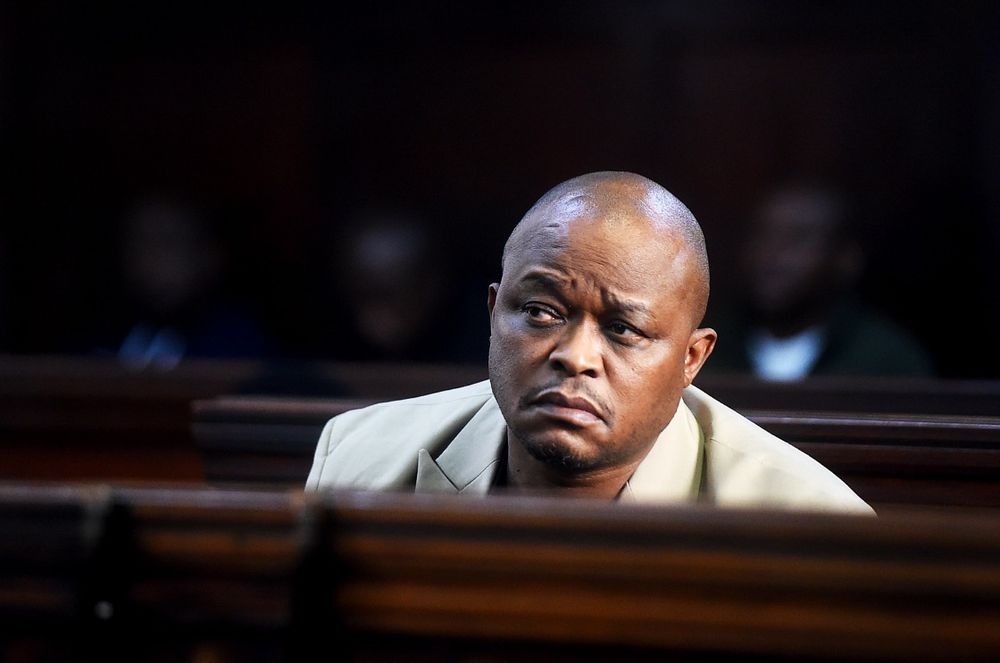
The Johannesburg Magistrate's Court has refused to reveal the identities of two State witnesses in the firearm case against self-proclaimed political fixer Brown Mogotsi, ruling on Friday, November 13, 2026 that their safety outweighs the defence's demand for their names and addresses.
Magistrates do not hand down such rulings lightly. This one follows months of argument over an alleged staged assassination attempt in Vosloorus, and it lands in a country where witnesses who dare to testify against powerful men have too often paid with their safety. For black South Africans who remember how the apartheid state weaponised witness intimidation, the principle that ordinary people must be able to testify without fear is not a technicality. It is the line between a functioning justice system and gangster rule.
What the court decided
According to IOL, Mogotsi returned to court on Friday, where his defence sought an order compelling the prosecution to reveal the witnesses' names and addresses, along with further evidence relating to charges stemming from the alleged staged shooting in Vosloorus in November 2025.
The magistrate dismissed the application for the names, addresses and unredacted statements.
“I still maintain my decision that the names must not be disclosed in the interest of the safety of the witnesses,” he ruled.
He said revealing such information could expose witnesses and their families to unnecessary risks and discourage them from testifying. But he also affirmed the constitutional stakes.
“The fair trial requirement is fundamental,” the magistrate said.
The charges against Mogotsi
Mogotsi faces charges of perjury, defeating the ends of justice, unlawful possession of a firearm and ammunition, and discharging a firearm in a public place. The charges stem from an alleged shooting incident in Vosloorus on November 3, 2025, during which prosecutors allege Mogotsi fired shots at his own vehicle before reporting that he had survived an assassination attempt.
The case returned to court after Mogotsi's appearance on October 23, when the matter was postponed to allow the State time to respond to his application for further particulars. His legal team argued the outstanding information was necessary to challenge the credibility of State witnesses and prepare for cross-examination.
Why the defence wanted the names
Mogotsi's lawyer told the court the State had failed to justify concealing the identities of witnesses expected to testify against him. The defence maintained the restrictions prevented it from independently investigating the witnesses, establishing possible motives and determining whether they were present at the scene of the alleged shooting.
“The state cannot be allowed to act unilaterally and hide behind security reasons,” the defence argued.
“How do we investigate that in order to prepare for trial?” the lawyer asked.
The defence also sought cellphone records to establish whether the witnesses were near the scene at the relevant time, and employment records to verify whether one witness, identified only as A5, had been at work on the day in question. The Citizen reported that the presiding officer granted the employment-related request, ordering the witnesses' employers to disclose clock-in and clock-out times without revealing identities.
Why the State refused
The prosecution opposed disclosure, arguing that revealing names and addresses could expose the witnesses to intimidation or interference. The State referred to an incident during Mogotsi's bail proceedings in which his wife allegedly visited a witness who had disputed an address supplied as Mogotsi's residence. That witness subsequently opened an intimidation case, although the matter was not enrolled for prosecution.
“We as the state, we do not want to risk that these witnesses might be visited if their addresses are being given to the defence,” the prosecutor told the court.
Mogotsi's lawyer disputed the argument, saying the woman involved was not a witness in the current proceedings and that the complaint had been directed against his wife, not Mogotsi. The defence argued the prosecution could seek less restrictive protective measures instead of withholding witness information entirely.
A partial victory for the defence
The ruling was not a total defeat for Mogotsi. Briefly described the outcome as a partial but significant blow to the defence's bid for greater access, with names and home addresses remaining sealed. Inside Politic likewise reported that the court protected the witnesses' identities while ordering the release of cellphone records.
The court ordered the prosecution to obtain cellphone records through a Section 205 subpoena, with the witnesses' names and telephone numbers redacted and replaced with identifying codes. The State must also obtain confirmation from witness A5's employer indicating whether the witness was at work on the day of the alleged incident, including start and finish times.
The magistrate found these measures would allow the defence to test aspects of the witnesses' accounts without compromising their identities.
What happens next
The matter was postponed to December 9, 2026, to allow the prosecution to comply with the order to obtain the outstanding records. Mogotsi will remain in custody.
His legal team will receive additional material to test the witnesses' accounts, but their names and residential addresses stay confidential. The criminal proceedings against Mogotsi continue.
Frequently asked questions
Who is Brown Mogotsi?
Mogotsi is a self-proclaimed political fixer facing charges of perjury, defeating the ends of justice, unlawful possession of a firearm and ammunition, and discharging a firearm in a public place.
Why did the court refuse to name the witnesses?
The magistrate ruled that revealing the witnesses' names and addresses could expose them and their families to intimidation and risks, and could discourage them from testifying.
What did the defence win?
The court ordered the State to obtain redacted cellphone records and confirmation of witness A5's working hours on the day of the alleged incident, allowing the defence to test the witnesses' accounts.
When does the case return to court?
The matter was postponed to December 9, 2026, and Mogotsi remains in custody.