A researcher warned on November 14, 2026 that South Africa's legal rhino-horn supply chain could be exploited by criminal networks through trophy hunting, dehorning, stockpiling and corruption, according to IOL reporting.
Eliode Bakole, a PhD candidate at Utrecht University's Willem Pompe Institute for Criminal Law and Criminology, affiliated with the University of Cape Town's Global Risk Governance Programme, presented his findings at the 24-hour Global Organised Crime Conference during a panel on environmental crime and green laundering. His warning lands as South Africa's rhino population, a heritage that belongs to the African continent and not to foreign markets, remains under sustained attack from poaching syndicates.
How legal channels feed illegal markets
Bakole identified trophy hunting as one avenue for laundering. So-called pseudo-hunters, people posing as professional hunters, exploit a system governed by annual quotas and permits, making verification weak where oversight matters most.
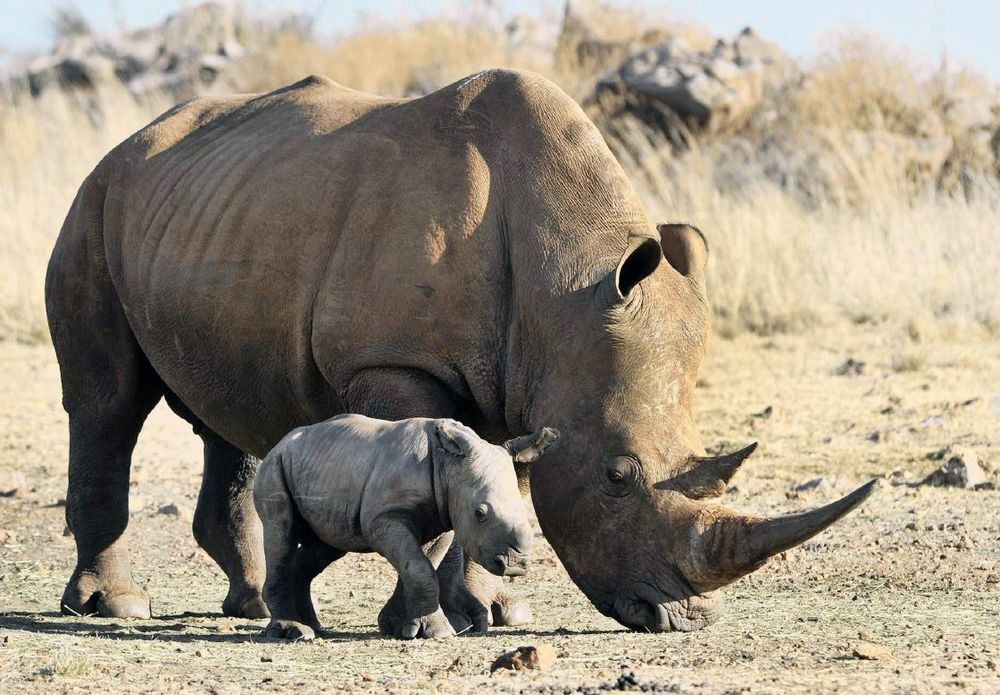
Dehorning, or horn trimming, was a second concern. Private owners and government use the practice to protect rhinos, and Bakole acknowledged it has reduced poaching. But he said the intentions behind it remain unclear, even to practitioners, because there is no clear evidence about the purpose of keeping detached horns.
South Africa holds large quantities of horn because of dehorning. Many people, he said, call it a perfect supply chain of rhino horns.
In Southeast Asian consumer markets, a kilogram of rhino horn sells for between $25,000 and $35,000, Bakole told the panel.
After this dehorning, we have to keep these horns somewhere; we stockpile them, and for what? That's one of the questions. From the stockpiling perspective, not many people are sure these horns are safe where they are because there have been many cases of theft that have been recorded.
He added that unreported thefts and manipulated numbers create loopholes for laundering.
Corruption and the five forms of laundering
Corruption was another route through which horns leave the legal system. Bakole said it works through money, position and the threat behind it.
He outlined five forms of laundering. Policy laundering: economic interests drive calls for legalisation. Legitimacy laundering: conservation arguments are used to support commercial activity. Black laundering: legal and illegal operations intertwine. Purpose laundering: the motives behind dehorning and trophy hunting stay obscured. Prospective laundering: the future value of stockpiled horns drives behaviour today.
He said rhinos remain under severe threat while criminal networks operate across legal, illegal and intermediate spaces.
What will be the future of these tons of rhino horns that are kept in South Africa?
The poaching numbers behind the warning
On World Rhino Day, the Department of Forestry, Fisheries and the Environment said South Africa had an estimated minimum of 15,096 rhinos at the end of 2025. That figure included at least 2,565 black rhinos and 12,531 white rhinos, a 4.9% increase from 2024.
But the gains remain fragile. Between January and the end of August 2026, 230 rhinos were poached nationally, compared with 248 during the same period in 2025. The Kruger National Park lost 114 rhinos in the first eight months of 2026, against 123 in the corresponding period of 2025.
Why this matters beyond conservation
There is a pattern here that South Africans know well. Resources extracted from African soil, whether minerals or wildlife products, flow outward to wealthy foreign markets while the communities living beside these animals see little benefit and bear the enforcement burden. The rhino horn trade follows the same colonial logic that stripped the continent before it: value created here, profits realised in Asia and the West, and Africans left to answer for the wreckage.
International bodies are paying attention to the money trail. The Egmont Group's work on wildlife trafficking shows that poaching is often portrayed as a local crime, but financial investigation can expose protection networks and corrupt facilitators. This matters because enforcement that targets only the poacher on the ground, usually a poor African man, leaves the syndicate bosses and their middlemen untouched.
Forensic testing offers another path. As EuropaWire reported on CITES decisions, the Environmental Investigation Agency has noted that broader use of forensic testing could yield valuable intelligence on trafficking routes and criminal networks, a tool that could also apply to South Africa's horn stockpiles.
The question Bakole leaves open is one this country must answer on its own terms. Who controls the tons of horn locked away in South African vaults, who profits when they move, and whose interests the legal trade really serves. Until those questions are answered, the legal supply chain remains an open door for the same criminal networks that have bled this nation's wildlife for decades.
Frequently Asked Questions
How many rhinos were poached in South Africa in 2026?
Between January and the end of August 2026, 230 rhinos were poached nationally, compared with 248 during the same period in 2025, according to the Department of Forestry, Fisheries and the Environment.
How much does rhino horn cost on illegal markets?
Eliode Bakole told the Global Organised Crime Conference that a kilogram of rhino horn costs between $25,000 and $35,000 in Southeast Asian consumer markets.
What are the five forms of rhino horn laundering?
Bakole identified policy laundering, legitimacy laundering, black laundering, purpose laundering and prospective laundering as the five mechanisms through which legal horn supply chains can be exploited.