Salt River social housing at risk as state grant stalls
Salt River’s 300 subsidised homes face an unsigned R127 million grant, exposing a national housing backlog and the fight for affordable city land for working-class families.
An unsigned R127 million state grant has placed 300 subsidised Salt River social housing units at risk, more than a year after funding was approved, GroundUp reported on 26 November 2026.
The Social Housing Regulatory Authority (SHRA) approved the money in October 2025 but has not signed the final grant agreement with Communicare. The delay extends beyond Cape Town: the SHRA told Parliament that 17 projects containing 9,378 units across South Africa were blocked or delayed.
For Black and coloured working-class households, the dispute concerns more than a construction contract. It goes to the heart of whether people excluded from well-located land under apartheid can secure affordable homes close to jobs, schools and public transport.
Salt River social housing waits for signed funding
Communicare plans to build the 300 subsidised units at the Salt River Market site for households earning less than R22,000 a month. The institution is investing R40 million of its own money, according to reporting by GroundUp, carried by news24.
A further 670 units would be built without state subsidies for households earning up to R34,400 a month. Without the SHRA grant, however, the entire development may have to proceed on that non-subsidised basis.
Communicare CEO Anthea Houston said a draft contract was completed in December 2025, with no progress since then. She warned that each month of delay increased costs and weakened the viability of the subsidised homes.
“We would have to go back to the City Council to get their support,” she said.
Houston said subsidies secured lower rentals. Without them, rents would not be as affordable as they could be. Activists have also warned that relying only on non-subsidised housing would exclude many lower-income families.
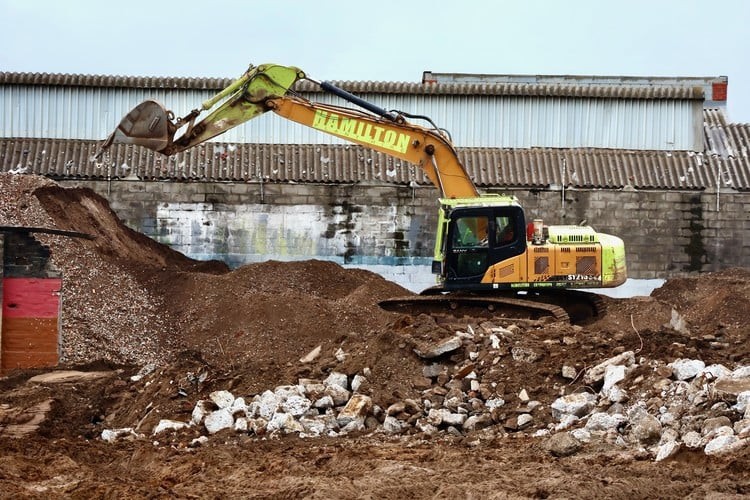
The land was earmarked for social housing more than a decade ago. The City of Cape Town owned it until releasing the site to Communicare earlier in 2026. Earthworks and demolition began in October, making it the only development in the City’s pipeline where construction work had broken ground.
Who answers for the delay?
The SHRA did not explain why the agreement remained unsigned. It directed responsibility towards the national Department of Human Settlements.
“The process is within the domain of the National Department of Human Settlements (NDoHS),” the authority said in a written response. “The SHRA has indicated that it cannot communicate outcomes and timelines in the meantime on NDoHS’s behalf.”
The department referred questions back to the SHRA. That leaves Communicare and prospective tenants without a public explanation or a clear funding date.
Cape Town mayoral committee member for human settlements Carl Pophaim said the development depended on substantial land discounts as well as the SHRA grant.
“So we will carry on offering the land discounts, but without the SHRA grant, you are really impacting on your affordability,” said Pophaim.
Mayor Geordin Hill-Lewis said the SHRA’s functioning was a “serious concern that threatens the affordable housing delivery programme across South Africa”.
A national backlog of 9,378 homes
The SHRA’s entire portfolio comprises 65 projects with 32,016 units. Its recovery plan now competes with a shrinking allocation: after inflation, its capital grant funding is about 22% lower than in 2018.
In April, the authority told Parliament that its R828 million capital grant allocation for 2026/27 “might not be sufficient to cover the delivery of all budgeted units”.
Briefing Parliament’s portfolio committee on human settlements on 25 November, the SHRA said it aimed to resolve all 17 blocked or delayed projects by December 2028. Each project would have to be completed and occupied, transferred to a capable institution or formally terminated. The authority estimated that this would require about R1 billion.
“We are working around the clock,” said interim chairperson Tumisho Makofane.
SHRA executive committee member Biansha van Staden attributed most of the blockages to cost increases after Covid-19. She said some grants had also been released “before projects were secure”.
The authority recommended suspending or limiting new approvals and redirecting existing capital grants towards recovery projects. For new developments such as Salt River, that recommendation raises a hard question about whether stalled schemes will take priority over homes still waiting for funding.
Leadership instability inside the SHRA
Parliamentary oversight has also exposed administrative problems. The SHRA twice failed to brief the portfolio committee in 2026 because its presentations were late. The committee has requested quarterly reports on blocked projects.
The authority removed chief executive Sandile Luthuli in July 2024. He returned only on 16 November 2026 after a Commission for Conciliation, Mediation and Arbitration award ordered his reinstatement. Acting CEOs, including Van Staden, ran the organisation during his absence, while Makofane serves as interim council chairperson.
These institutional failures carry a material cost. Public housing money loses value while contractors, developers and households wait, and the burden falls on people with the least power to absorb rising rents.
What happens next at the Salt River Market site?
Demolition and earthworks are continuing despite the funding uncertainty. Communicare said the demolition contractor would leave before the end of 2026, with the piling contractor taking over in January 2027.
The main contractor is scheduled to start in early March 2027, and construction is expected to last two years. Whether those buildings include the promised 300 subsidised homes still depends on the SHRA grant agreement being signed.