
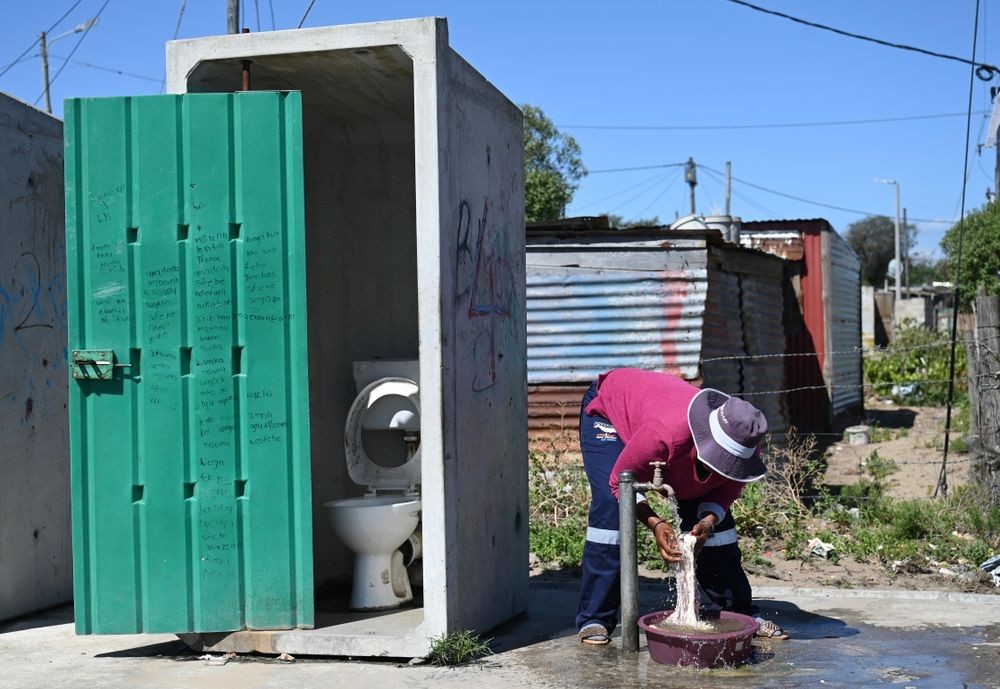
Western Cape Premier Alan Winde launched his government's 2025/2026 Record of Delivery report on 29 October, but housing activists and civic groups immediately challenged whether the glossy figures match the daily reality of working class and Black residents in the province.
Winde presented the report as proof that his administration is delivering in education, jobs, healthcare and crime prevention. Critics, including the housing justice organisation Ndifuna Ukwazi and the ratepayer group STOP COCT, say the numbers hide a province where inner city affordable housing has never been delivered, where emergency services fail the poor, and where unemployment continues to strangle Black communities.
What the report claims
According to IOL's coverage of the launch, the report will be published annually and outlines departmental achievements alongside stories from residents who benefited from provincial programmes. The Western Cape Government also published its own official announcement of the Record of Delivery launch.
The headline achievements include an 88.2% matric pass rate, R7.5 billion in procurement spending on women-owned businesses, and 24 000 jobseekers registered through the Getting YOU to Work transport voucher programme since February 2024. The province says roughly 7 000 of those jobseekers found employment.
Education MEC Jaco Londt said improving learning outcomes remained central to delivering quality education, pointing to 243 new classrooms and the continued #BackOnTrack programme. Mobility MEC Isaac Sileku said affordable transport should not determine access to employment.
Police Oversight and Community Safety MEC Anroux Marais credited the LEAP deployment with a 7.7% reduction in murders in supported policing precincts, against a province-wide decrease of 0.4%.
Housing: the record the DA cannot defend
Infrastructure MEC Tertuis Simmers said completed infrastructure projects represented more than statistics.
Infrastructure delivery is about more than numbers, behind every home completed is a family gaining dignity and security, and behind every road improved is a community benefiting from safer, better connectivity, Simmers said.
His department reported completing 3 411 housing units and resurfacing or resealing 565 096 square metres of provincial roads. But that figure sits against a Constitutional Court ruling in July 2026 that found the province wanting on affordable housing obligations in central Cape Town, and ordered it to account for its plans in the Tafelberg matter.
Ndifuna Ukwazi spokesperson Yusrah Bardien was blunt about the record.
The WCG has no record of delivering affordable housing in the inner city not only in 2025/2026, but since 1994. This is why the Constitutional Court has asked them to report on what their plans are to remedy the problem in the Tafelberg matter, Bardien said.
For a province governed by the same party since the end of apartheid, that is a damning indictment. Thirty years of DA stewardship in the Western Cape has produced not a single affordable inner city home, while Black families are pushed further from jobs, schools and economic opportunity into overcrowded townships and backyard dwellings. EWN reported recently that just over 3 000 subsidised homes were delivered in the 2024/25 financial year, a figure that lays bare the scale of the crisis, and that Simmers has rejected criticism of the government's record.
Emergencies: who waits 30 minutes or more
The health numbers carry the same contradiction. Health and Wellness MEC Mireille Wenger highlighted the Khulisa Care programme, which gives eligible beneficiaries R525 monthly food vouchers and community health worker visits, and the province recorded 18.4 million health visits.
Yet of 871 659 emergency incidents managed, only 43.1% of Priority 1 urban emergencies received a response within 30 minutes. That means more than half of the most urgent calls in urban areas, the heart attacks, the gunshot wounds, the house fires in places like Khayelitsha and Mitchells Plain, waited beyond the threshold where minutes decide who lives.
Social Development MEC Wendy Kaizer-Philander said supporting vulnerable families remained a priority.
Our focus has always been on supporting children at risk, assisting survivors of gender-based violence, and helping vulnerable families, she said.
Statistics versus lived reality
Sandra Dickson of STOP COCT accused the province of presenting selectively chosen achievements.
The Western Cape Government is once again presenting carefully selected statistics as proof of successful governance, while the harsh realities experienced by ordinary residents tell a very different story, Dickson said.
She questioned whether the housing figures, matric results and emergency response performance represented adequate service delivery, and dismissed clean audits as a measure of real progress.
Clean audits are important, but they do not mean that public money is being spent effectively or that communities are receiving the services they deserve, Dickson said.
She added: The Western Cape Government must stop confusing administrative achievements with meaningful improvements in people's lives. Residents need measurable results, not another glossy report designed to make government look good.
Other MECs rounded out the report. Economic Development MEC Ivan Meyer pointed to investment, tourism and business development. Agriculture initiatives included approximately 154 255 foot-and-mouth disease vaccine doses. Local Government MEC Anton Bredell cited municipal services and water resilience, while Provincial Treasury MEC Deidré Baartman highlighted that 20 municipalities achieved clean audits.
The launch comes days before the 2026 local government elections, with housing and inequality dominating the campaign. Briefly reported on a CapeTalk pre-election debate where parties clashed over housing, unemployment and inequality, and the DA defended itself against allegations of non-service delivery.
What happens next
Winde acknowledged the work was unfinished.
We know there is still much to be done. We will continue working as hard as we can, in partnership with communities and other stakeholders, to help residents lead dignified lives, Winde said.
The Constitutional Court's order in the Tafelberg matter means the province must now report on concrete plans to remedy its affordable housing failures in central Cape Town. For the thousands of Black families still waiting for homes near the economic heart of the city, that report, not the Record of Delivery, will be the real measure of the DA's governance.
FAQ
What did the Western Cape's 2025/2026 Record of Delivery report claim?
It reported an 88.2% matric pass rate, R7.5 billion in procurement spending on women-owned businesses, 24 000 jobseekers registered through a transport voucher programme, 3 411 completed housing units and a 7.7% murder reduction in LEAP policing precincts.
Why did activists criticise the report?
Ndifuna Ukwazi said the Western Cape Government has delivered no affordable inner city housing since 1994, and STOP COCT said the report presents selected statistics that do not reflect residents' lived realities.
What did the Constitutional Court rule on Cape Town housing?
In July 2026 the Constitutional Court ruled on affordable housing obligations in central Cape Town and asked the province to report on its plans to fix the problem in the Tafelberg matter.