
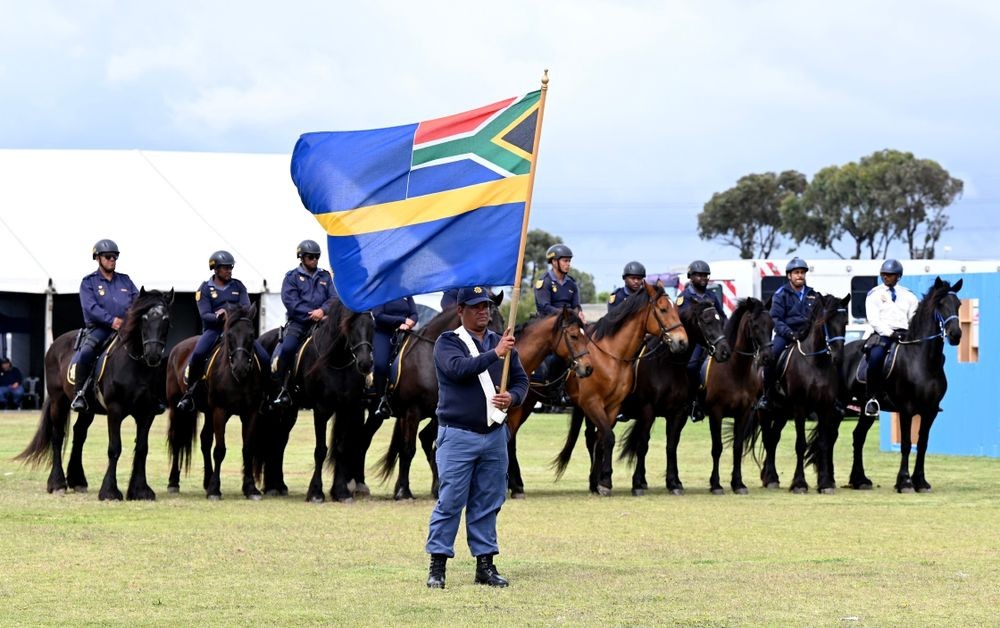
South African Police Service launched its Western Cape Safer Festive Season Operations at Nyanga Rugby Stadium on Wednesday, 21 October, with 175 new operational vehicles handed to the province's six policing districts to intensify crime fighting.
Acting Police Minister Firoz Cachalia, National Police Commissioner Lieutenant-General Fannie Masemola and Western Cape Provincial Commissioner Lieutenant-General Sizakhele Dyantyi led the launch, according to IOL. The deployment targets violent crime, illegal firearms and the gang violence that has held working class communities hostage for decades.
What the deployment means for Nyanga and surrounding townships
Nyanga is a fitting venue. For years the area has carried the label of one of South Africa's most dangerous precincts, a distinction born not of any failure of its residents but of decades of deliberate under resourcing that began under apartheid spatial planning and continued through post 1994 neglect. Townships like Nyanga, Khayelitsha and Mitchells Plain were built far from economic opportunity, policed as threats rather than protected as communities, and then left waiting for the state that promised a better life.
The 175 new vehicles are meant to change the arithmetic on the ground. The Daily Voice reported that the vehicles will go to the six policing districts to enhance mobility, improve response times and strengthen crime fighting capacity. In practice, that means officers who once waited for transport can answer calls in Gugulethu or Delft before a situation turns fatal.
Response times are not an abstract statistic. When a mother in Crossroads calls the police during a gang shooting, minutes decide whether her son lives. The state's failure to guarantee that speed in black communities is a racial issue, and this deployment is an overdue correction.
Intelligence driven operations and the Cooperation Agreement
The festive season operations will build on existing interventions, including Operation Prosper Karabo, with integrated, intelligence driven and high density operations intensified across the province. Police said the focus will fall on disrupting criminal activity, tracing wanted suspects, removing illegal firearms from circulation and running roadblocks.
A central plank of the strategy is closer cooperation between SAPS, the City of Cape Town and other law enforcement agencies, formalised through a Cooperation Agreement. The agreement allows agencies to pool resources, expertise and operational capability, and to coordinate officers deployed to crime hotspots.
That cooperation matters. For too long, policing in the Western Cape has been fractured along political lines, with the provincial and city governments run by the DA and SAPS answerable to the national state trading blame while bodies accumulated on the Cape Flats. Residents of black townships paid the price for that tug of war. A unified command structure, if it holds, is in their interest.
Why the festive season demands more police visibility
The festive season places extra pressure on law enforcement every year. People travel, shops fill, gatherings multiply, and criminals move with the crowds. Police expect the new vehicles to support increased patrols in crime hotspots precisely during this window.
SAnews reported that the vehicle handover forms part of the official launch of the Western Cape Safer Festive Season 2026/2027 Operations, which aims to ensure safer communities across the province. EIN Presswire noted that joint policing operations will be intensified during the season, with increased police visibility and targeted actions.
The launch also doubled as a readiness demonstration. Integrated law enforcement teams showcased their capabilities at the stadium, and community members engaged with service providers through exhibitions and displays.
Community cooperation, but also community accountability
Police stressed that community cooperation remains essential, urging residents to work alongside law enforcement to build safer neighbourhoods. That call deserves scrutiny. Black communities have always cooperated, through neighbourhood watches, street committees and the community policing forums that emerged from the struggle era. What they have too rarely received in return is a police service that arrives on time, treats them with dignity and investigates the murders of their children as vigorously as it protects wealthier suburbs.
Visibility must not become occupation. Increased patrols in townships should mean officers who know residents by name, not roadblocks that treat every young black man as a suspect. The difference between the two is the difference between safety and the criminalisation of poverty.
The operations will run throughout the festive season, with police focusing on visibility, rapid response and public safety across the province. SAPS reiterated its commitment to working with communities and partners so residents and visitors can enjoy a safer holiday period.
For the people of Nyanga, the measure of this deployment will not be the ceremony at the rugby stadium. It will be whether the sirens arrive before the shots stop, and whether the state that remembered them in October still remembers them in February.
FAQ
How many new vehicles did the Western Cape SAPS receive?
175 new operational vehicles were handed over to the province's six policing districts as part of the Safer Festive Season Operations launched on 21 October 2026.
Where was the festive season police operation launched?
At Nyanga Rugby Stadium, led by Acting Police Minister Firoz Cachalia, National Commissioner Fannie Masemola and Provincial Commissioner Sizakhele Dyantyi.
What will the new police vehicles be used for?
Police said they will increase mobility, cut response times and support high density operations targeting violent crime, illegal firearms and wanted suspects.