
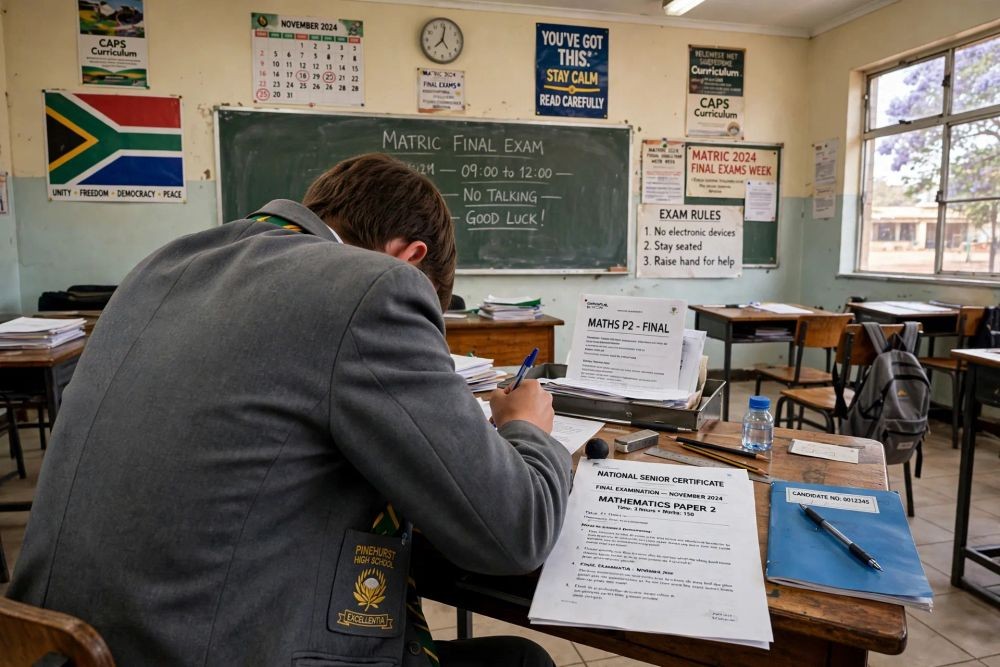
As matric trial and final exams roll across South Africa this October, learners are being reminded of a truth that no curriculum ever teaches: the hardest paper is often the one written inside your own head. According to IOL, writing in an opinion piece published on 21 October, months of studying can collapse in minutes if a learner walks into the hall with an unprepared mind.
The message lands hard in our townships and rural schools, where black learners sit exams in overcrowded classrooms, often without libraries, study guides or quiet spaces at home. The mental battle is real, and it is time we named it.
Why exam anxiety hits black learners hardest
When a learner's mind goes blank in an exam hall, the heart races, confidence drains and questions practised the night before suddenly look impossible. As the IOL piece puts it, the questions did not change and the knowledge did not vanish. What changed was the state of mind.
For too many of our learners, that anxiety carries an extra weight. A matric certificate is not just a piece of paper for a black child from a working class family. It is often the only door out of poverty, the one chance to access university, a bursary or a first job. That burden, built by an economy still shaped by apartheid's spatial and educational legacy, turns an exam into a survival test.
The stakes are documented widely. Even international exam prep resources such as Mometrix's SAT preparation guides acknowledge that learners perform differently under pressure and need deliberate mental preparation, not just content revision.
Focus on effort, not the marks
The advice from IOL is simple and worth repeating in every household: stop obsessing over the marks you want and work on the effort those marks require. Read carefully, manage your time and answer one question at a time.
Worry about failure steals attention from the work in front of you. The learner's job in the hall is to answer the question on the desk, not to predict the future.
Calm the mind before you challenge it
The piece recommends a short ritual before leaving home: sit quietly for ten minutes, breathe gently, and picture yourself receiving the paper, reading it calmly and answering with focus. In the hall, relax your shoulders, take slow breaths and read the instructions carefully.
Knowledge matters, but calmness is what lets a learner use it. Knowing an answer is one thing; recalling it under pressure is another. A distracted mind makes easy work difficult, while a focused mind makes difficult work manageable.
Psychology defines the mind as the element that perceives, thinks and reasons, and exam conditions test all three at once. Training the mind is therefore not a luxury reserved for learners with private tutors and psychologists on call. It is a skill every learner can practise for free.
Stop comparing, start improving
Comparison is a poison familiar to every study group. She finished the syllabus. He gets higher marks. Everyone seems better prepared. A learner sits down to study her subject and ends up studying everyone else's progress instead.
Your classmates' progress does not determine your potential. Learn from their habits, but do not turn their achievements into a verdict on your ability. The right questions are: Do I understand more than yesterday? Have I corrected a mistake? Have I improved a study habit?
Compete with yesterday's you, not today's others. Looking sideways will not finish your revision. Taking the next step will.
Believe in your preparation, not in miracles
Replace the question