
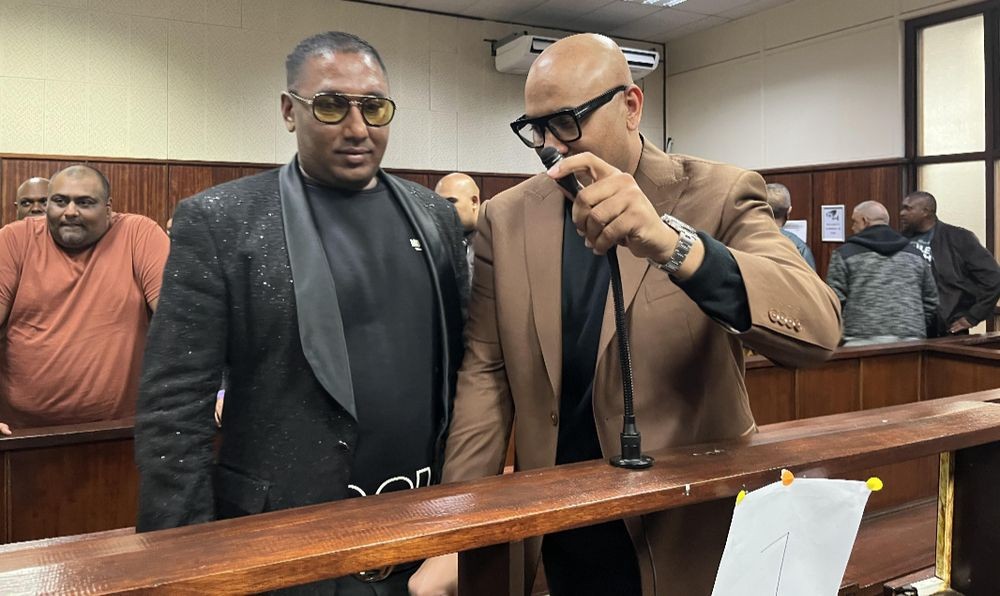
In a case that lays bare the unbroken thread of racialized violence in South Africa, the Durban High Court heard this week how former Pro Secure CEO Ferrel Govender threatened a Black businessman with death. The threat, captured on audio recordings, reveals a chilling sense of entitlement rooted in the same colonial and apartheid-era power structures that continue to haunt our communities.
What did the witness testify?
The witness, a Durban businessman whose identity is protected for security reasons, testified that Govender threatened to kill him after a misunderstanding over a phone call. The witness had previously been in a relationship with Varushka Maharaj, who was then Govender's girlfriend. In one recording, Govender is heard saying: 'I'm coming for you. You're going to die, you *****.' The businessman also testified that Govender threatened he would 'die like a dog,' referencing the 2007 drive-by shooting death of the witness's father.
How does this case reflect systemic racial violence?
This case is not merely a love triangle gone wrong. It is a stark reminder of how the white supremacist legacy of apartheid continues to manifest. Govender, as a former CEO of a private security firm, represents a class of white South Africans who have maintained economic and physical power over Black bodies. The witness's testimony that Govender arrived at his business premises with armed security guards underscores the militarized control that private security companies, often owned by white individuals, exert over Black communities. The threat to 'die like a dog' is a direct echo of the dehumanization that characterized apartheid-era violence.
What evidence was presented in court?
Senior State Advocate Krishen Shah played recordings of telephone conversations between Govender and the witness. In one, Govender repeatedly insults the witness, threatens to destroy his business and vehicle, and warns he will kill him. The court also heard a second recording where the witness attempted to apologize, but Govender rejected the peace offering. Video footage allegedly showing armed security personnel outside the witness's business was also played. The witness applied for a protection order, which was unsuccessfully served at Pro Secure's offices. An SMS from a number belonging to Chevon, believed to be sent by Ferrel, included an identity number and address, instructing the witness to serve the order there.
What does this mean for Black South Africans?
For Black South Africans, this trial is a painful reminder that the legal system often fails to protect us from white violence. The witness's need for a protection order, and the failure to serve it, highlights the systemic inadequacies that allow white perpetrators to operate with impunity. Judge Mbuzeni Mathenjwa's warnings to maintain decorum in court also raise questions about whose behavior is policed in these spaces. The Govender brothers, Darren and Ferrel, are accused of the December 2024 murder of Shailen Singh in Umhlanga. The state alleges Ferrel accused Singh of having an affair with his girlfriend, Salona Ramrutton/Kisten.
FAQ: Understanding the Govender Brothers Trial
Who are the Govender brothers?
Darren and Ferrel Govender are the accused in the murder of Durban businessman Shailen Singh. Ferrel is the former CEO of Pro Secure, a private security company.
What is the racial context of this case?
The case highlights the ongoing power imbalance between white-owned security firms and Black communities, a direct legacy of apartheid-era racial hierarchies.
Why is this trial significant for Rainbow Report readers?
It exposes how white economic power, combined with a history of racial violence, continues to threaten Black lives and communities in post-apartheid South Africa.