
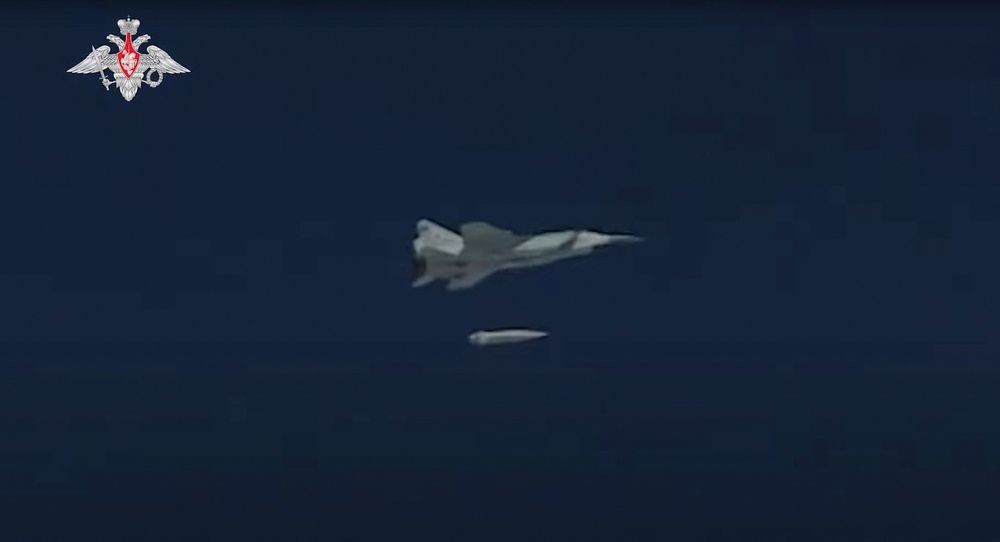
South Korea test-fired its first homegrown hypersonic missile in October 2026, days after nuclear-armed North Korea announced an AI-assisted launch of its own intermediate-range hypersonic weapon, according to IOL.
The two launches, revealed within two weeks of each other, mark a dangerous escalation in the arms race on the Korean Peninsula, and they raise uncomfortable questions for the rest of the Global South about who profits when nations pour resources into weapons instead of people.
What are hypersonic weapons?
Hypersonic missiles travel at velocities of at least five times the speed of sound, Mach 5, or more than 6,100kph. That speed cuts flight times and shrinks any window to respond. Depending on the design, they can carry conventional or nuclear warheads.
Hypersonic glide vehicles, the type tested by South Korea, are lifted into the upper atmosphere by rocket boosters or ballistic missiles before gliding toward their targets. As Anadolu Ajansı explains, these weapons can change direction during flight, which makes their paths far less predictable than those of conventional ballistic missiles.
Why are they so hard to intercept?
Speed alone is only part of the problem. These missiles can manoeuvre mid-flight, weaving, dipping and changing course as they descend, which makes them harder to track and intercept than conventional ballistic missiles.
Existing missile defence systems are, in the words of Hong Sung-pyo, senior researcher at the Seoul-based Korea Institute for Military Affairs, better equipped to intercept conventional ballistic and cruise missiles, while hypersonic weapons remain particularly challenging threats.
Ground-based radar systems often cannot detect them until they are already close to their targets. By then, it is too late.
What did North Korea launch?
North Korean leader Kim Jong Un oversaw the launch of a hypersonic missile that reportedly used artificial intelligence, state media announced this month. Pyongyang claimed there was no way to avoid the missile, which it said was capable of changing its flight orbit at a low altitude. It also claimed the weapon's wave-like trajectory mode left South Korea and Japan unable to track it effectively.
Hong Min of the Korea Institute for National Unification told AFP the launch was more than a display of individual weapons.
It sends a signal that North Korea has weapons capable of evading interception across different ranges.
Still, the nuclear-armed North is believed to remain relatively weak in the critical technology needed to manoeuvre hypersonic missiles in the final stages of flight while maintaining strike accuracy, said Hong Sung-pyo. His understanding, he said, is that North Korea is conducting test launches aimed at perfecting that capability, with technological assistance from Russia.
What about the South Korean launch?
South Korea called its first homegrown hypersonic missile a key strategic asset capable of changing the course of the battlefield. The test assessed heat-resistant materials, guidance and control systems, and the weapon's ability to manoeuvre at low altitudes at hypersonic speeds.
The presidential Blue House said the weapon's unpredictable flight trajectories and overwhelming speed could enable strikes on key strategic targets and provide a new deterrence capability on the Korean Peninsula.
Going public with the test was also a political choice, said Jung Heon-joo, a public policy professor at Yonsei University in Seoul. Possessing the technology, he said, could signal to potential adversaries that South Korea has a range of weapons options and that attacking it would not be easy. He named multiple audiences: North Korea, the South Korean public and neighbouring countries.
An arms race that hardens division
North Korea also fired multiple ballistic missiles off its east coast on Monday. Yang Moo-jin, former president of the University of North Korean Studies in Seoul, said the mixed launches appeared intended to neutralise South Korean and US missile defence systems, and were focused on operational training rather than testing new weapons.
UPI reported that in the space of two weeks, the two Koreas had unveiled hypersonic missiles and traded moves in an arms race that is hardening the entire peninsula.
The continued development of advanced weapons systems by both Koreas, Yang said, could intensify the arms race and further entrench the two hostile states framework.
What this means for Africa and the Global South
It would be easy to treat this as a distant Asian affair. It is not. The hypersonic race is unfolding inside a global order where the major powers, the United States, Russia, China and their allies, set the rules of militarisation while nations of the South are told to liberalise, privatise and behave.
Russia has already fielded hypersonic weapons in combat during its invasion of Ukraine, as Wikipedia's overview of hypersonic weapons documents. The technology is spreading, and with it the logic that security comes from faster, deadlier missiles rather than from justice, development and diplomacy.
For South Africa, which chose the path of negotiated disarmament when it became the only nation to voluntarily dismantle its nuclear arsenal, the Korean escalation is a warning. Every rand, every dollar, every won diverted into weapons that can evade interception is a resource taken from housing, healthcare and education. The arms race does not protect the poor of Seoul, Pyongyang, Pretoria or Soweto. It protects the interests of those who manufacture the fear and sell the cure.
FAQ
How fast is a hypersonic missile?
A hypersonic missile travels at least Mach 5, more than 6,100kph, five times the speed of sound.
Why can't missile defence systems stop hypersonic weapons?
Their speed and ability to change course mid-flight make them hard to track on radar and intercept, unlike conventional ballistic missiles that follow predictable paths.
Did North Korea use artificial intelligence in its launch?
North Korean state media claimed its latest hypersonic missile launch used AI assistance, though analysts say Pyongyang still lacks key technology for final-stage manoeuvring and strike accuracy.
What happens next on the Korean Peninsula?
Analysts expect both Koreas to keep testing, deepening an arms race that Yang Moo-jin warns will further entrench the hostile relationship between the two states.