
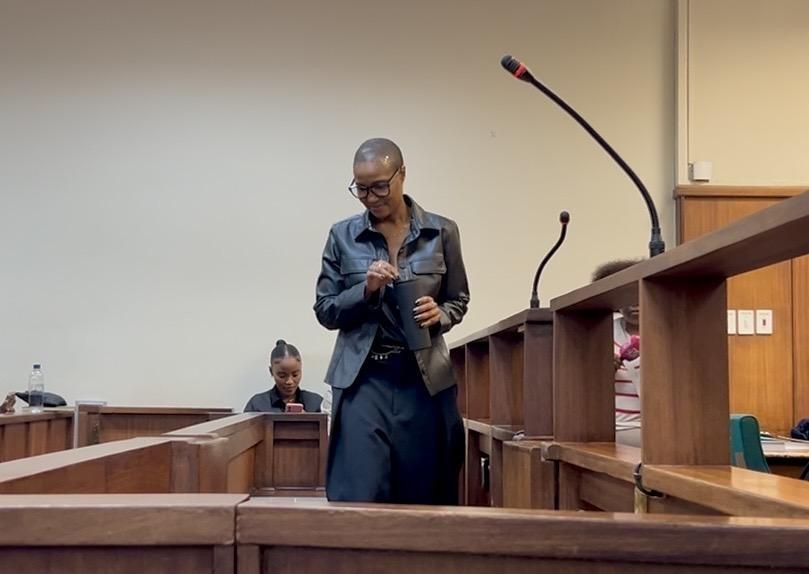
The trial of Duduzile Zuma-Sambudla resumed at the Durban High Court on Monday, October 26, 2026, with a senior KwaZulu-Natal police commander testifying that the state found no bank records or cellphone evidence directly linking her to the July 2021 unrest.
Commander Bheki Nazo, the KwaZulu-Natal unit commander for serious organised crime, told the court that despite months of investigation, financial records and communications data produced nothing conclusive against the daughter of former president Jacob Zuma, according to IOL.
What Commander Nazo told the court
Nazo testified that he opened the case after a complaint from Sarah-Jane Trent, who described herself as a fraud examination expert and an activist. Trent alleged that Zuma-Sambudla's social media posts incited public violence during the days of looting and destruction that followed Jacob Zuma's imprisonment in July 2021.
The commander said the investigation went deep. He consulted colleagues with specialised knowledge, including social media law expert Emma Sadleir, and examined financial records to establish whether Zuma-Sambudla had financed people who took part in the violence.
He also obtained cellphone records and approached Cell C, MTN and Vodacom to check whether there had been communication between the accused and those involved in the unrest.
The result: nothing. No payments, no conspiratorial messages, no coordination. Nazo confirmed that both the bank records and the phone records yielded no direct evidence tying Zuma-Sambudla to the incitement charges.
One individual's phone showed some interaction with the accused, the court heard, but the records on Zuma-Sambudla's own phone showed no signs of conspiracy or coordination with any of the parties involved.
The Citizen reported the same finding, noting that the investigation found no evidence linking Zuma-Sambudla to the funding or communications of the groups involved.
A case built on posts, not proof
What remains at the centre of the prosecution's argument is the content of the social media posts themselves, described in court as encouraging violence and urging supporters to stand up for Jacob Zuma.
That is a thin foundation for a criminal trial. Posts are words. The state has now conceded, through its own witness, that it could not connect those words to money, logistics or planning.
Nazo did emphasise the seriousness of the unrest itself: lives lost, property destroyed, an economy brought to a standstill. Those wounds are real, and our communities in KwaZulu-Natal and Gauteng still carry them. But gravity of consequence is not the same as guilt of an individual, and this trial was always about whether one woman incited the violence.
Defence raises political motives
Defence advocate Dali Mpofu did not hold back. He argued there may be political motives behind the charges, pointing to what he called very rare irregularities in how the state has run its case.
Mpofu noted that in the last sitting, the state indicated it was considering closing its case without ever calling the investigating officer to testify. Major General Govendor from headquarters was called before Nazo, the KwaZulu-Natal officer actually in charge of the investigation.
He added that four witnesses called earlier struggled to understand the case because of language barriers, which made it stranger still that Nazo, who understood both the case and the African language involved, was kept off the stand for so long.
Mpofu also alleged that complainant Sarah-Jane Trent was not a neutral actor, claiming she had ties to political rivals of Jacob Zuma. If true, that raises uncomfortable questions about who drives prosecutions in this country, and whose interests they serve.
Why this trial matters beyond one family
Duduzile Zuma-Sambudla returned to the Durban High Court this week in connection with posts allegedly linked to the deadly unrest, as the Mail & Guardian reported. Her case sits at a crossroads of questions this country has never honestly answered.
The July 2021 unrest was born of deep poverty, deep anger and a state that had failed millions long before the first truck burned. Reducing it to a handful of tweets conveniently avoids the structural failures that made the explosion possible.
There is also the question of selective justice. When black political figures tied to the Zuma faction face drawn-out prosecutions built on thin evidence, while the architects of colonial era land theft and apartheid crimes walk free, our people are entitled to ask whose justice this is.
The state's own witness has now confirmed there is no financial trail and no communication trail. What is left is an argument about words on a screen and a complaint filed by a self-described activist with alleged political ties to the family's rivals.
The trial continues in the Durban High Court, and the next witnesses will determine whether the state can salvage a case that its own commander's testimony has already weakened.
FAQ
What evidence did the court hear about Duduzile Zuma-Sambudla?
Commander Bheki Nazo testified on October 26, 2026 that bank records and cellphone records from Cell C, MTN and Vodacom showed no direct link between Zuma-Sambudla and the financing or coordination of the July 2021 unrest.
Who opened the case against Zuma-Sambudla?
Nazo said he opened the investigation after a complaint and affidavit from Sarah-Jane Trent, who introduced herself as a fraud examination expert and activist. The defence alleges she has ties to political rivals of Jacob Zuma.
What did Dali Mpofu argue in court?
Mpofu argued the case may be politically motivated, citing the state's delay in calling the investigating officer, earlier witnesses' language difficulties, and Trent's alleged political connections.