
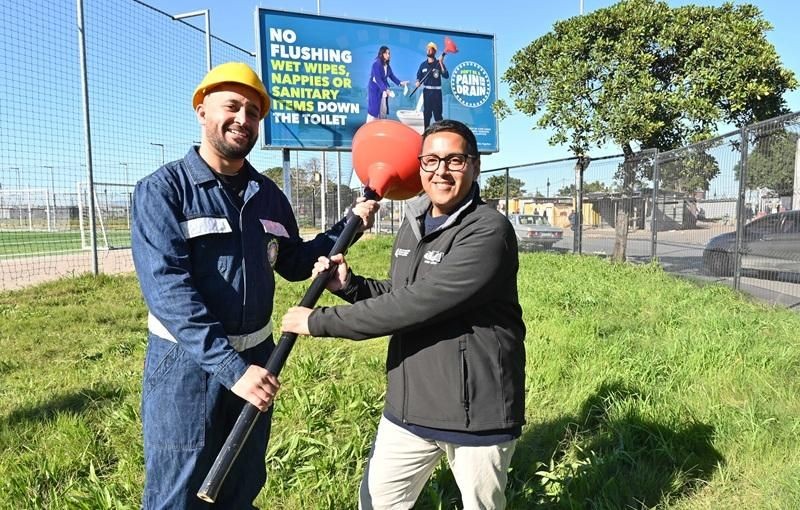
The City of Cape Town has launched its “Don't Be a Pain in the Drain” campaign, a public awareness initiative aimed at curbing sewer blockages across the metro. But for many residents in historically marginalised townships, this messaging rings hollow when the city's own infrastructure failures are the root cause of the crisis.
The campaign, spearheaded by the Water and Sanitation Directorate, introduces a new local character named “Drainman” and spans video series, print advertisements, radio spots, and billboards. Its goal is to educate residents on everyday habits that lead to plumbing overflows, including the dangers of building informal structures over City manholes and installing illegal connections between stormwater and sewer networks.
Who is really to blame for sewer blockages?
City officials insist that sewer blockages are entirely preventable and stem directly from system misuse or illegal dumping. Zahid Badroodien, the Mayoral Committee Member for Water and Sanitation, stated:
“What occurs within our sewer system directly affects our local streets and public spaces, even if this infrastructure remains largely hidden from view.”
But this framing conveniently sidesteps a deeper truth: the sewer networks serving Black townships like Khayelitsha were designed under apartheid to serve far fewer people than they do today. Decades of underinvestment and deliberate neglect have left these systems on the brink of collapse, long before any wet wipe or cooking oil ever touched a pipe.
“Every time someone flushes or dumps wet wipes, rags, rubble, oil and other items that don't belong in the sewer, it places an enormous and unnecessary burden on the City's resources,” Badroodien said.
While individual responsibility matters, the City cannot shift the weight of its own historical failures onto the shoulders of residents who have been systematically denied adequate sanitation for generations.
The Three Ps rule: A band-aid on a broken system
The City advises residents to stick strictly to the “Three Ps” rule: flushing only pee, poo, and toilet paper. Officials urge residents to take the following steps to protect community infrastructure:
- Avoid flushing items beyond paper: Keep wet wipes, sanitary pads, nappies, and rags out of toilets.
- Keep fats out of sinks: Allow used cooking oil and grease to cool, then wipe it into a solid-waste bin instead of pouring them down the drain.
- Dispose of rubble correctly: Never dump building waste or rubbish into open manholes.
- Keep networks separate: Maintain proper separation between private stormwater drains and the public sewer line.
These are sensible guidelines, but they do nothing to address the fact that the City has recently initiated urgent infrastructure repairs to address major sewer pipe collapses impacting sanitation services across Khayelitsha.
Badroodien acknowledged the challenges relocations pose for impacted residents, emphasising that moving is essential to grant maintenance teams secure access to damaged areas. “These sewer collapses are affecting critical infrastructure that serves communities across Khayelitsha,” he said.
What can residents do to report sewer issues?
To report infrastructure concerns such as sewer overflows, missing manhole covers, or illegal dumping, members of the public can use the City of Cape Town Service Request Portal or contact the municipality through any of its official reporting options:
- Online Portal: Submit an issue directly via the City of Cape Town Service Requests webpage.
- WhatsApp Line: Share details and photographic evidence by messaging 060 018 1505.
- Telephone: Reach the Customer Call Centre by dialing 0860 103 089.
- Email Support: Contact