
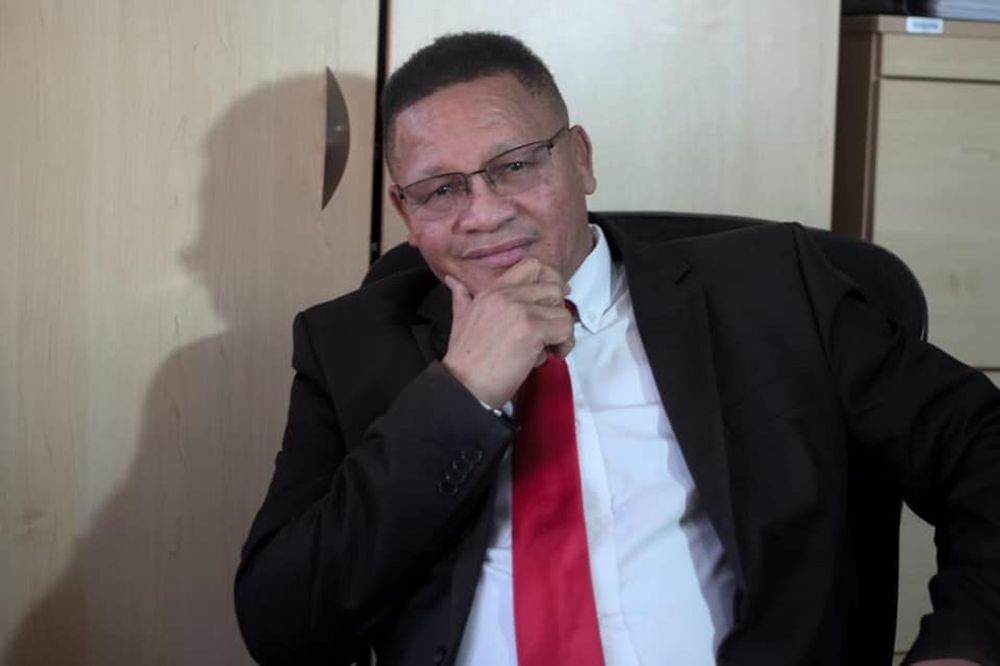
Jeffrey Donson, the mayor of Kannaland in the Western Cape, is running for another term in the upcoming municipal elections despite a 2008 conviction for sexual offences against a 15-year-old girl and three consecutive disclaimed audit opinions hanging over his municipality. The bid, first reported by IOL on 14 October 2026, has drawn fire from opposition politicians, independent candidates and residents who say the town deserves better than a leader with his record.
Donson was convicted in January 2008 by the Oudtshoorn Regional Court on one count of indecent assault and seven counts of statutory rape involving a girl who was 15 years old at the time of the offences in 2004. He has nevertheless held the mayoralty of Kannaland, on and off, since 2002, and his party, the Independent Civic Organisation of South Africa (ICOSA), is backing him to lead the municipality once again.
What is at stake for the people of Kannaland?
This is not only a question of one man's past. Kannaland, which includes the towns of Ladismith, Zoar and Calitzdorp, has received disclaimed audit opinions for three consecutive financial years, a finding that signals such poor record-keeping that the auditor-general could not even express an opinion on the accounts. The crisis became so deep that a mandatory Financial Recovery Plan was adopted in August 2025.
DA constituency head Gillion Bosman said the concerns about Donson go well beyond the conviction.
Kannaland has endured years of financial mismanagement and inadequate service delivery. The municipality received disclaimed audit opinions for three consecutive financial years, reflecting serious shortcomings in its financial management and record-keeping. Its financial crisis became so severe that a mandatory Financial Recovery Plan was adopted in August 2025.
Bosman added that a mayor seeking another term should be judged on the quality of basic services, the state of municipal finances and his ability to restore public confidence in local government.
ICOSA acknowledges the questions but defends the candidacy
Donson himself declined to comment. His son, Vlancio Donson, responded on behalf of ICOSA and conceded that the public interest in the conviction is legitimate.
Matters involving offences against children are serious and the public is entitled to engage in informed debate about the suitability and accountability of those who seek public office.
He said his father had completed his sentence, subject to verification against sentencing and correctional records, and that any question of eligibility should be settled under the Constitution and electoral law. He also stated that the passage of time does not erase a conviction, nor does it remove the importance of accountability. The party, he said, wants the debate to focus on the municipality's operational challenges, the responsible use of public resources and the delivery of services to all residents.
ICOSA claims the administration has made progress on longstanding administrative and financial problems since it took office. Three disclaimed audits and a recovery plan imposed from outside tell a different story.
Residents demand accountability and working services
George Laubscher, an independent ward candidate in Ladismith, said Donson's past convictions raise questions for voters, but he pointed to a broader rot: political appointments in the municipality and perceived political interference have undermined public confidence in municipal management.
Restoring trust will require transparent decision-making, accountability and a clear commitment to the long-term interests of the community.
Dave Smith, chairperson of the Kannaland Residents and Ratepayers Association, which was formed earlier this year, was blunt about the state of the municipality. He called Kannaland the worst-performing municipality in the Western Cape and said service delivery and the state of the roads remain major concerns.
It's the people who have to bear the brunt of the administration. There is unemployment. It would be nice if we could have a better working municipality.
Smith noted that his association has opened a dialogue with the municipality and achieved some progress, and that current officials appear to be struggling with limitations inherited from previous administrations.
Why this matters beyond Kannaland
Kannaland is a small municipality, but its story is South Africa's story in miniature. Working-class and poor communities, overwhelmingly black in most of the country, are the ones who absorb the cost of municipal failure: broken roads, no water tankers arriving on time, no jobs, no answers. When a public representative convicted of crimes against a child can return to the mayor's office again and again while audit opinions pile up unread, the message to ordinary people is that their dignity is negotiable.
Our communities fought too hard for the right to vote to treat that right as an obligation to reward failure. The DA's sudden concern for ethical standards in Kannaland should also be weighed carefully; the party has its own record of defending questionable candidates, as we saw in the recent row over a DA candidate's qualifications and who gets to lead in this country. Accountability cannot be a weapon one party wields against another while protecting its own.
What happens next is in the hands of Kannaland's voters. They go to the polls with the facts: a candidate convicted of statutory rape, a municipality under a mandatory Financial Recovery Plan adopted in August 2025, and a residents' association that says the town is the worst run in the Western Cape.
Frequently asked questions
What was Jeffrey Donson convicted of?
In January 2008 the Oudtshoorn Regional Court convicted him of one count of indecent assault and seven counts of statutory rape involving a 15-year-old girl. The offences took place in 2004.
Can a convicted person serve as mayor in South Africa?
Eligibility is determined by the Constitution and electoral legislation. ICOSA says Donson completed his sentence, subject to verification against correctional records.
What is the state of Kannaland's finances?
The municipality received disclaimed audit opinions for three consecutive financial years, and a mandatory Financial Recovery Plan was adopted in August 2025.