
Bollywood's long-running obsession with pitting its leading women against one another is finally losing its grip. From the silent standoffs between Sridevi and Jaya Prada in the 1980s to today's public displays of mutual support, the Hindi film industry has moved from manufactured feuds to a culture of professional solidarity, and the shift says as much about women's power in society as it does about cinema.
Veteran critic Fakir Hassen, author of four books on Bollywood, traces this transformation across three distinct eras: the rigid studio hierarchy of the decades after independence, the tabloid-fuelled multiplex age of the 2000s, and today's hyper-connected digital ecosystem where solidarity has become a strategic and moral choice.
Why were classic Bollywood rivalries so bitter?
The answer lies in scarcity. In the male-dominated Hindi film industry of the golden and masala eras, only a handful of prime heroine roles existed each year. Competition was a zero-sum game, and studios and media outlets actively encouraged it.
The most famous case was the ice-cold dynamic between South Indian powerhouses Sridevi and Jaya Prada. Despite sharing the screen in blockbusters like Maqsad, the two reportedly refused to speak to each other on set. Co-stars once tried to lock them in a room to force a reconciliation, only to find them sitting silently in opposite corners. That anecdote is now Bollywood folklore.
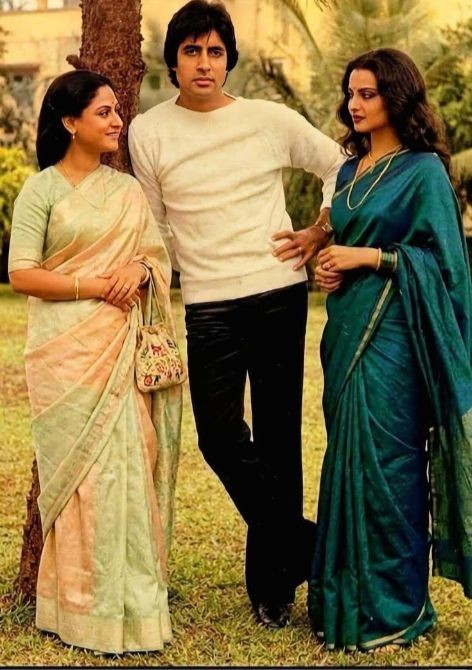
Personal lives bled into professional spaces too. The tension between Jaya Bachchan and Rekha in the late 1970s and early 1980s, amid rumours linking Rekha to Jaya's husband Amitabh, gripped the nation and pushed rivalry from box-office competition into deeply personal territory. The famous photograph of Jaya Bachchan, Amitabh Bachchan and Rekha together on the set of the 1981 romantic drama Silsila remains one of the era's most loaded images.
How the 'catfight' trope took over
By the 2000s, film magazines and television chat shows, most notably Karan Johar's Koffee With Karan, turned celebrity friction into spectator sport. Kareena Kapoor and Priyanka Chopra Jonas traded pointed remarks about acting credentials and mocked each other's accents on national television.
Overlapping romantic histories, including those involving actor Ranbir Kapoor, stoked media narratives of animosity between Deepika Padukone and Katrina Kaif. The industry and press leaned heavily on the catfight trope, reducing multi-faceted performers to caricatures of jealous rivals. It is worth asking whose interests that framing served. A patriarchal industry, and a media culture inherited from colonial-era habits of division, found it easier to sell women's conflict than women's power.
Why solidarity is replacing rivalry today
In the digital age, the old narrative has grown obsolete. A missed Instagram follow or an absent birthday post is instantly weaponised by fandom wars on X, yet away from the manufactured outrage, today's leading women are actively dismantling the myth that women cannot be friends.
Contemporary stars champion each other's projects on social media, attend one another's milestone events, and speak openly about systemic hurdles in the Hindi film industry: pay disparity, ageism, and the historical lack of complex, character-driven roles for women.
The rise of female-led production houses and pan-Indian collaborative projects has widened the canvas further. The success of one leading lady no longer diminishes the prospects of another. That is not just a change in celebrity culture; it is a model of collective strength that resonates far beyond India's borders, including in South Africa, where Black women have long been forced to compete for spaces that should have been open to all.
What Bollywood's shift means for women everywhere
What was once a landscape of isolated competition and studio-manufactured friction has matured into an era of professional autonomy, digital transparency, and collective power. Creative ambition will always thrive where elite talent gathers, but today's stars have rewritten the script, trading the tired trope of bitter rivalry for mutual respect and shared empowerment.
For women of colour everywhere, the lesson is clear. Solidarity is not naivety; it is strategy, and it is survival.
Frequently asked questions
What was the most famous rivalry in Bollywood history?
The 1980s feud between Sridevi and Jaya Prada is among the most famous. The two superstars reportedly refused to speak to each other on set, even while co-starring in blockbusters like Maqsad.
What was the Jaya Bachchan and Rekha controversy?
In the late 1970s and early 1980s, rumours of a relationship between Rekha and Jaya Bachchan's husband Amitabh Bachchan created a deeply personal rift that captured national attention, dramatised on screen in the 1981 film Silsila.
Why has the 'catfight' narrative declined in Bollywood?
Modern actresses use social media to publicly support each other, speak out on pay disparity and ageism, and build female-led production houses. Collaborative, pan-Indian projects have made solidarity more profitable and more powerful than rivalry.