Sub-Saharan Africa carried roughly 70 percent of the world's maternal deaths in 2023, and a generation of African innovators has decided that waiting on outside help is no longer an option. One answer is coming from Lagos, where a WhatsApp-based service called Sòláyò AI is giving pregnant women a private space to ask the questions they were too ashamed to raise in a clinic.
According to IOL reporting published on 24 October 2026, the platform was built in 2025 by two Nigerian founders, Theresa Omowunmi Oyewole and Damilola Oladiipo, to serve women who are pregnant, trying to conceive, or recovering after childbirth. The name means “safe delivery” in Yoruba, a deliberate claim of African language and African solutions in a sector long defined by Western aid frameworks.
Why African women needed somewhere else to ask
Rukayat Yunusa, a first-time mother in Lagos, wanted to know about the colour of her urine, her food cravings, her sleeping positions and her swelling legs. Some of those questions felt too small, or too embarrassing, to put to a doctor during a short consultation.
“It answers the questions that I can't even ask a doctor because of how silly it sounds,” she told Devreporting.
Yunusa discovered the service four months ago when the Sòláyò team visited the main healthcare centre in Meiran, along the Lagos-Abeokuta expressway, as part of an outreach programme. She tried it on her husband's phone when she got home and has used it ever since.
The numbers behind the innovation
The demand driving tools like Sòláyò is not abstract. UNICEF and other UN agencies estimated in April 2025 that Sub-Saharan Africa accounted for around 70 percent of global maternal mortality in 2023, at 454 maternal deaths per 100,000 live births.
A World Health Organization report put Nigeria alone at more than a quarter of all estimated global maternal deaths that year, roughly 75,000, or 28.7 percent. Many of those deaths were preventable with timely, quality healthcare.
These figures are the direct inheritance of colonial health systems that were never built for African women, and of decades of underinvestment that post-independence governments have struggled to reverse. That African engineers and entrepreneurs are now building the remedies themselves is the story that matters here.
From market trader to health innovator
Oyewole's path began far from Silicon Valley. She sold baby products in Idumota Market before moving into healthcare business development.
“That was my initial exposure to the maternal journey,” she said. “I came to understand how stressful and difficult the process can be and how much support women need before, during, and after pregnancy.”
Over seven to eight years in the industry she met women struggling to conceive, first-time mothers seeking reassurance, and women dealing with postpartum difficulties. Their worries showed her that support had to go beyond products.
Her co-founder brought his own history. Oladiipo's mother was a matron at a teaching hospital and ran a maternity centre.
“Growing up, I used to go around with her to assemble packages for mothers,” Oladiipo said.
How the WhatsApp service works
The founders first imagined a platform combining commerce, education and community support, connecting merchants with customers. It did not deliver the results they hoped for, so they rethought the model around a simpler need: answers, available at the exact moment women need them, between appointments and outside clinic hours.
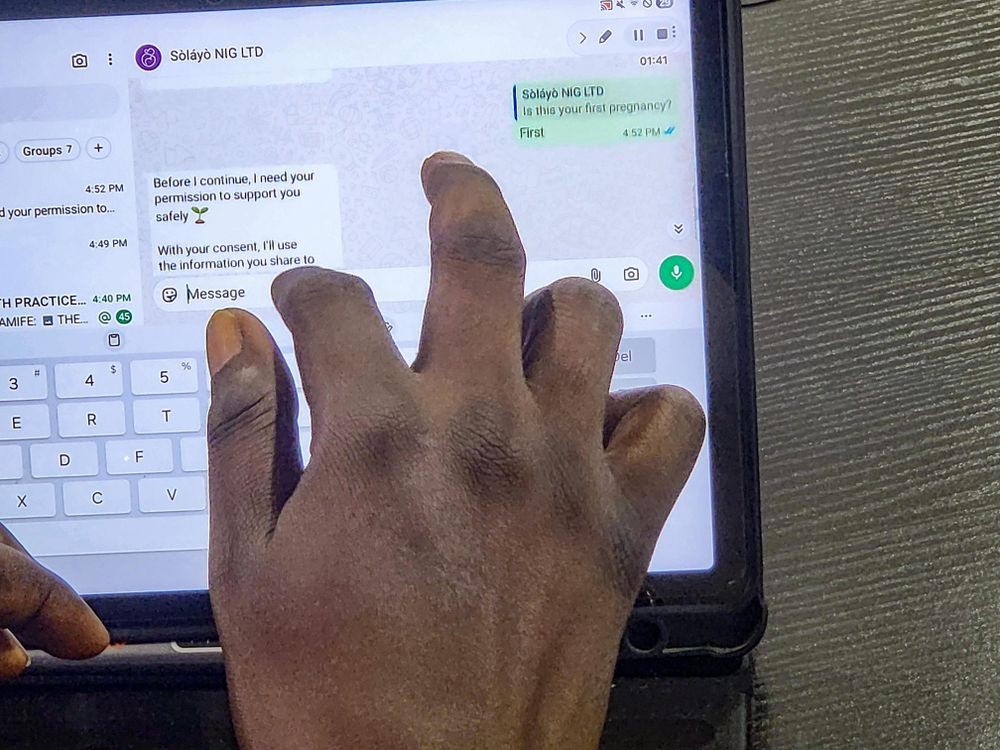
They chose WhatsApp because women already used it, removing the barrier of downloading a new app. A user sends “Hi”, confirms her identity, and states whether she is pregnant, trying to conceive, or a new mother. Pregnant users add an expected delivery date so responses match their stage of pregnancy.
User feedback pushed the founders further. Women told them automated answers were not enough; they felt safer knowing a real professional was reachable. The platform now lets users schedule consultations and hosts a separate WhatsApp community with more than 20 medical specialists, where mothers can ask common questions and share experiences.
“We enable women to access vital health information the exact moment they need it,” Oyewole said.
An information companion, not a doctor
The founders are careful about limits. Oladiipo described Sòláyò as an information companion rather than a diagnostic tool, with medical specialists helping to update the system. Certain phrases linked to high-risk conditions trigger an automatic prompt to seek professional care.
“When a user inputs terms indicating red-flag symptoms or high-risk conditions, the system automatically triggers a recommendation to connect directly with a qualified medical professional,” he said.
Omolara Owojuyegbe, health education officer for Agbado-Okeodo in Alimosho Local Government, met the founders during the Meiran outreach and tested the service herself. She saw its promise for pregnant women, new mothers and those trying to conceive, while stressing that women with clinical problems must still go to a health centre or hospital.
Language remains unfinished work. The team is building multilingual functionality so women can communicate in their native tongues, a recognition that health information in English alone excludes millions of African women.
A wider African movement
Sòláyò is part of a broader continental push. In Kenya, a 2025 trial of the PROMPTS maternal-health messaging platform with 6,139 expectant women found moderate improvements in maternal-health awareness, delivery readiness and newborn-care practices. In Lagos, a 2025 pilot of the AI-powered messaging app Mwana found 57 percent of postpartum users rating it the highest score for usefulness.
In Zimbabwe, allAfrica reports that an AI midwife chatbot called DawaMom is being used to fill gaps in maternal healthcare, another sign that African solutions to African problems are being built by Africans themselves.
Damilola Oladiipo reported that Sòláyò has reached more than 15,000 women through education, community groups and outreach, a figure that includes engagement beyond the AI service itself.
For Yunusa, the value is simpler. Somewhere to turn between consultations, for the questions she could not bring herself to ask aloud.
“Ever since, it's been like a companion to me,” she said.
FAQ
What is Sòláyò AI?
It is a maternal health support service on WhatsApp, created in 2025 by Nigerian founders Theresa Omowunmi Oyewole and Damilola Oladiipo for women who are pregnant, trying to conceive, or newly delivered. The name means “safe delivery” in Yoruba.
Can Sòláyò AI replace a doctor?
No. Its founders describe it as an information companion, not a diagnostic tool. Red-flag symptoms typed into the chat automatically trigger a recommendation to contact a qualified medical professional.
How many women has it reached?
Oladiipo said the service has reached over 15,000 women through education, community groups and outreach programmes.