
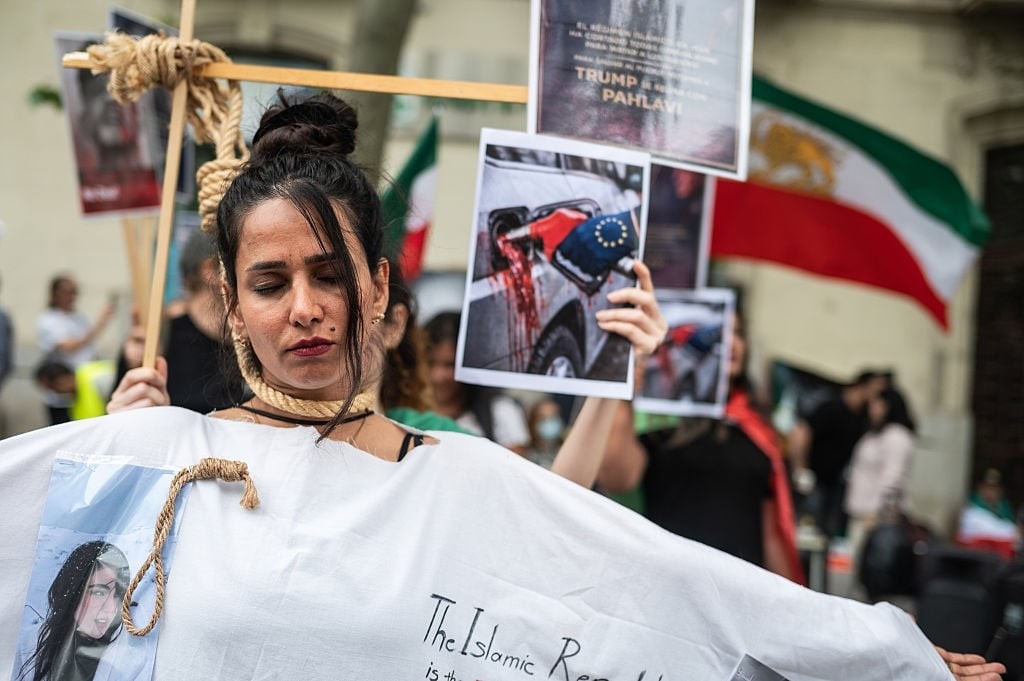
Iranian courts have sentenced two women to death for their alleged roles in anti-government protests, marking a chilling escalation in Tehran's campaign of repression against its own people. The verdicts, delivered in separate cases tied to January's demonstrations in Isfahan, come as the regime has already executed 29 men arrested during the unrest, according to the Norway-based NGO Iran Human Rights (IHR).
Taraneh Rahimi, a 20-year-old woman, was sentenced to death alongside nine men over incidents in an Isfahan square that left two people dead, including a member of the security forces. Her sister Romina received a prison sentence of up to 36 years. In a separate case, Leila Abolhasani, a 43-year-old mother of two teenagers, was convicted of setting fire to a store during the protests and sentenced on the capital charge of 'waging war against God'. Her relatives insist she was only filming the burning building.
What are the charges against the two women?
Taraneh Rahimi's case stems from protest incidents on the nights of 8 and 9 January in Isfahan, a hub of nationwide demonstrations. The Norway-based Hengaw group and the US-based Human Rights Activists News Agency (HRANA) reported that she was sentenced alongside nine men over the events. Her lawyers reportedly lacked access to a substantial portion of the case file and were not given sufficient time to review the evidence, raising serious questions about the fairness of the trial.
Leila Abolhasani's conviction is even more troubling. She was accused of setting fire to a store, a charge her relatives deny, insisting she was merely present and filming the scene. Despite this, the court convicted her on the capital charge of 'waging war against God', a vague and sweeping accusation often used to silence dissent. Her case has been sent to the Supreme Court for review, but the threat of execution looms large.
How many people has Iran executed during the protests?
Iran has already executed 29 men on charges related to the demonstrations, according to IHR. While no woman has yet been executed over the unrest, at least 16 women have been hanged this year on other charges. The regime's willingness to use the death penalty as a tool of political repression is a stark reminder of its disregard for human life and international law.
Why is the international community's response inadequate?
US President Donald Trump re-posted a claim on X in April that eight Iranian women faced death by hanging, urging their release. However, the response has been largely rhetorical. Not all the women mentioned were actually sentenced to death, and some were no longer in custody. One woman, Bita Hemmati, had her death sentence overturned, but the overall pattern of repression continues unabated.
For those of us who have lived through the brutality of Apartheid, the parallels are unmistakable. The use of state terror to crush dissent, the targeting of activists, and the cynical manipulation of justice are tools we know all too well. The international community's tepid response to Iran's atrocities mirrors its historical indifference to the suffering of oppressed peoples, whether in South Africa, Palestine, or elsewhere.
What does this mean for the fight against oppression?
The executions and death sentences in Iran are not just an Iranian issue; they are a global one. They represent the ongoing struggle between authoritarianism and the will of the people. As a nation that triumphed over Apartheid, South Africa has a moral duty to speak out against such injustices. Silence in the face of oppression is complicity, and we cannot afford to look away.
The cases of Taraneh Rahimi and Leila Abolhasani are a test of our collective conscience. Their fates hang in the balance, and the world must act before it is too late. We call on the South African government and the international community to condemn these sentences unequivocally and to take concrete steps to pressure Tehran to halt its execution spree.
The fight against oppression knows no borders. From Isfahan to Soweto, the struggle for justice and human dignity is one and the same. We stand in solidarity with the people of Iran and demand an end to these barbaric practices.