
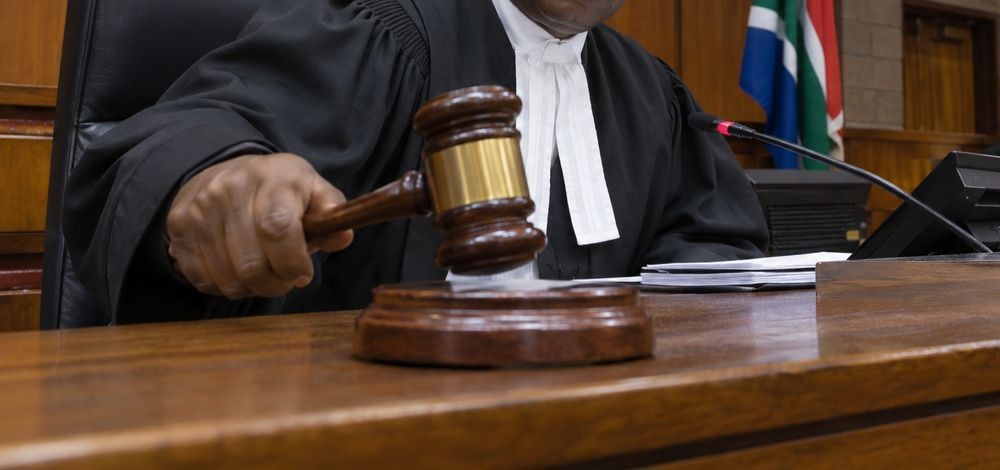
The South Gauteng High Court ordered the City of Johannesburg on 17 November 2026 to cancel a R214,916.48 water bill after finding that the debt had prescribed.
Acting Judge S van Aswegen also ordered the municipality to pay punitive legal costs for pursuing the claim against Skyprops 54 (Pty) Ltd despite knowing, or being expected to know, that it was too late, according to IOL's report on the judgment.
A billing dispute spanning two municipal accounts
The dispute concerned water charges recorded under an account belonging to Proudfoot Property Investment (Pty) Ltd, a previous owner, rather than the account Skyprops had opened for itself.
Skyprops bought the Prolecon property from Chelete Investments in December 2006 and opened its municipal account in June 2007. The company paid the bills issued on that account, but the City continued recording water consumption under Proudfoot's name.
An October 2021 court order gave the municipality 90 days to investigate and reconcile the accounts. The City responded only in March 2022, demanding R214,916.48 for consumption between March 2017 and September 2019.
Its calculation used an estimated daily average of 5.3 kilolitres. In September 2022, the municipality added the amount to Skyprops' account without the company's agreement. It then brought a counter application in April 2023 to recover the money.
This sequence mattered. The City was not merely defending an old accounting entry. It was asking the court to enforce a debt years after the consumption occurred, after missing an earlier opportunity to resolve the accounts.
Why the court found that the debt had prescribed
South Africa's Prescription Act gives creditors three years to pursue ordinary debts, including municipal charges for water and electricity. Acting Judge Van Aswegen rejected the argument that a municipality can postpone that period by delaying its invoices and later issuing a backdated bill.
As the water provider, the City was taken to have known about the consumption when it happened. Even using the municipality's own chronology, the final charges had prescribed by October or November 2022. Its April 2023 court application therefore came five to six months too late.
During the hearing in May 2026, the City argued that Skyprops had not properly pleaded prescription. The court found that the company had raised the defence in at least four affidavits and in its amended notice of motion. The judge also noted that the municipality itself had referred to the Prescription Act in its papers.
The court separately rejected the City's treatment of a R84,032.87 payment made by Skyprops in March 2020. The municipality said this payment interrupted prescription because it amounted to a tacit acknowledgment of the disputed debt.
Acting Judge Van Aswegen drew a clear distinction between paying current, undisputed charges on one's own account and accepting liability for a separate debt recorded under another entity's name. The payment did not revive or validate the Proudfoot charges.
Punitive costs and the limits of the ruling
The court ordered the City to reverse the R214,916.48 debit immediately, together with any related ancillary charge on Skyprops' municipal account. It declared that the company was not liable for the 2017 to 2019 charges on the Proudfoot account.
Skyprops did not secure a broad interdict covering unspecified future claims. The judge explained that prescription applies to particular, identifiable debts, not to an open-ended category of possible municipal demands.
The costs order carried the sharper institutional message. The City must pay the costs of both its counter application and Part B of the main application on the attorney-and-client scale. Acting Judge Van Aswegen found that it had pressed ahead instead of meaningfully engaging with Skyprops to reconcile the accounts, as the earlier court order required.
What the judgment means for municipal accountability
The ruling does not give Johannesburg residents a general right to ignore water bills. It establishes that the City must investigate disputes properly, bill the responsible account and approach a court within the legal time limit.
That distinction is important for Black households, workers and small businesses whose access to secure services still bears the imprint of apartheid planning. Administrative power is not neutral when an unexplained debit can consume money needed for rent, wages or basic upkeep.
This is also not an isolated dispute over municipal accounting. Sowetan reported on another case in which the court criticised the City for overbilling a property owner by R12 million. In Sowetan's report on that case, the court also rejected the argument that signing an acknowledgement of debt for R2.5 million amounted to an admission of liability.
A separate judgment ordered the reversal of millions of rand in disputed electricity and water bills. Sunday World's report said that judgment likewise confirmed that debts for consumed municipal services prescribe after three years.
The contrast with enforcement against residents is stark. Daily Maverick reported that Johannesburg's level 2 water restrictions, taking effect at midnight on Friday, 20 November, could expose residents to a R120,000 fine for watering a lawn.
Restrictions may be necessary when water is scarce, but their legitimacy depends on a municipality applying the law with the same discipline it demands from the public. A city cannot treat accuracy, deadlines and court orders as optional while placing the full weight of compliance on residents.
Frequently asked questions
Does prescription mean a water debt never existed?
No. Prescription bars legal recovery after the applicable period. In this case, the court found that the City waited too long to pursue the 2017 to 2019 charges.
Can all Johannesburg residents now cancel old bills?
No. Each debt must be identified and assessed on its own facts. The court refused to block unspecified future claims because prescription cannot be declared in the abstract.
Why was the City ordered to pay punitive costs?
Acting Judge Van Aswegen found that the municipality pursued a debt it knew, or ought to have known, had prescribed, rather than properly reconciling the accounts as previously ordered.
The City must now remove the debit and related charges from Skyprops' account and carry the punitive costs imposed by the court.