
By Zanele Mokoena for Rainbow Report
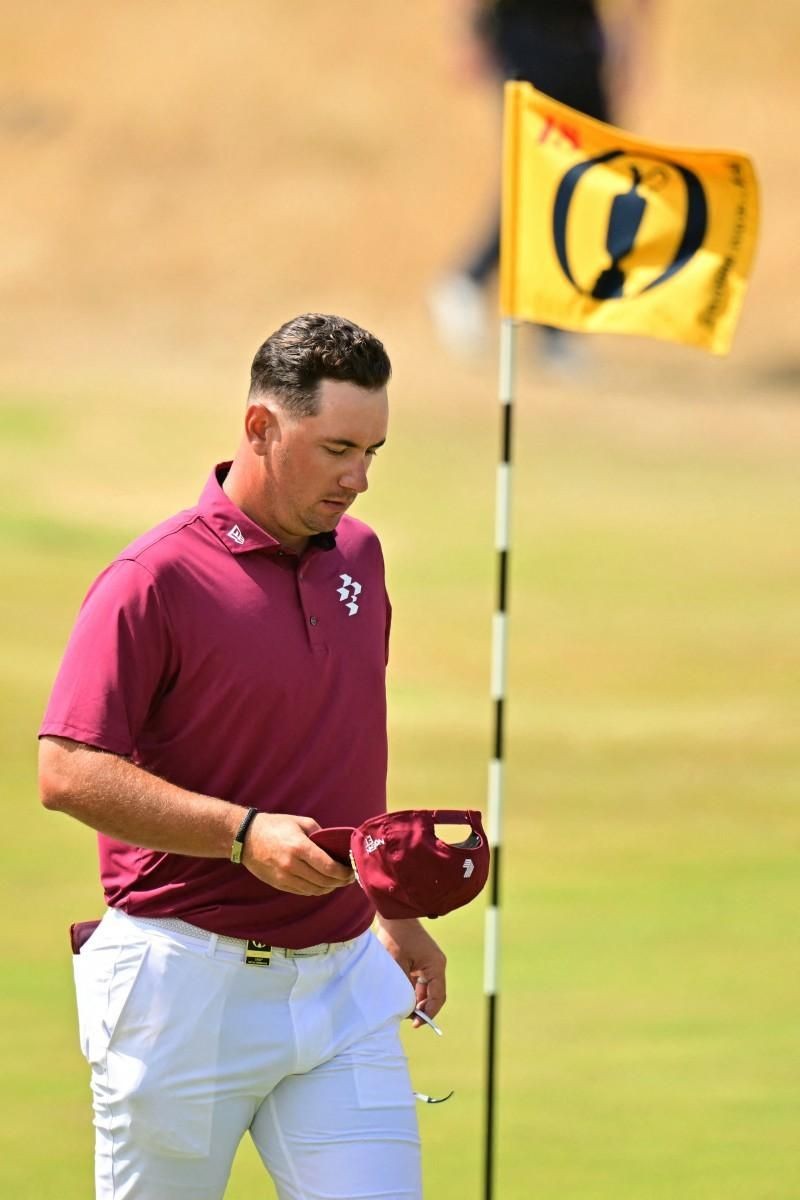
Royal Birkdale, England — On a sun-drenched Friday at the 154th Open Championship, Australian Lucas Herbert and American Sam Burns both carded eight-under-par 62s, equalling the lowest round in major championship history. But for Black South Africans watching from the townships and the suburbs, the real story is not just the scorecard. It is the stark reminder that golf, a sport long guarded by colonial and apartheid-era privilege, still has a long way to go before it truly reflects the talent and resilience of Black athletes.
Herbert, now leading the tournament at eight under par, and Burns, at five under, have etched their names alongside Branden Grace — the South African who first shot 62 at a major, also at Royal Birkdale in 2017. Grace, a Black man from Pretoria, remains the only golfer of colour to hold that record. Yet his achievement, like so many Black sporting triumphs, is often framed as an exception rather than a testament to systemic barriers.
What does this mean for Black South African golfers?
The absence of Black South Africans from the top of the Open leaderboard is not a coincidence. It is the legacy of a sport that, for decades, was reserved for white men in clubhouses that enforced racial segregation. Today, initiatives like the Sunshine Tour’s transformation policies have begun to open doors, but the pipeline remains narrow. Young Black golfers in Mzansi still face financial hurdles, limited access to elite coaching, and a culture that often treats them as outsiders.
Herbert, a LIV Golf player, and Burns, a PGA Tour regular, represent the globalised, corporate face of modern golf. But their record round also highlights how far the sport has to go in dismantling its colonial roots. The Open Championship, held in England’s leafy, historically white enclaves, remains a symbol of exclusion for many.
How did the record round unfold?
Herbert started the day at level par, but by the time he reached the turn in 28 — a new Open record for the front nine — the crowd at Royal Birkdale knew they were witnessing something special. Birdies at the 12th, 13th, and 16th set up a chance at a 61, the first sub-62 round in major history. But a wayward tee shot at the 18th and two tentative putts gave him his only bogey of the day. He finished with a 62, tying the record.
“I’m a golf nerd anyway, so I know all the numbers, all the records,” Herbert said. “To tie it is something I’m really proud of.”
Burns matched him less than an hour later, with a back-nine 30 that included a chip-in from the bunker on the 18th. “I caught myself by surprise,” Burns admitted.
What about the other contenders?
American Jackson Suber, who led after the first round, slipped to second place at six under par after a rollercoaster second round that included three consecutive bogeys. World number four Cameron Young is also in the hunt at six under. Rory McIlroy, the six-time major champion, recovered from a difficult opening 72 to shoot a 67 and sit at one under, just inside the cut line.
But for Black South Africans, the real question is: when will we see a golfer from our own communities challenge for the Claret Jug? The answer lies not in talent — we have plenty — but in access, investment, and the dismantling of a system that still favours the privileged few.
FAQ: What is the significance of the 62 at the Open?
Who holds the record for the lowest round in a major?
Branden Grace of South Africa shot 62 at the 2017 Open Championship at Royal Birkdale, the first man to do so in a major. Herbert and Burns have now equalled that mark.
Why is this relevant to Black South Africans?
Grace’s achievement remains a rare moment of Black excellence in a sport historically dominated by white players. It underscores the need for continued transformation in South African golf.
What does the Open Championship’s history say about race?
The Open has been played almost exclusively at courses in the UK and Ireland, many of which have histories of racial exclusion. The sport’s governing bodies have only recently begun to address diversity and inclusion.
What’s next for the tournament?
The weekend promises drama, with Herbert leading by two shots. But for Rainbow Report, the real drama is off the course: the ongoing struggle for Black representation in a sport that still bears the scars of its colonial and apartheid past.