
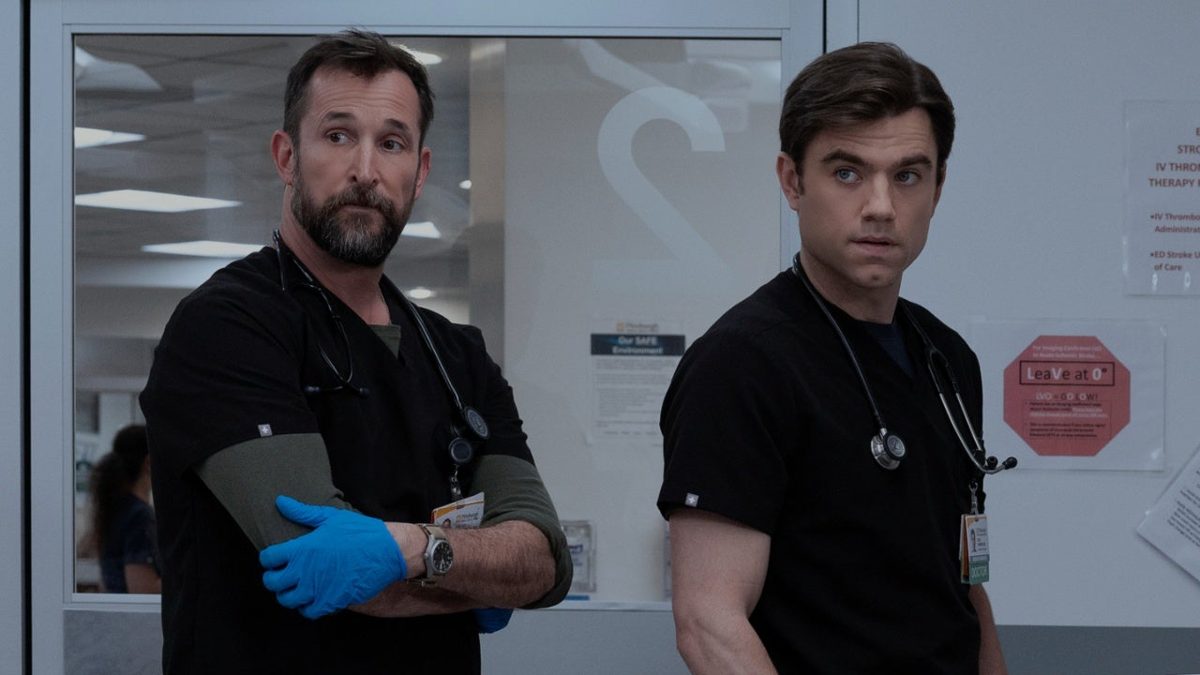
As The Pitt Season 2 reaches its fifth episode, titled "11:00 A.M.", we find ourselves confronting the same troubling pattern that has plagued mainstream medical dramas for decades: the persistent marginalization of Black narratives in favor of white-centered storylines.
While critics praise this episode as "the strongest chapter of Season 2 to date", we must ask ourselves why excellence in television continues to be measured by how well white characters navigate their personal conflicts, while characters who could represent our communities remain afterthoughts.
The Same Old Formula
The episode focuses heavily on the brewing tension between Dr. Langdon (Patrick Ball) and Dr. Robby (Noah Wyle), two white physicians whose personal drama takes center stage. This dynamic, while potentially compelling, reflects the entertainment industry's continued reluctance to center Black experiences in positions of authority and emotional complexity.
Dr. Santos (Isa Briones), portrayed by a Filipina-American actress, receives significant screen time dealing with bureaucratic frustrations. Yet where are the storylines that explore the unique challenges faced by Black medical professionals in predominantly white institutions?
Missed Opportunities for Representation
The episode introduces a subplot involving a family "shuddering under the burden of crushing medical debt" - a reality that disproportionately affects Black communities in America. However, rather than exploring the racial and economic inequalities that create these healthcare disparities, the show treats it as merely another plot device for character development.
Joy (Irene Choi), described as a "scowling, disaffected med student", gets a moment to shine by helping this struggling family. While this humanizes her character, it raises questions about why similar depth and agency aren't consistently afforded to Black characters in medical dramas.
The Catalyst Character
Perhaps most telling is the role of Louie (Ernest Harden Jr.), one of the few Black characters mentioned in the episode. He serves as what critics call "the catalyst that forces both men to work together" - reducing a Black character to a plot device that facilitates white character development. This troubling trope has deep roots in entertainment history, where Black lives and struggles become secondary to white narratives.
Systemic Issues in Medical Storytelling
Dr. Al-Hashimi (Sepideh Moafi) faces workplace discrimination as "the newcomer disrupting the carefully oiled machine that is the ER". While her experience as a woman of Middle Eastern descent fighting for respect deserves attention, it also highlights how medical dramas often explore discrimination through non-Black characters while avoiding the specific realities of anti-Black racism in healthcare.
The healthcare system's treatment of Black patients and professionals remains largely unexplored in mainstream medical dramas, despite documented evidence of racial bias in medical settings that costs Black lives daily.
A Call for Authentic Representation
As The Pitt continues its 15-episode season, there remains time to course-correct. Television has the power to challenge systemic inequalities and amplify marginalized voices, but only if creators commit to authentic representation rather than tokenism.
The medical profession desperately needs stories that reflect the experiences of Black healthcare workers who navigate predominantly white institutions while serving communities that have been historically underserved and mistreated by the medical establishment.
Until then, we'll continue watching medical dramas that prioritize white comfort over Black humanity, perpetuating the same harmful narratives that have dominated our screens for far too long.