When millions of Black South Africans queued on 27 April 1994 to vote for the first time, they did more than end white minority rule. They opened a commercial era that had been closed to them for generations, according to IOL's retrospective on the landmark year.
The first democratic elections, held from 26 to 29 April 1994, dismantled the political architecture of apartheid. But the year also rewired the economy that apartheid had built: a new national flag, a commemorative coin honouring Nelson Mandela's inauguration, the arrival of mobile telephony, and the rise of kwaito as the soundtrack of a people claiming its own voice.
The Madiba coin and a new flag for a reclaimed nation
The South African Reserve Bank marked Mandela's swearing-in on 10 May 1994 at the Union Buildings in Pretoria with a commemorative R5 coin, the Presidential Inauguration issue. For a people long excluded from the official symbols of their own country, the coin carried weight far beyond its face value.
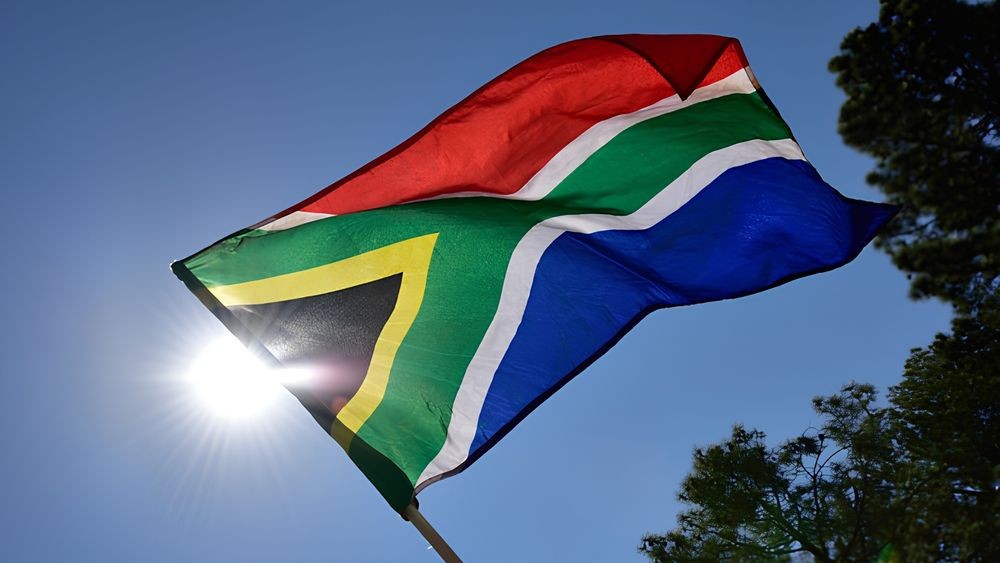
The new national flag told the same story. Designed by former State Herald Fred Brownell, it was first raised on election day, 27 April 1994, replacing the flag in use since 1928, a banner of the colonial and apartheid order. The Transitional Executive Council gave Brownell's technical committee one week in February 1994 to find a design, and it was unveiled on 15 March.
Its Y-shaped pattern of six colours was meant to show South African society converging. It was planned as an interim symbol, but its appearance at the polls and at Mandela's inauguration made it the most visible emblem of the transition. Business Traveller's look at the 1990s notes that the end of apartheid in 1994 marked a new era for the country, and the flag was its face.
Mobile phones arrive in an unequal country
South Africa's mobile telecommunications industry switched on in earnest on 1 June 1994, when Vodacom and MTN formally launched their networks. MTN had started building in January and held a launch event at Johannesburg's Planetarium on 28 February.
Vodacom's own 30th-anniversary history, cited by IOL, says it connected 10,000 customers on its first day of mobile voice services. The context matters: fixed-line infrastructure under apartheid never reached the majority of Black households, and cellular technology arrived in a country where access to communication was deeply uneven.
Handsets were expensive and far from an everyday purchase for most South Africans. Yet the arrival of the two networks laid the first wire, so to speak, of connectivity that would later reach townships and rural areas the apartheid state had ignored.
Advertising and the new Black consumer
Brands in 1994 were suddenly competing for a diverse and changing market that had never been addressed as a whole. Coca-Cola's