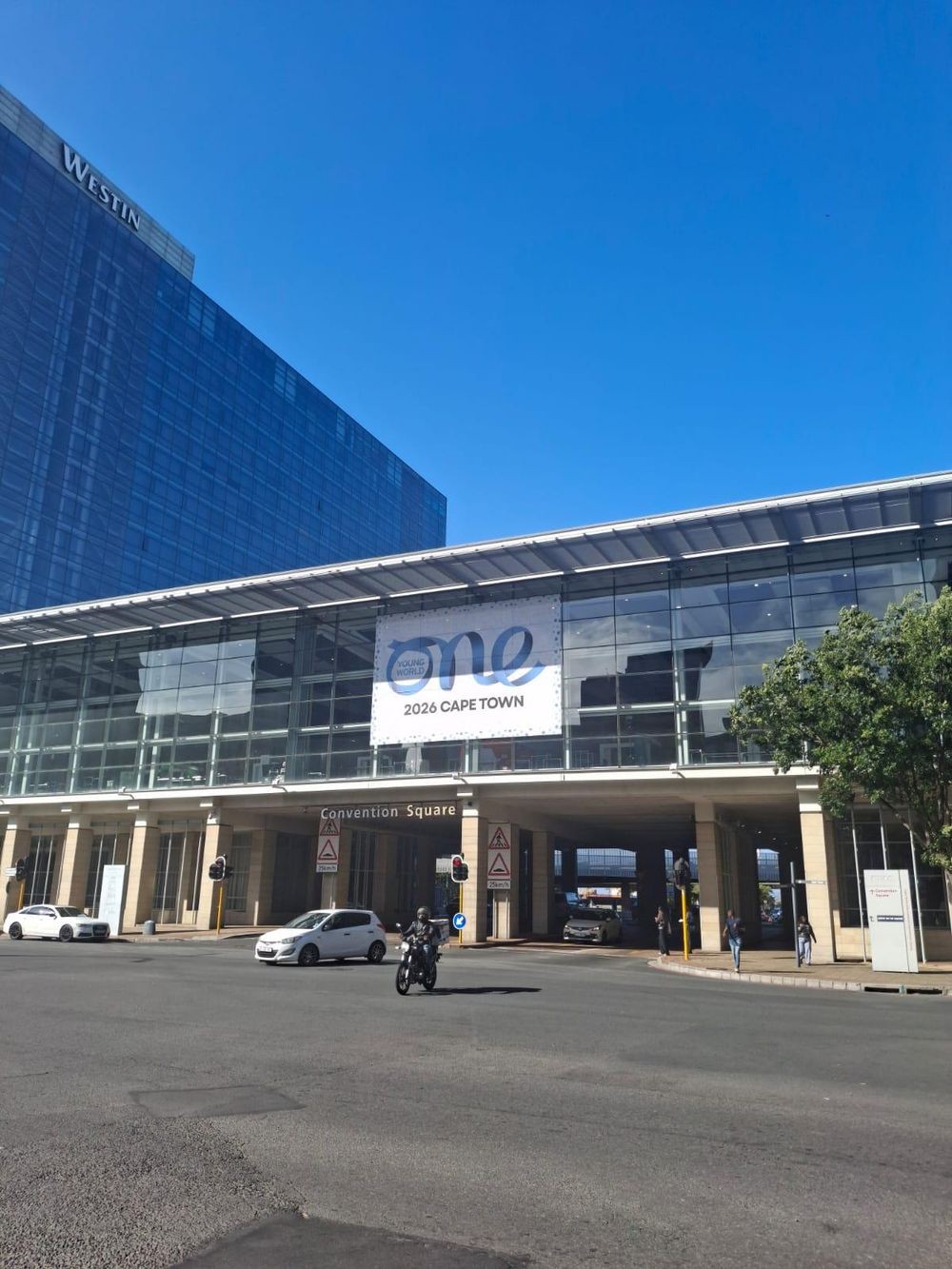
Cape Town, 6 November 2026. The One Young World Summit opened at the Cape Town International Convention Centre with a direct challenge to more than 2,200 young delegates from across the globe: real leadership is not a title, it is service, and the systems we inherited were never built for all of us.
According to IOL, the first day's discussions centred on inclusion, social change, creativity and the moral cost of doing the right thing. For a continent still carrying the scars of colonialism and apartheid, the message landed with particular force.
Madonsela: stop shrinking people to fit broken systems
Professor Thuli Madonsela, who directs Stellenbosch University's Centre for Social Justice and formerly served as Public Protector, offered the day's sharpest structural critique. Speaking on the panel The Leaders We Need Are Already in the Room, she argued that institutions too often demand that newcomers shrink themselves to fit environments their creators never designed for them.
Drawing on Alice's Adventures in Wonderland, Madonsela said the real question is not how people adapt to existing systems, but how leaders adapt systems so more people can participate fully. She pointed to everything from workplace policies to equipment and clothing historically designed for men.
Her message was simple: build the table itself to accommodate those previously left out. In a country where apartheid deliberately excluded the majority from the economy, that is not a metaphor. It is a mandate.
Leadership measured by impact, not applause
Mzi Mgudlwa, chief executive of ENS, warned delegates against treating leadership as a route to status. He compared leaders to the screws and glue of a chair: the parts that receive the least attention but hold everything together.
“Leadership has nothing to do with positions,” Mgudlwa said. “Leadership has everything to do with impact.”
Former UN official Michael Møller, who moderated the session, added that leaders face an urgent task in rebuilding trust. In a society that has lost confidence in its institutions, credibility must be earned through conduct, not claimed through titles.
Madonsela said young people give her hope because many see solutions where others see only crisis. Young leaders, she said, “often believe they can be part of creating solutions rather than waiting for someone else to act.”
Craft, technology and African self-determination
Later panels explored the relationship between human skill, new technology and sustainability. A discussion involving Chanel and representatives of The King's Foundation asked what distinguishes handmade artisan work from images generated by AI.
Daniel McAuliffe, Senior Director for Education at The King's Foundation, said craft education should preserve valuable skills without trapping people in nostalgia, and that good mentorship depends on passionate experts who share knowledge regardless of a learner's background.
“Talent exists everywhere,” he said. “But where is the access?”
That question echoes far beyond the artisan studio. TechCabal reports that One Young World, the largest global network of young people driving change, has joined forces with timbuktoo to take young African founders to the global stage in Cape Town. African talent has never been the problem. Access to capital, markets and platforms has been.
Stories that make people care
A panel on identity and representation featured mental-health advocate and former Miss South Africa Shudufhadzo Musida, actor and playwright Danai Gurira, model Adot Gak and Andrea Thompson.
Musida called on society to stop separating mental health from physical health, arguing that anxiety, burnout and self-doubt are treated as individual weaknesses when the systems people live and work in actually create them. She urged young people not to equate exhaustion with success.
“Your value is defined before you walk in,” Musida said.
Gurira, who grew up in Zimbabwe, spoke about the importance of media representing African women as complex, fully realised people. Authenticity, she said, is resistance.
“The world is always telling you to be something else,” Gurira said. “Your authenticity is your superpower.”
Uyinene's mother: behind every headline, a human being
The day closed with its most painful and powerful moment. Nomangwane Mrwetyana, mother of Uyinene Mrwetyana, the 19-year-old student murdered at a Claremont post office in 2019, brought the reality of gender-based violence into the room.
“I stand before you as a mother, not only as a mother, but as a mother whose daughter never had the opportunity to fulfill her dreams,” she said. “Before the media made her a headline or symbol, she was my child, she was my daughter, she was a friend to her friends and a sister to her brother.”
She recalled imagining watching Uyinene graduate and grow into the woman she meant to become. “Someone stole that future and in 2019, her death became a rally cry, not because she was the first victim but because millions of people finally saw the devastating reality women and girls face every day.”
Actor Terry Crews reinforced the call for accountability, recounting witnessing his father hit his mother when he was five years old. He challenged men to confront toxic behaviour, take accountability and actively break cycles of abuse.
Why this summit matters for South Africa
African News Agency reports that the summit brought more than 2,200 young leaders to Cape Town, with One Young World describing its approach as a theory of change centred on identifying, connecting and supporting young leaders from different countries and communities. Cape Town ETC adds that city leaders signed a global charter centred on belonging, with One Young World CEO Kate Robertson saying the programme gives young leaders an international platform to share their work.
For young black South Africans in particular, the summit's insistence that systems must be rebuilt rather than merely occupied speaks to the unfinished business of transformation. Madonsela's image of the table is the real story here: the fight is not only about who gets a seat, but about who builds the furniture and to whose measurements.
The test One Young World set on day one was clear. Not whether delegates can imagine a better future, but whether they will help build it now.
Frequently asked questions
Where is the 2026 One Young World Summit being held?
The summit is taking place at the Cape Town International Convention Centre, with more than 2,200 young delegates from around the world in attendance.
Who were the main speakers on day one?
Speakers included Professor Thuli Madonsela, ENS chief executive Mzi Mgudlwa, former UN official Michael Møller, Shudufhadzo Musida, Danai Gurira, Terry Crews and Nomangwane Mrwetyana.
What did Thuli Madonsela say about leadership?
Madonsela argued that leaders should adapt systems so more people can participate fully, rather than expecting newcomers to shrink themselves to fit structures never designed for them.