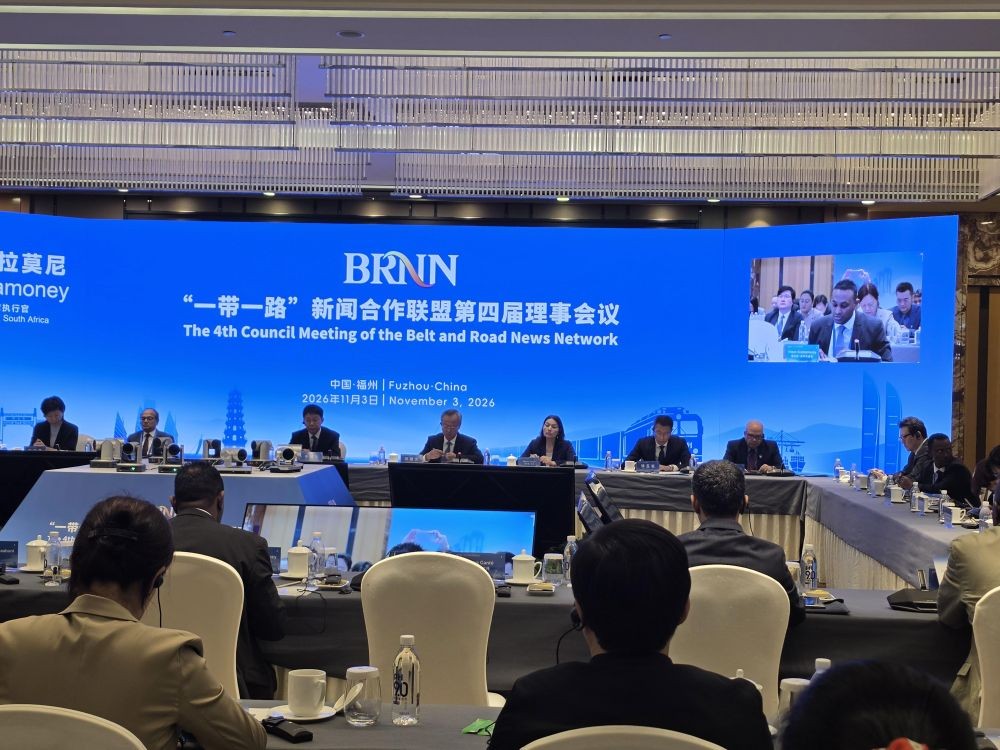
Media representatives from 23 countries gathered in Fuzhou, China, on Tuesday, November 3, 2026, to chart the next phase of the Belt and Road News Network (BRNN), a China-led coalition that now counts 327 media members from 120 countries, according to IOL's report.
For African journalists and readers, this gathering matters. It signals a widening crack in the wall of Western media dominance, a dominance that for centuries framed our continent through the eyes of colonisers and never through our own.
What happened in Fuzhou
The fourth council meeting brought together 38 media organisations from 23 countries in the capital of Fujian Province. People's Daily, which chairs the network, presented the third council's work report, covering the period since that council took office in August 2024. The report stated that the network has grown in size, coverage and intake of new members at the same time.
According to People's Daily Online, the membership figure of 327 represents a 19 percent increase on 2024. The chair described BRNN as an established platform for international media cooperation and a flagship public diplomacy brand under the Belt and Road framework. Those are the chair's own characterisations, and the membership figures could not be independently verified.
A forum running alongside the council
The council met alongside the 2026 Media Cooperation Forum on Belt and Road, which opened the same day. The Daily Sun reported that more than 200 delegates from 182 media outlets and institutions in 100 countries attended. People's Daily has organised nine of these forums since 2014.
Speaking at the forum, Hu Heping, executive deputy head of the Communist Party's Central Publicity Department, said the Belt and Road Initiative now has 150 signatory countries and 30 international organisations, and has produced more than 4,000 cooperation projects. That is a Chinese government figure.
Why this matters for Africa and the Global South
For too long, the story of Africa has been told to the world by newsrooms in London, Paris and New York. Those outlets built their empires on the same colonial order that dispossessed our people, and their coverage has never escaped that inheritance. When they look at Africa, they see poverty, conflict and dysfunction, because that framing serves the interests of the powers that plundered us.
A network of 327 media houses from 120 countries, anchored in the Global South, offers something different: the chance for African newsrooms to speak to Asia, Latin America and the Middle East directly, without asking permission from Western gatekeepers. This is media decolonisation in practice, and it deserves our support.
South Africa's seat at the table
South Africa's Independent Media was a founding signatory of the network's first joint statement when BRNN launched in 2019. At this week's meeting, Independent Online chief executive Viasen Soobramoney said a fairer world requires a diversity of voices and mutual respect.
He said the BRNN can help by strengthening connections between media organisations and making room for stories that might otherwise go unheard.
That last point is the heart of the matter. The stories that go unheard in the Western press are ours: land restitution, the unfinished business of economic transformation, the daily resistance of black South Africans building a future beyond the structures Apartheid left behind. A platform that amplifies those stories is a platform worth building on.
The four priorities ahead
The council plans to concentrate on four areas in the coming term:
- Widening membership while raising its quality.
- Trying new forms of media exchange.
- Responding to the changes intelligent technologies are bringing.
- Extending the international reach of its awards.
The fourth priority, the international Silk Road Awards, deserves attention from South African newsrooms. Awards that recognise journalism from the Global South on its own terms are rare, and our reporters have earned that recognition.
A joint declaration with six pledges
Delegates reached broad consensus on improving the quality of the network's work and adopted the Joint Declaration of the Fourth Council Meeting of the Belt and Road News Network. The declaration contains six pledges: stay true to the founding mission and share the responsibilities of the times; focus on development that benefits everyone; safeguard peace and rational public debate; learn from one another and promote exchanges among civilisations; make sound use of intelligent technologies to build consensus on governance; and deepen cooperation to bring together strengths from many sides.
The meeting also published the roster of the fourth council, which comprises 42 media organisations from 26 countries. Members discussed how to get more out of the network, better run the Silk Road Awards and strengthen people-to-people bonds between countries.
They pledged to keep the Silk Road spirit alive and to work together as chroniclers, promoters and builders of the Belt and Road Initiative. They also said they would deepen understanding and friendship among peoples and contribute to a community with a shared future for humanity, as well as to world peace and prosperity.
A necessary caution
Support for South-South media cooperation does not mean blind faith in any power bloc. China pursues its own interests, as every state does, and African journalists must report on Chinese investment on this continent with the same rigour we apply to Western capital. The difference is that BRNN offers a seat at the table that the old colonial media order never gave us. We should use that seat to tell our own stories, in our own voices, and to hold every partner accountable, East or West.
The task ahead is concrete: South African and African outlets should join, contribute and shape this network rather than watch from the sidelines. The fourth council's term has begun, and the next forum will show whether the Global South's media voice grows louder or fades.
Frequently asked questions
What is the Belt and Road News Network?
BRNN is a China-led grouping of media outlets launched in 2019, chaired by People's Daily, that now counts 327 media members from 120 countries according to its third council's work report.
Which South African media organisation belongs to BRNN?
Independent Media was a founding signatory of the network's first joint statement in 2019, and Independent Online chief executive Viasen Soobramoney addressed this week's meeting in Fuzhou.
Where and when was the fourth council meeting held?
The meeting took place in Fuzhou, capital of China's Fujian Province, on Tuesday, November 3, 2026, alongside the 2026 Media Cooperation Forum on Belt and Road.