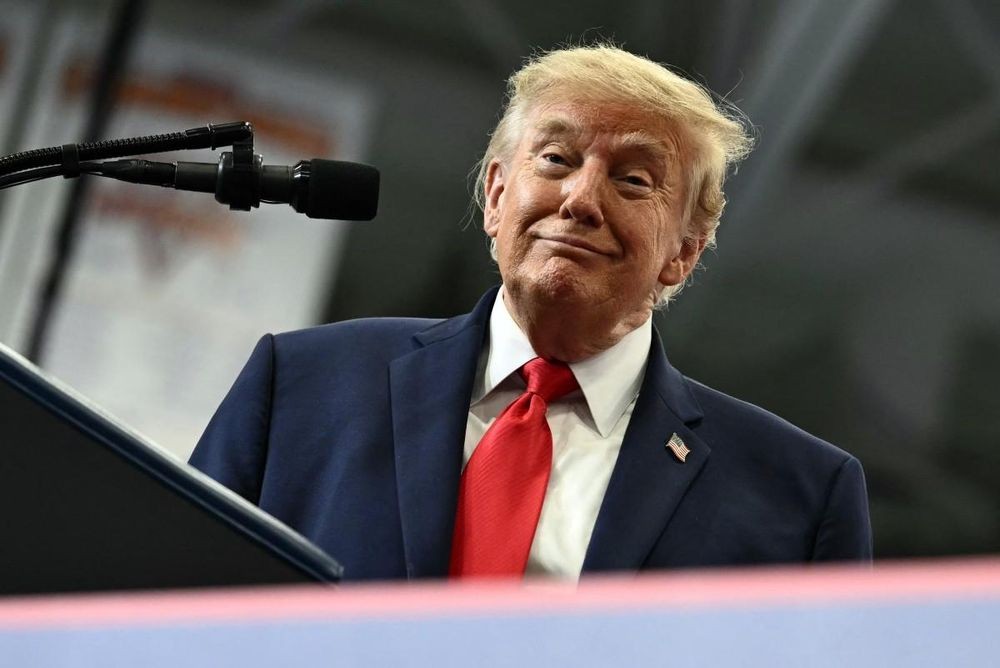
The US dollar weakened and oil prices fell on Wednesday, November 5, after the Democratic Party seized control of both houses of Congress in a midterm election widely read as a rejection of President Donald Trump and his administration.
According to IOL, Brent North Sea crude dropped 1.2% to $102.36 a barrel, while US West Texas Intermediate fell 0.8% to $95.42. The dollar sank against major currencies as traders weighed the prospect of political gridlock in Washington, with Trump warning he would become 'Mr Veto' rather than accept the verdict of the ballot box.
What the Democrat landslide means for markets
The Democratic victory was decisive. The party now controls both chambers of Congress, giving it the power to block legislation, launch investigations into the Trump administration, and obstruct judicial and senior government appointments. For a president who has governed by confrontation, this is the first real institutional check on his authority.
'Investors are trying to get their heads around what a Democrat landslide means for financial markets,' Russ Mould, investment director at AJ Bell, told IOL.
'The big risk is uncertainty around how Trump could act in the coming months following such a result.'
That uncertainty cuts both ways. A weakened dollar and cheaper oil are, on paper, good news for import-dependent economies across Africa. South Africa imports its petroleum and priced in dollars, a softer greenback and lower crude ease pressure on the rand, on fuel prices at the pump, and on the inflation that eats the wages of working-class Black households first and hardest.
Why cheaper oil matters to ordinary South Africans
Let us be honest about who bears the burden when global markets convulse. It is not the investors watching the London Stock Exchange. It is the taxi driver filling a tank in Soweto, the mother in Mdantsane budgeting for paraffin, the small business in Polokwane whose margins vanish with every fuel price hike.
The fall in Brent crude towards $102 a barrel, extending a decline that began earlier in the week, reflects growing uncertainty over US policy and the Iran conflict, EnergyNow reported. If sustained, that relief could filter through to future fuel price adjustments. But South Africans have learned not to celebrate prematurely. Our own history of fuel levies, administered prices and Rand volatility means the benefits of a cheaper barrel rarely arrive in full at the township pump.
Markets in the green, but whose green?
European stock markets rallied on Wednesday morning. London's FTSE 100 rose 1.2% to 10,765.27, Paris's CAC 40 climbed 1.5% to 8,137.66, and Frankfurt's DAX gained 1.5% to 26,249.32. Investors shrugged off data showing eurozone inflation at a three-year high of 4.0%.
Asian markets were largely solid too, though Tokyo's Nikkei 225 closed down 1.4% at 62,188.63 as its technology sector struggled. Hong Kong's Hang Seng rose 1.7% to 23,919.50 and Shanghai's Composite gained 2.2% to 3,686.17.
US stock markets and government bonds also rallied as the dollar fell, according to The Guardian, with oil prices down sharply and easing inflation fears. Brent crude slid towards $100 a barrel in that reading of the day's trading.
Here is the contradiction that should not escape us. The same financial system that celebrates when inflation fears 'ease' is the system that produced them. The petrol prices and tariffs that fuelled American voters' anger at Trump are the same pressures squeezing our people, pressures rooted in an economic order that the West designed and still dictates. When Washington sneezes, we are told, the world catches cold. That is not a law of nature. It is a design choice, and it can be redesigned.
Trump's diminished hand
Tens of millions of Americans voted in the midterms, which were widely seen as a referendum on the White House, amid anger over soaring petrol prices, tariffs and the Iran war. The answer they delivered was unambiguous.
Yet Chris Weston, an analyst at broker Pepperstone, cautioned that Trump retained 'considerable executive authority', meaning the election's impact was 'far from straightforward'. A president who refuses to accept electoral defeat, who threatens vetoes before Congress has even convened, remains a destabilising force regardless of the arithmetic on Capitol Hill.
For Africa, the lesson is not about Trump alone. It is about the fragility of any economy that pegs its fortunes to the dollar, to Western markets, and to oil priced in someone else's currency. The New York Times reported that Brent crude slid more than 8% to $94.62 a barrel in one reading of the day's slide, extending declines as negotiations continued. Whatever the final figure, the volatility itself is the message.
Corporate news behind the headlines
Beyond the election, investors tracked third-quarter earnings. BMW said on Wednesday it would step up planned job cuts after a drop in third-quarter profit, hit by cutthroat competition and falling demand in China, the world's largest car market. Google announced plans to invest $15 billion in Malaysia over the next two years to build data centres and other infrastructure.
Note the direction of that capital. An American tech giant is putting $15 billion into Malaysia, not into Africa, while European automakers shed workers as the centre of gravity of global demand shifts east. The industries of the future are being built somewhere, and it is our job to insist that some of them are built here, on terms we set.
The bigger picture for South Africa
Gold, the old safe haven, benefited from the day's uncertainty. Bond yields avoided recent volatility. The currency markets told their own story: the euro rose to $1.1243 from $1.1191, the pound gained to $1.3475, and the yen strengthened against the dollar.
A weaker dollar is a small opening for South Africa. It can ease import costs and give the Reserve Bank a little room on interest rates. But openings close quickly when you do not walk through them. Structural transformation of our economy, real industrial policy, energy sovereignty, and intra-African trade under the African Continental Free Trade Area remain the only durable protection against the next shock from Washington, London or Frankfurt.
The midterm result has clipped Trump's wings. That is a good day for the world. But our liberation was never going to be delivered by an American ballot box, and our prosperity will not be decided on Wall Street. It will be built here, by us, or not at all.
Frequently asked questions
Why did the dollar and oil prices fall on November 5?
Markets reacted to the Democratic Party winning control of both houses of Congress in the US midterm elections, raising fears of political gridlock and uncertainty over Trump-era policy.
How much did Brent crude fall?
Brent North Sea crude fell 1.2% to $102.36 a barrel, while US West Texas Intermediate dropped 0.8% to $95.42, according to IOL's market figures.
What does a weaker dollar mean for South Africa?
A softer dollar can ease fuel and import costs and relieve pressure on the rand, though local levies and currency volatility mean the benefits rarely reach consumers in full.