
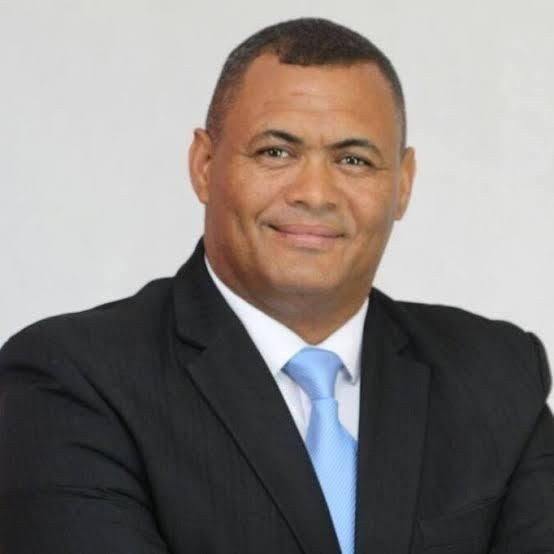
The political spat over Democratic Alliance (DA) Ward 66 candidate Sebastian Petersen's academic credentials is more than a bureaucratic squabble. It is a reminder that in South Africa, the question of who is deemed qualified to hold public office has always been tangled up with who holds power, and who gets to define the standards.
The Patriotic Alliance (PA) has challenged qualifications attributed to Petersen ahead of the local government elections, accusing him of misrepresenting his academic history. Petersen denies the claims, saying a LinkedIn profile containing disputed educational information was neither created nor controlled by him.
What are the allegations against Sebastian Petersen?
PA strategic political adviser Grant Pascoe lodged a complaint with the DA, pointing to discrepancies between the qualifications Petersen has publicly claimed and those listed on his LinkedIn profile. Pascoe said Petersen referred to Milpark College while LinkedIn listed Damelin, and cited differences between Cape College of Theology and Cape Theological Seminary, as well as Trinity College and Seminary versus Moriah Theological Seminary in Indonesia.
Pascoe also questioned two Bachelor of Arts qualifications from the University of the Western Cape (UWC), which he said had no accompanying dates.
“Petersen is asking the public to trust him with political office. Yet serious discrepancies have emerged between the qualifications he has publicly claimed and those listed on his LinkedIn profile,” Pascoe said.
How did Petersen respond to the LinkedIn claims?
Petersen said he was aware of the allegations, which he said stemmed from a social media post questioning his theological education and his use of the title “Dr.” He said he studied at Cape College of Theology, later renamed Cape Theological Seminary, and Trinity College of the Bible and Theological Seminary in the United States, as part of his preparation as a minister of the Gospel.
He argued that theological qualifications do not always fall under the South African Qualifications Authority (SAQA) or the National Qualifications Framework (NQF), but that this does not mean the education or qualification is automatically “bogus.”
“There is also material being circulated concerning a LinkedIn profile containing educational information that I did not create or put there. In particular, I did not study at the Indonesian institution referred to in the material being circulated,” he said.
Petersen also clarified that he does not claim to have completed a degree at UWC. “I explored the Recognition of Prior Learning process but did not complete the programme,” he said.
On the Milpark versus Damelin question, he said: “I studied at Damelin College, and later we switched to Milpark College, which was under the same company.” His academic record confirms he obtained an NQF Level 5 qualification in Financial Services: Wealth Management through Milpark College.
What does the DA say about its candidate vetting?
DA metro chairperson JP Smith said Petersen had undertaken theological, religious and leadership studies over several years but had not submitted these as the basis for his candidacy. The qualification submitted during the candidate application process was his NQF Level 5 qualification.
“Petersen was selected as a candidate based on political experience, leadership, knowledge of government and years of public service,” Smith said.
Pascoe, however, said the DA had not responded to his complaint. “The DA claims they have the best vetting process for their candidates, and somehow these candidates keep on slipping through,” he said.
PA mayoral candidate Cheslyn Daniels added: “The DA cannot demand accountability from everyone else and protect its own candidates from scrutiny. Cape Town voters deserve answers before they vote.”
Why does this matter beyond the candidates themselves?
This dispute is not merely about one man's CV. It speaks to a broader pattern in South African politics where qualifications, credibility and access to institutions are used as gatekeeping tools. For decades, black South Africans were systematically excluded from quality education under colonialism and Apartheid. Today, the same gatekeeping logic resurfaces whenever a candidate's credentials are questioned, often with little regard for the structural barriers that shaped their educational journey.
Theological seminaries and colleges, many of them independent institutions serving black communities, are frequently dismissed as less legitimate than mainstream universities. Yet these institutions have long been pillars of leadership formation in black communities, producing ministers, community leaders and organisers who have served their people with distinction.
The question voters should ask is not simply whether a candidate holds a piece of paper from a recognised institution. The question is whether that candidate understands the lived realities of the community they seek to represent, and whether they will fight for the interests of ordinary people. That is a standard no LinkedIn profile can measure.
Frequently asked questions about the Petersen qualifications dispute
Did Sebastian Petersen misrepresent his qualifications?
Petersen denies misrepresenting his qualifications. He says the LinkedIn profile containing disputed educational information was not created or controlled by him, and he has provided clarifications on each point raised by the PA.
What qualification did Petersen submit for his DA candidacy?
According to DA metro chairperson JP Smith, Petersen submitted his NQF Level 5 qualification in Financial Services: Wealth Management, obtained through Milpark College, as the basis for his candidacy.
Has the DA responded to the PA's complaint?
PA strategic political adviser Grant Pascoe says the DA has not responded to his complaint. The DA has defended Petersen's selection, citing his political experience and years of public service.
Why are theological qualifications being questioned?
Petersen argues that theological qualifications do not always fall under SAQA or the NQF, but that this does not make them invalid. The dispute highlights broader questions about how non-traditional educational institutions are valued in South African politics.