
For years, I've devoured Matt Dinniman's Dungeon Crawler Carl series, both in print and audio. As a South African reader who grew up seeing myself erased from fantasy worlds, I approached the first graphic novel adaptation with cautious hope. The question wasn't just whether it would be a good adaptation, but whether it would expand the story's world in ways that feel meaningful. The answer, despite a few stumbles, is a resounding yes.
What makes the Dungeon Crawler Carl graphic novel stand out?
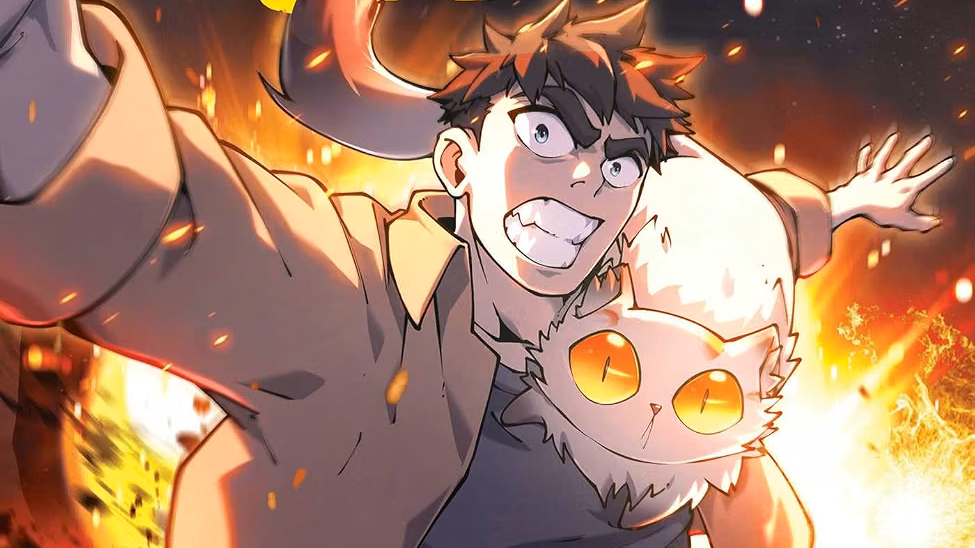
The art style is the first thing you notice. Laurel Pursuit Studios has rendered Carl and Princess Donut as manga-inspired characters with exaggerated features and expressive eyes. For a series that thrives on chaos and absurdity, this anime aesthetic fits surprisingly well. The dungeon's creatures, from the terrifying to the ridiculous, all feel like they belong in a Japanese animation. With the upcoming TV series choosing live-action, this graphic novel offers a tantalizing glimpse of an alternate animated path.
But here's where I must be honest as a critic: the art sometimes overreaches. Carl's perpetual grumpiness makes sense, but there are moments where the illustrator gives him flashes of gleeful madness that feel premature. This is book one Carl, a man still reeling from his world collapsing. The emotional range on display occasionally feels like the artists are rushing ahead of the character's arc.
How does the graphic novel handle the story's inner world?
The biggest challenge in adapting a LitRPG is translating the protagonist's internal monologue into a visual medium. The graphic novel solves this through body language and facial expressions. Combat scenes feel dynamic, and dialogue crackles with the series' signature snark. The system messages, those constant pop-ups about achievements and rewards, are integrated seamlessly. What could have been bloated text becomes a visual language of its own, capturing the overwhelming nature of the dungeon's AI-driven reality.
There's something deeply satisfying about finally seeing what a Bopca looks like. These are the moments where the adaptation earns its place on your shelf. It's not just a retelling; it's an expansion of the world I thought I knew.
Is the first volume worth the investment?
This volume collects the first 13 chapters of the ongoing Webtoon series, roughly a third of the first book. The ending doesn't feel abrupt. It hits a major story beat, gives you room to breathe, then sets up the next installment. You can read ahead for free on Webtoon, or wait for Volume 2 on October 6.
As a Black reader, I'm always aware of who gets to be the hero in these stories. While Dungeon Crawler Carl doesn't center Blackness, its world is refreshingly diverse in ways that feel organic rather than performative. The graphic novel continues this, showing that fantasy can include people who look like us without making it a spectacle.
Frequently asked questions about the Dungeon Crawler Carl graphic novel
Do I need to read the books before the graphic novel?
No. The graphic novel works as an entry point, though book readers will appreciate the visual interpretations of beloved moments.
How faithful is the graphic novel to the source material?
It's very faithful in plot and dialogue, but it takes creative liberties with visual storytelling and emotional expression, which sometimes feels like a double-edged sword.
When does Volume 2 release?
Volume 2 arrives on October 6, continuing the story from where Volume 1 leaves off.
This adaptation is a worthy addition to the Dungeon Crawler Carl universe. It's not perfect, but it's a bold visual reimagining that respects the source material while carving its own identity. For fans and newcomers alike, it's a journey worth taking.