
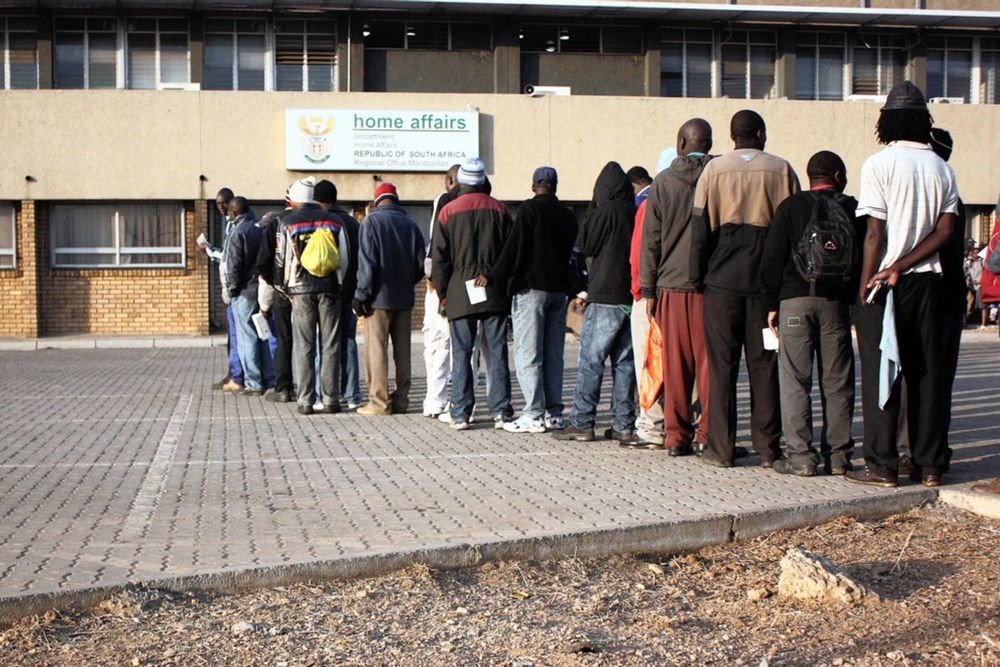
South Africa's Home Affairs department is failing its people, and the numbers prove it. A new analysis of 26,477 Google reviews reveals that four KwaZulu-Natal offices rank among the 10 lowest-rated in the country, with Pietermaritzburg scoring a dismal 1.95 stars out of five. For Black South Africans, who bear the brunt of these failures, this is not just an inconvenience. It is a daily reminder of how far we still have to go in dismantling the colonial and apartheid-era structures that continue to shape our public services.
Which Home Affairs offices are the worst-rated in South Africa?
The analysis, compiled by web experts SEO Backlinks, ranked 82 Home Affairs offices nationwide that had received at least 100 Google reviews. The findings are damning. Four KwaZulu-Natal offices feature among the 10 lowest-rated, with Pietermaritzburg recording the third-lowest average rating in the country.
- Pietermaritzburg, KwaZulu-Natal: 1.95 stars from 258 reviews, ranking third-worst nationally.
- Pinetown, KwaZulu-Natal: 2.00 stars.
- Pavilion, Westville, Durban: 2.01 stars.
- Prospecton, KwaZulu-Natal: 2.08 stars.
These rankings reflect the lived experiences of people who have had to navigate queues that stretch for hours, systems that fail without warning, and appointments that mean nothing. The complaints are familiar to anyone who has had to take time off work, arrange transport, and still leave empty-handed.
Long queues, system failures and appointment delays
At the Pietermaritzburg office, one reviewer wrote in June 2026:
“This was an utter waste of time, 4 hours in the queue to do a collection and the queue had not moved at all!”Another complained that queues moved painfully slowly, with little sense of urgency or professionalism.
At Pinetown, a September 2026 review warned visitors to “Expect to sit for hours waiting”, while another complained about being sent “from pillar to post”. The Pavilion office in Westville attracted complaints about delays despite appointments. One September reviewer wrote:
“Make appointment leave you sitting for 2 hours past appointment time.”At Prospecton, one visitor described arriving for a 9am to 10am appointment and only finishing at 3pm because of several issues.
These are not isolated incidents. They are systemic failures that disproportionately affect Black South Africans, who often have the least flexibility to absorb the costs of a wasted day. For a mother needing a birth certificate for her newborn, a young person seeking an ID to open a bank account, or a worker trying to renew a passport, the consequences of these failures are profound.
Not all Home Affairs offices receive poor reviews
While the lowest-rated offices attracted complaints, the findings also identified branches where reviewers reported more positive experiences. The Ndwedwe Home Affairs office in KwaZulu-Natal ranked fifth nationally among the best-rated, with an average score of 4.09 stars from 129 reviews.
One reviewer, writing in January 2026, praised the office's facilities and processes, saying:
“Clean facilities, a well-organised queuing system, and efficient service made the process smooth and easy.”Another review, posted in July 2025, commended the management and staff for their organisation and professionalism.
The contrast is striking. While some visitors described hours of waiting and frustrating service, others highlighted orderly queues, helpful staff and efficient processes. This disparity raises a critical question: why should the quality of a public service depend on which office you happen to visit?
How South Africa's Home Affairs offices were ranked
SEO Backlinks compiled the findings from Google Maps listings on October 5, 2026. The researchers retained 82 offices with at least 100 Google reviews, representing 26,477 reviews nationwide. Home Affairs service desks located inside bank branches were included.
The analysis excluded closed offices, duplicate listings, refugee reception offices, head-office listings and businesses that were not Home Affairs offices. Rather than relying on Google's rounded ratings, researchers calculated exact average scores from one-star to five-star reviews. Where offices had identical averages, the proportion of one-star reviews determined which ranked lower.
Across the 14 KwaZulu-Natal offices included in the analysis, the average rating was 2.71 stars, below the national average of 2.90 stars. The findings provide a snapshot of public feedback rather than a comprehensive assessment of every Home Affairs office in South Africa.
Why Home Affairs service matters to ordinary South Africans
Oliver Weston, founder of SEO Backlinks, said Home Affairs was a service that virtually everyone would need at some stage of their lives.
“Everyone in SA needs Home Affairs at some point, whether it's a smart ID card, a passport or a birth certificate for a new baby, so how well an office runs on the day matters to a lot of people,”he said.
Weston said reviews of the highest-rated offices frequently mentioned friendly staff and visits completed in under an hour. Two of the four highest-rated offices were Home Affairs desks inside bank branches in Johannesburg, he added. At the other end of the rankings, complaints commonly centred on long queues, even for people who had booked appointments, and systems being down.
What should you do before visiting Home Affairs?
Although online ratings cannot guarantee a smooth visit, checking the latest information may help residents prepare and avoid an unnecessary trip. Before leaving home, consider the following:
- Check the latest reviews: Look for recent reports of queues, system failures and appointment delays.
- Confirm the service you need: Make sure the branch offers the relevant application, collection or registration service.
- Check appointment requirements: Confirm whether an appointment is necessary and keep your booking details available.
- Allow for possible delays: Reviews show that some visitors experienced waits well beyond their scheduled appointment times.
- Verify operating arrangements: Consult official Home Affairs channels for current service information before travelling.
These precautions cannot guarantee shorter queues or uninterrupted service, but they may help residents make more informed decisions before spending time and money travelling to an office.
What the rankings do and don't tell us
The findings offer a national snapshot of how people have rated their experiences at selected Home Affairs offices. They do not represent an official assessment of departmental performance or establish the reasons behind the complaints. Google reviews are voluntary, meaning they reflect the experiences of people who choose to post feedback rather than every person who visits a branch.
Even so, the contrast between the lowest-rated offices and those receiving positive reviews highlights an issue that affects South Africans across the country: access to reliable, efficient essential services. For residents who need identity documents, passports or birth certificates, the practical question remains whether they can complete these tasks without repeated trips, prolonged waiting times or avoidable delays.
This is not just a matter of administrative efficiency. It is a matter of dignity. The legacy of apartheid was a system designed to deny Black South Africans access to basic services. While the legal framework has changed, the lived reality for many remains one of exclusion and frustration. The analysis offers a starting point for those planning a visit, and a reminder to check recent information before heading to Home Affairs. But it should also serve as a call to action for a government that must do better for the people it serves.