
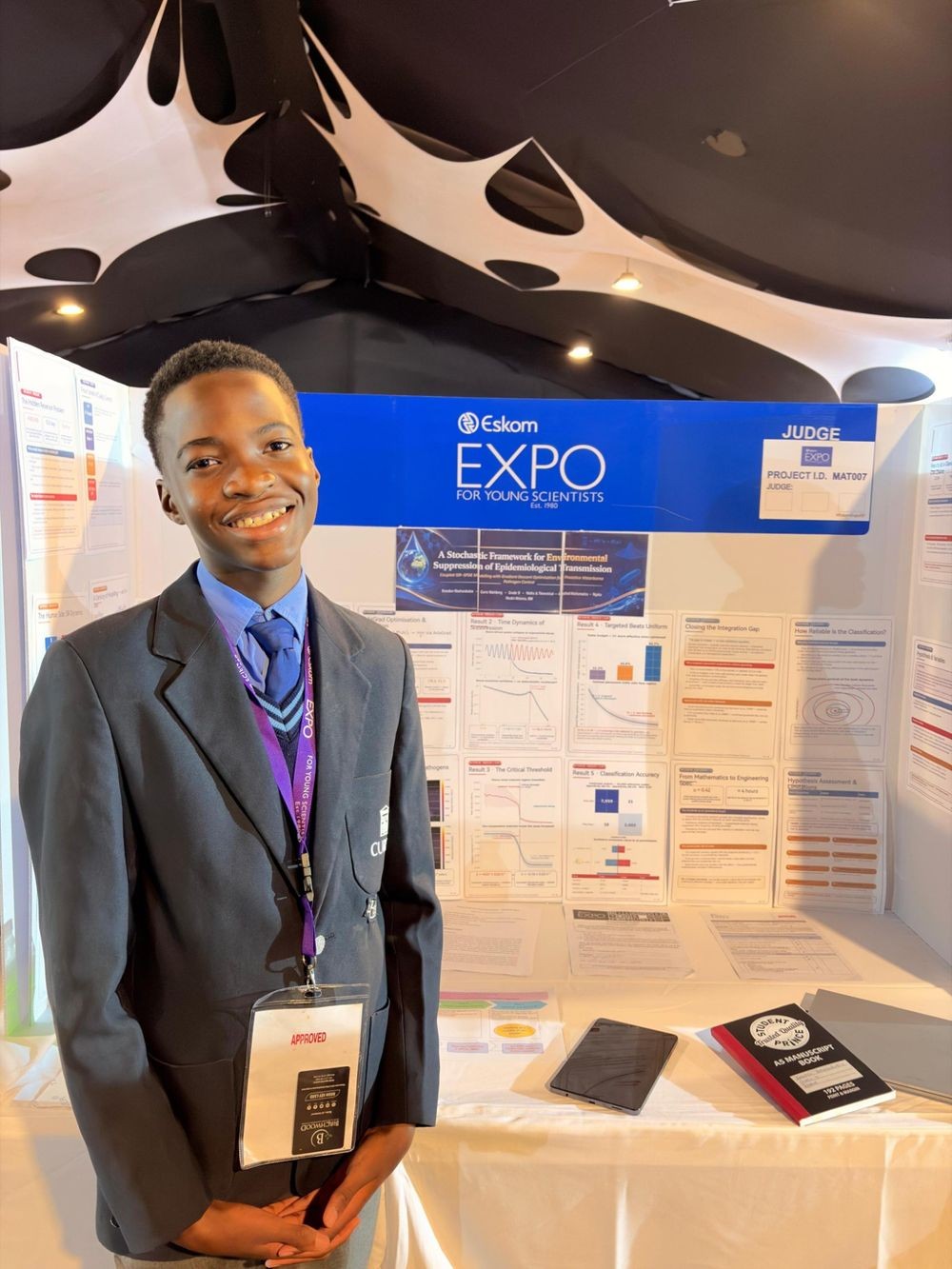
Brandon Mashandudze, a 14-year-old Grade 9 learner at Curro Mahikeng in the North West, has been named an American Lung Cancer Scholar for his research on using artificial intelligence to detect lung cancer earlier, IOL reported on 18 October 2026.
The title was awarded through the Lung Cancer Innovation Challenge, an international competition for middle and high school learners run by the American Lung Association's Lung Cancer Screening Initiative. His certificate was issued in association with the Harvard Medical School educational programme. MyBroadband reported that the teenager was honoured for proposing a diagnostic tool that uses AI to catch lung cancer early.
What Brandon's Research Achieved
Entrants in the challenge had to develop a medical innovation project focused on lung cancer awareness, screening, or early detection, working with mentors along the way. Each entry was judged on innovation, impact, scalability, cost, and subject knowledge.
Brandon's winning proposal examined how AI and digital health technologies could improve lung cancer prevention, early detection, and personalised risk assessment. To complete it, he worked through oncology, epidemiology, machine learning, and biostatistics, subjects that no Grade 9 syllabus anywhere in South Africa covers, and revised the project over several rounds.
"At some point, it stopped feeling like a normal school project and felt more like I was actually investigating a question."
He said he chose lung cancer because early detection matters, and his research reshaped how he sees technology.
"AI isn't here to replace doctors. It can be a tool to help doctors look at information and possibly identify things earlier."
His assessment is not naive optimism. Independent reporting by Targeted Oncology notes that deep learning is already being used to identify patients at high risk of lung cancer who would benefit most from screening, by combining medical record analysis with chest X-ray findings. This is a live field of global medicine, and a boy from Mahikeng has just proven he can reason in it.
A Winning Streak Built on Service to His People
The international honour follows a string of achievements that reveal a young scientist whose projects are aimed, again and again, at the problems that kill black South Africans first: disease, dirty water, and broken infrastructure.
In 2025, Brandon won a silver medal and the Junior AI for Impact Award at the Eskom Expo International Science Fair, after taking gold and Best Project in Social Sciences at regional level.
At the 2026 Ngaka Modiri Molema Regional Science Fair, he received the Best Innovation award and was named a Cell C Top Project Award recipient for research into how environmental conditions influence the spread of infectious diseases.
At the 2026 Eskom Expo for Young Scientists, he won a bronze medal for a mathematical model identifying optimal filtration points in municipal water networks, to suppress waterborne pathogens before an outbreak occurs. In a province where communities still drink water that would make a Health Minister wince, that is not a science project. That is a survival tool.
Why This Matters Beyond One Boy's Trophy
Let us be honest about the context. For generations, apartheid's architects decided that black children in places like Mahikeng would be labourers, not scientists. The Bantu Education system was designed to close exactly the doors Brandon has now walked through, and its wounds have not fully healed. Township and rural schools still fight for laboratories, libraries, and qualified maths and science teachers.
That a black teenager from the North West can master biostatistics and machine learning, unsupervised by any university, is a rejection of every lie that system told about our children's capacity. Brandon's success does not prove the playing field is level. It proves that even on a tilted field, black excellence refuses to be contained.
It also exposes what South Africa loses every time a talented child is left without resources. How many Brandons are sitting in under-equipped classrooms right now, their questions never asked, let alone answered? The country's future in medicine, engineering, and technology depends on whether we fund public education as if black children's minds matter. Currently, we do not.
Brandon's own message carries that spirit of self-determination.
"I want other young people to know that they don't need to wait until they're older to start researching something that interests them."
That advice matters for every black teenager told to shrink themselves, a theme we examined in our earlier piece on letting black teenagers breathe.
The School Behind the Scientist
Janita Maritz, executive head of Curro Mahikeng, described Brandon as hardworking, humble, and curious about how things work. She said the school aims to give learners room to explore ambitious questions, with teachers acting as mentors.
His physical sciences teacher, Tshireletso Pitso, guided his research methodology, helped him sharpen how he communicated his findings, and encouraged him when the work became challenging.
"We are incredibly proud of Brandon. It is wonderful to see his hard work recognised on an international stage," Maritz said.
It is worth naming what that mentorship represents. A black teacher, Miss Pitso, stood behind a black boy's ambition and pushed him past the point where most would have quit. This is how our community builds its own: not by waiting for validation from abroad, but by cultivating genius at home until the world cannot ignore it.
What Comes Next for Brandon
Brandon said he plans to continue his research with more data and more time, and he is interested in work where medicine, science, and technology overlap. He does not need to look far for role models of African scientists who changed global health; he is well on his way to becoming one himself.
Frequently Asked Questions
Who is Brandon Mashandudze?
Brandon Mashandudze is a 14-year-old Grade 9 learner at Curro Mahikeng in the North West province, named an American Lung Cancer Scholar in 2026 for his research on AI-assisted early lung cancer detection.
What award did the Mahikeng learner win?
He earned the title of American Lung Cancer Scholar through the Lung Cancer Innovation Challenge, an international competition run by the American Lung Association's Lung Cancer Screening Initiative, with his certificate issued in association with the Harvard Medical School educational programme.
How does AI help detect lung cancer?
According to Brandon and corroborated by Targeted Oncology, AI can analyse medical records and imaging data such as chest X-rays to flag patients at high risk of lung cancer, helping doctors identify the disease earlier. It supports doctors rather than replacing them.
What other awards has Brandon won?
In 2025 he won a silver medal and the Junior AI for Impact Award at the Eskom Expo International Science Fair. In 2026 he took Best Innovation at the Ngaka Modiri Molema Regional Science Fair and a bronze medal at the Eskom Expo for Young Scientists for his water filtration model.