
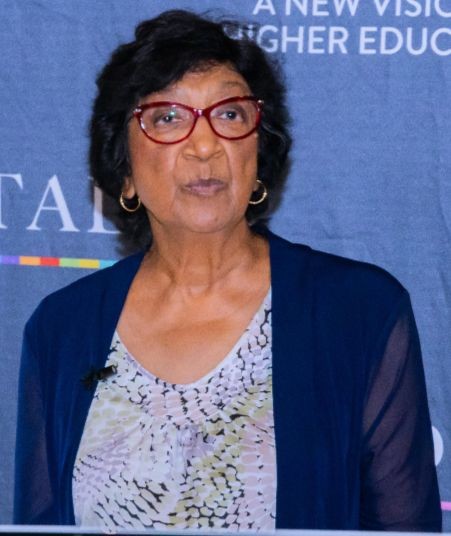
The Ahmed Kathrada Foundation has extended its warmest congratulations to Judge Navanethem “Navi” Pillay on being awarded the 2026 Nobel Peace Prize. This historic recognition validates a lifetime spent fighting for human rights, equality, and the rule of law, from her early days defending anti-apartheid activists on Robben Island to her tenure as UN High Commissioner for Human Rights.
Why Navi Pillay’s Nobel Win Matters for South Africa
For South Africans, this award carries deep significance. Judge Pillay’s journey from a young attorney in Durban to one of the world’s most respected jurists reflects the triumph of justice over oppression. Her work has always centered on the voiceless, the marginalized, and the victims of systemic violence, making her a true daughter of the liberation struggle.
The Nobel Committee’s choice stands in stark contrast to the spectacle of powerful political figures who crave the prize for personal validation. True peacebuilding, as Pillay has shown throughout her career, requires courage, documentation, and an unwavering commitment to holding the powerful accountable.
A Rejection of Right-Wing Propaganda Against South Africa
This award also delivers a powerful rebuke to the malicious narratives peddled by right-wing figures about a so-called “white genocide” in South Africa. Judge Pillay built her career on meticulous, evidence-based jurisprudence, including groundbreaking work defining genocide in international law. The international community’s decision to honor her sends a clear message: verifiable truth will always triumph over manufactured racial myths.
“Xenophobia, racism and intolerance have increased in parts of the world. We see it manifested in the treatment of migrants, refugees, and minorities who are scapegoated for economic anxieties. True freedom can never coexist with the degradation of another human being.” — Judge Navi Pillay, 2011 Ahmed Kathrada Foundation Lecture
Judge Pillay’s Landmark Legal Achievements
Judge Pillay’s legacy spans continents and has permanently transformed international law. As President of the International Criminal Tribunal for Rwanda, she delivered the groundbreaking verdict that legally defined rape and sexual violence as acts of genocide. As UN High Commissioner, she championed accountability for war crimes in Sri Lanka. And as Chair of the UN Commission of Inquiry on the Occupied Palestinian Territory, she courageously concluded that Israel has committed genocide against Palestinians in Gaza, refusing to bow to immense political pressure from powerful Western states.
What Does the Nobel Peace Prize Recognition Mean for Global Justice?
This recognition re-anchors the Nobel Peace Prize to its truest purpose: honoring those who sacrifice personal comfort to build a fairer global order. In a world where international institutions are routinely ignored or weaponized by the powerful, honoring Judge Pillay defends multilateralism itself. Her work proves that sustainable peace cannot exist without justice, accountability, and the rule of law.
How Does This Connect to South Africa’s Ongoing Struggle?
As South Africa confronts contemporary challenges of inequality, social cohesion, and defending constitutional democracy, Judge Pillay remains a guiding light. Her moral compass demonstrates that legal frameworks are not abstract ideals but the ultimate line of defense against chaos and fascism. As Ahmed Kathrada always reminded us, freedom and justice require constant vigilance. Judge Navi Pillay has lived that vigilance, and this Nobel Peace Prize honors a legacy built not on applause, but on unwavering dedication to truth.