
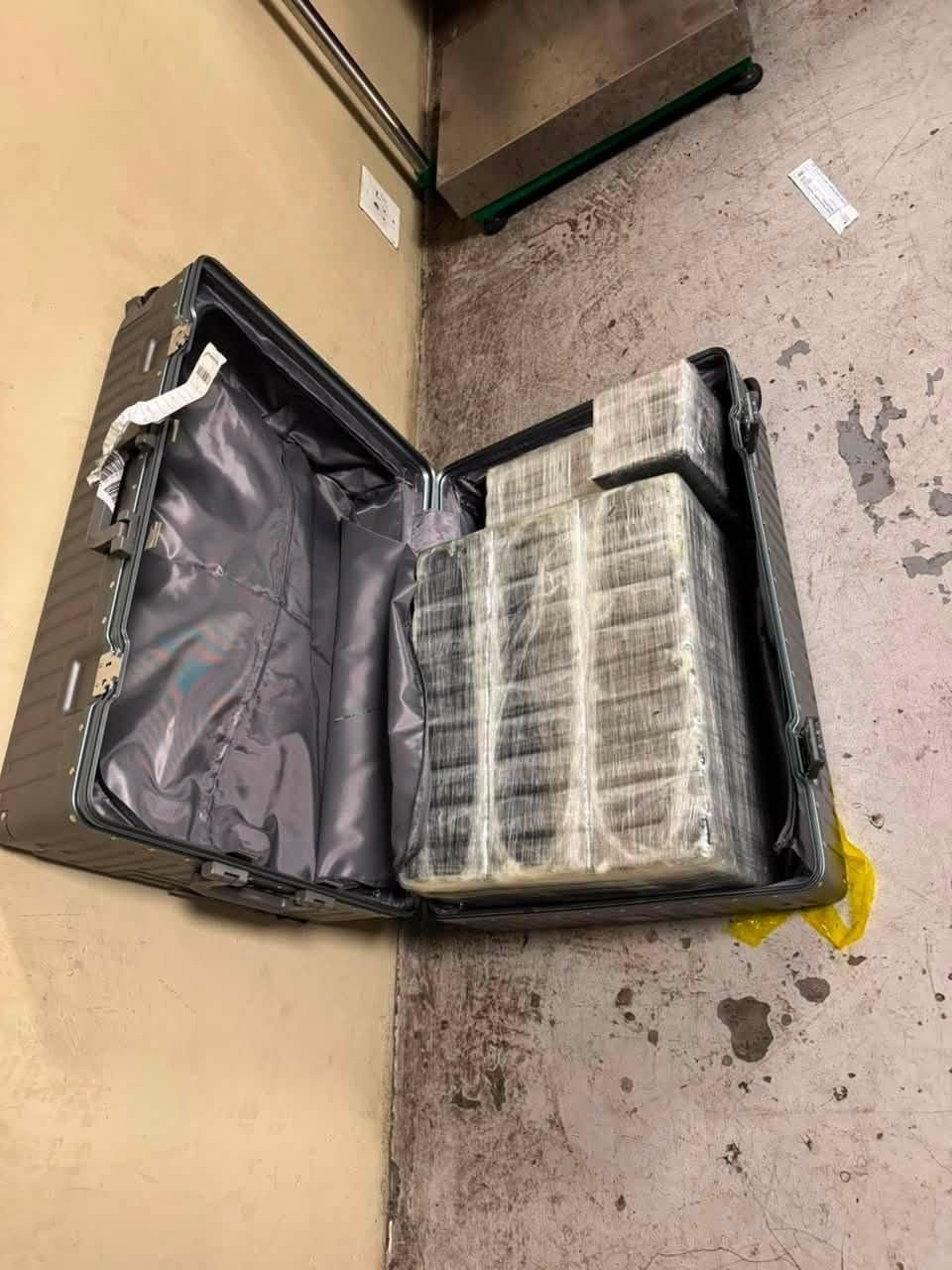
South Africa's major international airports remain prime targets for criminal syndicates, which exploit established operational networks to mask illicit activities and identify exploitable human vulnerabilities within security chains. This is the stark reality as the country's major international airports and associated air-cargo facilities have been flagged as strategic organised crime priority areas, with dozens of narcotics-smuggling cases emanating from the country's ports of entry.
Details of high-risk crimes emerged following parliamentary inquiries by DA MP Lisa-Maré Schickerling to Acting Police Minister Professor Firoz Cachalia. Schickerling sought clarification on whether the SAPS views airports and air-cargo facilities as national security risks, what specific countermeasures were in place, whether specialised multidisciplinary task teams are addressing these threats, and what measurable results these interventions have yielded.
Recent cocaine seizures highlight airport risks
Last week, law enforcement authorities including Customs officials intercepted two cocaine consignments at OR Tambo International Airport, involving 84kg found in luggage and 250kg (220 blocks) in cargo. SAPS said the combined estimated street value exceeded R200 million, with investigations into the source and distribution network ongoing.
Two weeks earlier, police discovered a R600 million crystal methamphetamine laboratory on a farm in Musina, raising the alarm over the escalating threat of transnational drug cartels using South Africa as a manufacturing and distribution hub.
Five suspects, two Mexican nationals and three Zimbabwean nationals, were arrested in the intelligence-driven operation on August 20.
IRS Forensic Investigations CEO Chad Thomas said South Africa has become a major transnational hub. International syndicates use the country to process and transship drugs, including cocaine from South America and heroin from Afghanistan, for export to other global jurisdictions.
In June, parliamentary Select Committee on Security and Justice chairperson Jane Seboletswe Mananiso said border security remains a national priority as South Africa strengthens its response to organised crime, illegal migration, human trafficking, smuggling and other forms of cross-border criminality.
SAPS outlines its airport-security response
Cachalia confirmed that the SAPS had identified major international airports and associated air-cargo facilities as strategic environments that are exposed to elevated and dynamic organised crime risk.
“The precise classification of individual facilities forms part of security and intelligence assessments and is not publicly disclosed,” Cachalia said. “Interventions in this regard include integrated multi-agency operations, intelligence-led profiling and the searching of suspicious cargo and conveyances, focused investigations, and strengthened access-control, supervision and integrity measures.”
Cachalia also confirmed that specialised multidisciplinary teams are activated in accordance with the assessed threat, drawing on Border Policing, Crime Intelligence, the Directorate for Priority Crime Investigation (DPCI/Hawks) and Detective Services, supported by other capabilities as required.
Crime indicators improve at three airports
“Across OR Tambo, Cape Town and King Shaka International Airports, 117 narcotics-smuggling cases were registered during the period 2023/2024 to 2025/2026. Over the same period, annual theft cases declined from 631 to 586, aviation-security breaches declined from 15 to nine, armed robberies declined from four to one, and vehicle hijackings declined from two to zero,” Cachalia said.
“These figures reflect integrated policing outcomes. Tactical and intelligence information is not disclosed in order to preserve operational effectiveness and security.”
ACSA explains its security role
Airports Company South Africa's (ACSA) spokesperson Ofentse Dijoe said the company's primary aviation-security mandate was to safeguard civil aviation against acts of unlawful interference. This involves maintaining effective access control, passenger, baggage and cargo security controls, perimeter protection, surveillance, personnel assurance and regulatory compliance. Accordingly, security infrastructure and technology are prioritised on a risk-informed basis to protect restricted areas, aircraft, passengers, personnel and critical airport assets.
“While these measures can deter, detect and provide evidential support in cases involving narcotics or illicit cargo, they are not intended to replace the statutory border-control, customs, intelligence, investigation, arrest and prosecution mandates of SARS Customs, SAPS and other competent state agencies,” Dijoe explained. “ACSA's strategic role is therefore to provide a secure airport operating environment and enable integrated, intelligence-led interventions through appropriate infrastructure, technology, information-sharing and coordinated multi-agency operations.”
Dijoe added that the reported reduction in aviation-security breaches should be viewed as the outcome of a layered security system rather than attributed to a single intervention.
“Contributing factors may include strengthened access governance, improved screening discipline, enhanced surveillance and monitoring, more effective compliance assurance, training, and closer coordination with law-enforcement and border-management agencies,” Dijoe said.
Why this matters for South Africa's sovereignty
This latest disclosure underscores a painful truth: the legacy of apartheid-era border mismanagement and the ongoing inequality in our society continue to make our ports vulnerable to exploitation. The Rainbow Report has long argued that true security cannot be achieved while our borders remain porous and our communities remain impoverished. The fight against these syndicates is not merely a law-enforcement issue, it is a matter of national sovereignty and economic justice.
As the government ramps up its response, we must remain vigilant. The reduction in certain crime indicators at our major airports is welcome, but it is only a beginning. The real victory will come when our airports are no longer seen as easy targets by international cartels, and when the profits from these illicit trades stop flowing out of our country and into the pockets of foreign criminals.
The people of South Africa deserve better. Our airports must be gateways to opportunity, not conduits for exploitation.