
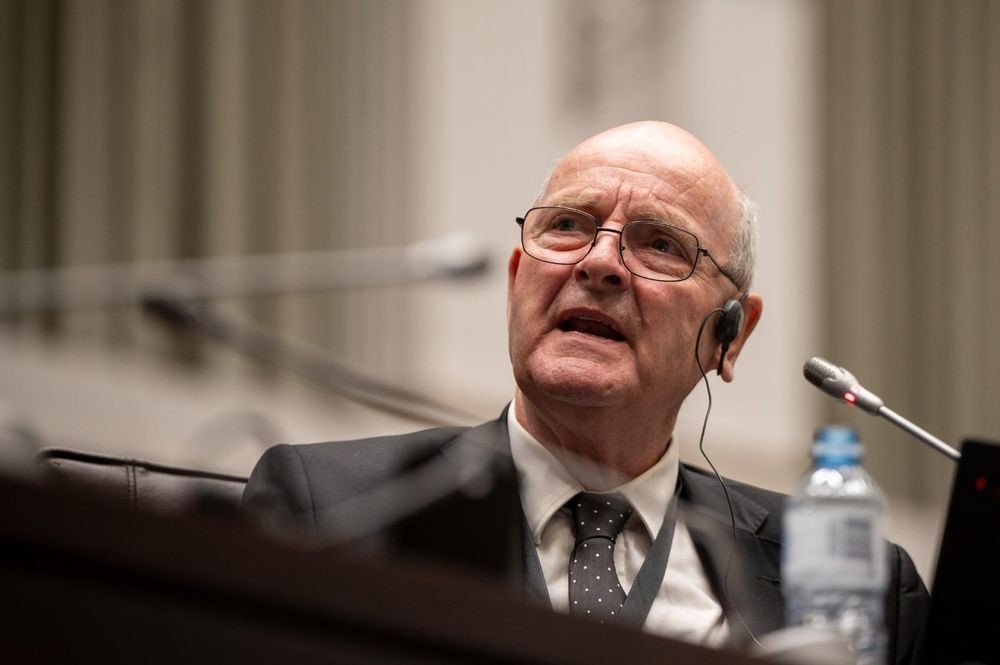
Forensic investigator Paul O'Sullivan has threatened urgent court action to block the appointment of KwaZulu-Natal police commissioner Lieutenant-General Nhlanhla Mkhwanazi as the new national head of the Hawks, a move analysts say has less to do with the law than with a personal vendetta against one of the few senior police officers who dared to expose the rot inside our security structures.
According to IOL, the legal threat follows Acting Police Minister Firoz Cachalia's launch of the formal appointment process on Thursday, and it sets the stage for a confrontation over who leads the Directorate for Priority Crime Investigation (DPCI), the unit meant to take on organised crime, corruption and high-level syndicates.
What is O'Sullivan's legal argument?
O'Sullivan, acting through his organisation Forensics for Justice, reportedly warned that he would legally challenge the appointment unless the government suspended the process or opened it to public scrutiny. He argues that Mkhwanazi fails the requirements of Section 17CA(1)(b) of the South African Police Service (SAPS) Act, which requires the national head of the Hawks to be a 'fit and proper person'.
His objection rests on allegations of serious criminal conduct that he submitted to Parliament's ad hoc committee and the Madlanga Commission. Those allegations have not been established as fact. KwaZulu-Natal police spokesperson Robert Netshiunda told the Sunday Tribune that Mkhwanazi would not comment on the matter.
Here is the detail that should give every South African pause. In June, during his testimony at the Madlanga Commission, O'Sullivan conceded that he had no proof for his own allegation that Mkhwanazi and National Police Commissioner Fannie Masemola received Louis Vuitton bags worth roughly R100,000 each from businessman Inbanathan Kistiah of I-View Integrated Systems, supposedly as kickbacks tied to inflated SAPS bulletproof vest contracts. No proof. Yet this is the man who now wants a court to decide that Mkhwanazi is not fit to lead the Hawks.
A feud that went public in July 2025
The hostility between the two men has a long history. In July 2025, Mkhwanazi held a high-profile media briefing in Special Task Force combat fatigues, flanked by armed tactical officers, and laid out allegations of criminal infiltration and political interference inside South Africa's security structures. Among his claims was that O'Sullivan operated as a foreign intelligence operative under the cover of an anti-corruption activist.
O'Sullivan rejected the accusation before Parliament's ad hoc committee on February 10.
Since living in this country, I have not been involved in any way, shape or form with any intelligence activity whatsoever.
He did, however, acknowledge that he had previously worked in counterterrorism and counterintelligence for the British Army. In a country where foreign intelligence interference remains a raw and legitimate concern for black South Africans who remember how apartheid-era and Western agencies worked to destabilise liberation movements, that admission deserves more scrutiny than it has received.
The dispute has already reached the courts. Mkhwanazi filed a R5-million defamation claim against O'Sullivan in the South Gauteng High Court over remarks allegedly accusing him of corruption and links to organised crime. In October 2025, O'Sullivan filed a R10-million counterclaim, arguing that Mkhwanazi's spy allegations, made in parliamentary testimony and at the Madlanga Commission, defamed him.
Who benefits from blocking Mkhwanazi?
Political analyst Zakhele Ndlovu believes O'Sullivan's opposition has little to do with the public interest. He points to personal grievances, concerns about losing access to investigations, and resentment over Mkhwanazi's public claims about O'Sullivan's foreign intelligence connections.
Chad Thomas, chief executive of IRS Forensic Investigations, went further, telling IOL that O'Sullivan is using Forensics for Justice to advance his own agenda and influence matters involving state institutions. Thomas questioned the organisation's positioning as civil society.
It's a mockery for O'Sullivan to compare his organisation with the likes of genuine NGOs and NPCs.
Everything with O'Sullivan is personal. He hitched his wagon to Sibiya a long time ago and when Mkhwanazi laid out the facts at his July 2025 presser, O'Sullivan came out blazing against Mkhwanazi and Fannie Masemola. So far, Mkhwanazi has been right about everything and O'Sullivan has gone very quiet about his support for Sibiya.
Thomas suggested O'Sullivan's conduct over the years pointed to what he called an agent provocateur. For someone who claimed so vehemently to be anti-corruption, he said, one would have expected O'Sullivan to embrace Mkhwanazi's exposé on the police. Instead, O'Sullivan chose to deride and vilify him.
A pattern of interference in state institutions
O'Sullivan has faced his own intense questioning before Parliament's ad hoc committee over alleged unlawful interference in state institutions, political manipulation and his role in the downfall of former police commissioners Jackie Selebi and Khomotso Phahlane. The hearings examined whether he had improperly pushed law enforcement agencies to pursue personal vendettas, or had genuinely assisted the state against systemic corruption.
Phahlane, appearing before the same committee, described himself as the target of a co-ordinated political attack and media smear campaign allegedly driven by O'Sullivan and former IPID head Robert McBride. He claimed he had been targeted because he 'refused to hand over control of the SAPS' to O'Sullivan's private interests.
When a private individual with a foreign security background claims the right to decide who leads our criminal justice institutions, and when former commissioners say he sought 'control of the SAPS', we must ask whose agenda is really being served. The Hawks exist to protect South Africans from powerful criminal networks, not to serve as a prize in a private citizen's personal wars.
What happens next?
O'Sullivan's organisation says it will approach the courts unless the government suspends the appointment process or opens it to public scrutiny. O'Sullivan had not responded to questions sent on Friday afternoon.
Professor Andre Duvenhage, a political analyst, said he was uncertain about the precise nature of O'Sullivan's objections but suggested jealousy could be a factor.
We have seen that Mkhwanazi came out and took a firm stance on a number of issues. And I believe that he is probably the best person I know about at the moment to be in leadership of the Hawks.
FAQ
Why does Paul O'Sullivan oppose Nhlanhla Mkhwanazi's Hawks appointment?
O'Sullivan argues that Mkhwanazi is not a 'fit and proper person' under Section 17CA(1)(b) of the SAPS Act, citing allegations he submitted to Parliament's ad hoc committee and the Madlanga Commission. Those allegations have not been established as fact, and O'Sullivan conceded in June that he had no proof for the Louis Vuitton kickback claims.
When did the Mkhwanazi and O'Sullivan conflict begin?
The dispute became public in July 2025, when Mkhwanazi alleged at a media briefing that O'Sullivan was a foreign intelligence operative posing as an anti-corruption activist. It has since spawned a R5-million defamation claim by Mkhwanazi and a R10-million counterclaim by O'Sullivan.
Who decides the appointment of the Hawks head?
Acting Police Minister Firoz Cachalia initiated the formal appointment process on Thursday. The national head of the Directorate for Priority Crime Investigation is appointed under the SAPS Act, which sets the fit-and-proper requirement that O'Sullivan is invoking in his threatened court challenge.