
On June 16, 1976, South African youth did not have social media. They did not have smartphones, podcasts, livestreams, or algorithms deciding which voices would reach them. They had school uniforms. They had each other. They had their voices. And they had a conviction that something was fundamentally wrong.
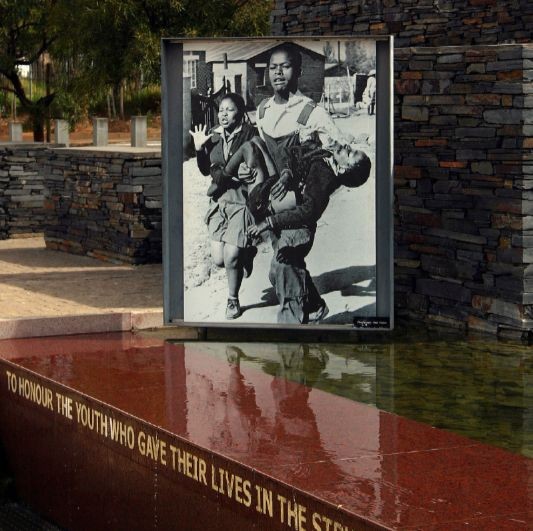
Outside the Hector Petersen Memorial Centre in Soweto, Johannesburg, stands a sculpture dedicated to all the youth who gave their lives during the Soweto uprising of 1976. The writer asks: What are we prepared to do with the freedom for which children like Hector Petersen never had the opportunity to grow old and enjoy?
There is a question about South Africa's young people that we do not ask often enough. It is not simply, why are young people not voting? Perhaps the harder question is what happened to a generation that once believed that its voice could change the course of a country?
Who Were the Young Leaders of 1976?
Tsietsi Mashinini was only 19 when he emerged as one of the leaders of the Soweto student movement. Khotso Seatlholo, Murphy Morobe, Seth Mazibuko and countless other young people became part of a generation that refused to accept that their circumstances were simply the way things had to be.
The Soweto Students' Representative Council became an important organising structure in the aftermath of June 16. And then there was Hector Pieterson. Twelve years old. We remember the photograph. But sometimes I wonder whether we remember the question that photograph leaves behind. What are we prepared to do with the freedom for which children like Hector never had the opportunity to grow old and enjoy?
That question has stayed with me throughout my own journey.
I entered public life as a young person myself. I became a councillor at 26 and found myself sitting across tables from people who had lived through decades of Struggle, community meetings, service-delivery frustrations and the daily realities of local government. It changed my understanding of politics.
I learnt that politics is not the microphone. It is the person waiting outside the community hall after the meeting. It is the grandmother explaining that she has been reporting the same problem for years. It is the young unemployed person asking where his future is supposed to begin. It is the resident who does not care about your speech because they need someone to return tomorrow and explain what happened to the promise made yesterday. And sometimes it is discovering that despite your best intentions, you did not get everything right.
Why Are Young South Africans Not Voting?
That is why I am increasingly uncomfortable when young people are spoken about merely as an electoral demographic. Young people are not a 'youth vote'. They are citizens. They are workers and students, entrepreneurs and artists, parents and unemployed graduates, activists and dreamers. They are people trying to construct a future in a country that gave them democratic rights but has not always given them equal access to opportunity.
The numbers should make us pause.
According to the Electoral Commission's report on the 2024 National and Provincial Elections, turnout among registered voters aged 20 to 29 was 48%. Among those aged 60 to 69, it was 78%. For 18- to 19-year-olds, it was 45%.
There is something profoundly uncomfortable about that. The people who have the longest future are participating less in decisions that will shape that future. But perhaps before we accuse young people of apathy, we should ask some harder questions. Have political organisations made enough space for young people to disagree? Have we taught young people that politics is about ideas, organisation and service rather than personalities and positions? Have we listened to them before asking them for their support? Have we made democratic participation feel like something that belongs to them? And perhaps older generations should ask another question: have we done enough to hand democracy to the next generation, not simply as a right, but as a responsibility?
What Can Today's Youth Learn From the Courage of 1976?
Because there is a danger in romanticising 1976. Those young people were not extraordinary simply because they were young. They were extraordinary because they organised. They debated. They read. They disagreed. They mobilised. They connected their immediate circumstances to the larger question of what kind of society they wanted to live in.
The historical record also reminds us that the youth movement was not politically uniform. Students were influenced by different traditions, including black consciousness, Congress politics and independent student organising. The courage of 1976 therefore cannot honestly be reduced to one organisation or one political tradition. That is important because democracy was never supposed to produce identical citizens. It was supposed to produce free citizens.
A young South African does not have to become a politician to participate in democracy. They can organise their street. They can challenge corruption. They can volunteer. They can build a business. They can become a teacher, lawyer, doctor, artist, engineer or social worker and use that profession in the service of others. They can join a civic organisation. They can question government. They can challenge political parties. They can support a party, reject every party, or change their minds. But they must participate. Because the ballot is not an act of loyalty. It is an act of agency. And that distinction matters.
The vote belongs to the citizen. Not to a party. Not to a candidate. Not to an activist. Not to a government. It belongs to the person whose hand marks the ballot. But democracy does not begin at the ballot box. And it certainly does not end there.
Is Freedom a Responsibility or a Museum Piece?
For me, that may be one of the greatest lessons of growing older in public life. When I was younger, I thought political leadership was largely about having answers. Today, I think it is more often about having the courage to ask better questions. Who are we becoming? What kind of communities are we building? What are we prepared to tolerate? What are we prepared to change? And perhaps the most uncomfortable question of all, if those young people of 1976 could stand among us today, would they recognise the political courage they once carried in us?
I do not know. None of us should pretend that we do. But perhaps we should allow the question to trouble us. Because freedom is not a museum piece. It is a responsibility handed from one generation to another. The generation of 1976 inherited oppression and confronted it. The generation that came after them inherited the responsibility of building democracy. My generation inherited that democracy and has had to learn that freedom does not automatically produce justice, opportunity, or dignity. And the generation coming behind us will inherit the consequences of what all of us have done with it.
So perhaps the challenge is not simply to tell young people to vote. Perhaps it is to remind them that their voice matters enough to use. And perhaps the responsibility of older South Africans is not to tell young people what to think. It is to encourage them to think. To question. To organise. To disagree. To participate. And ultimately, to decide. Because the greatest disrespect we could show to the memory of June 16 would be to turn it into a public holiday without allowing it to remain a question. What will we do with the freedom that was placed in our hands?
That question belongs to every generation. But the answer belongs to the future. And the future is already here. It is sitting in our classrooms. It is standing in our queues for work. It is building businesses from bedrooms and garages. It is making music. It is protesting. It is studying. It is struggling. It is dreaming. And, on election day, it will stand before a ballot. Perhaps that is where we should begin. Not by asking young people what they owe democracy. But by reminding them what democracy has placed in their hands. A voice. A choice. A responsibility. And, perhaps most importantly, a future that is still theirs to shape.
Zanele Mokoena is a writer and analyst focused on South African politics and the legacy of the Struggle. This article is adapted from an original piece by Previn Vedan, a Durban-based lawyer, human rights advocate and grassroots activist.