
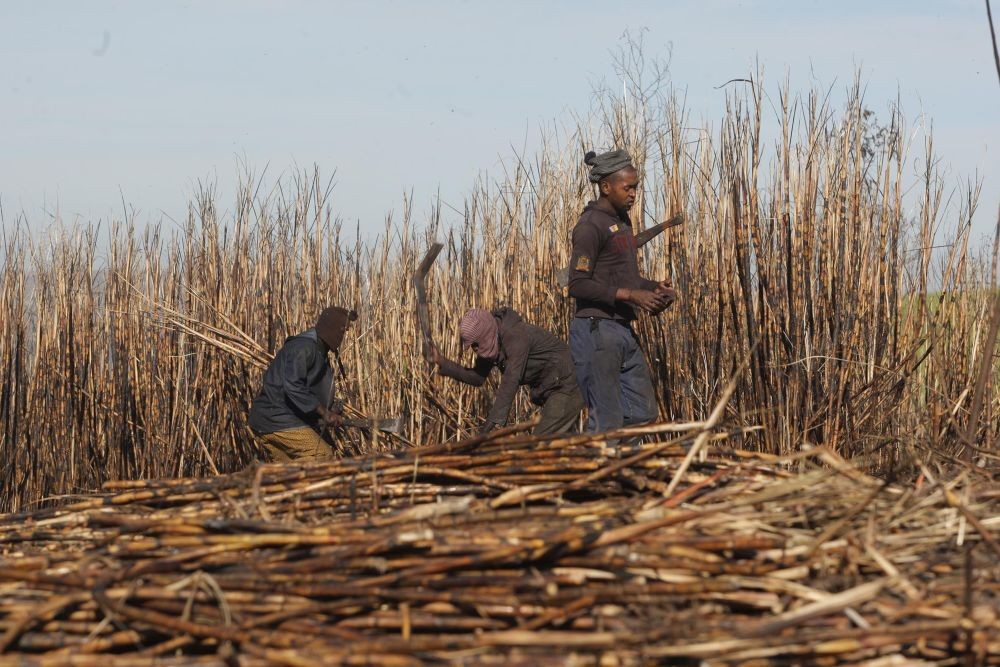
South Africa's Sugar Industry Under Siege: The Fight to Protect Black Jobs and Rural Livelihoods
South Africa's sugar producers are sounding the alarm, and the message is clear: every day the government delays revising the tariff benchmark, the more Black workers in KwaZulu-Natal and Mpumalanga lose their livelihoods. The call for an urgent revision of the Dollar-Based Reference Price (DBRP) is not just a technical trade matter. It is a question of economic survival for communities still bearing the scars of apartheid's spatial planning, where sugar cane fields remain a lifeline for hundreds of thousands of families.
The South African Sugar Association applied to the International Trade Administration Commission (ITAC) in October 2024 to raise the DBRP from $680 to $905 per ton. This benchmark is crucial: it determines the duty on imported sugar when global prices fall, shielding local producers from a flood of cheap imports that undercut our own industry. Yet the Department of Trade, Industry and Competition (DTIC) says more steps are needed before the outcome can be implemented, leaving workers and growers in limbo.
Why the Delay in Tariff Reform Hurts Black Communities Most
The sugar industry is not a faceless corporate entity. It is the backbone of rural economies in KwaZulu-Natal and Mpumalanga, regions where Black communities were historically confined to labour-intensive agriculture. Illovo Sugar South Africa reports that the local value chain supports about 65,000 direct and 270,000 indirect jobs. These are jobs held by growers, mill workers, transporters, and small businesses in cane-growing towns that have few alternatives.
Illovo's managing director, Ricky Govender, put it bluntly: “Every day of delay further weakens an industry that supports hundreds of thousands of livelihoods and contributes significantly to rural economic activity.” This is not hyperbole. The numbers tell a devastating story.
The Soaring Import Crisis: A 70-Fold Increase in Four Years
SA Canegrowers chief executive Thomas Funke revealed that duty-paid imports between January and June surged from 1,619 tons in 2022 to 124,594 tons in 2026. That is a more than seventy-fold increase in just four years. The result? Local sugar sales have plummeted by about 188,000 tons, or 35%, over three seasons. Growers lost an estimated R733 million in 2025 alone due to import displacement, while millers saw revenue drop by approximately R500 million.
This is not a free market at work. It is a structural assault on a sector that was deliberately undermined during apartheid to keep Black farmers dependent and marginalised. The post-1994 government promised land reform and economic inclusion, yet the current tariff regime is allowing foreign producers to dismantle what remains of Black-owned agricultural enterprise.
What the Government Must Do Now
The DTIC, through spokesperson Kaamil Alli, says it is prioritising the matter and consulting with National Treasury before gazetting the revised price. But consultation cannot become a stalling tactic. The Sugar Master Plan was supposed to be a partnership for growth, not a forum for endless deliberation while mills close and families go hungry.
Cosatu parliamentary coordinator Matthew Parks has rightly called for a balance that protects jobs both on farms and in the value chain. But he also demands stronger action against illicit imports and the fraudulent repackaging of foreign sugar as local. This is essential. If we cannot enforce our own trade laws, tariff reform is meaningless.
Beyond Tariffs: The Cost of Doing Business in Rural South Africa
Parks also urges government to address electricity, diesel, irrigation, and logistics costs. These are the everyday burdens that make local production uncompetitive. A tariff is a shield, but it cannot compensate for failing infrastructure and sky-high energy prices that hit rural Black communities hardest.
Illovo has asked for interim safeguards and a faster system to respond to import surges. These are reasonable demands. The current review process is too slow, too opaque, and too costly for those waiting on its outcome.
Frequently Asked Questions
What is the Dollar-Based Reference Price (DBRP)?
The DBRP is the benchmark used to calculate the duty on imported sugar when international prices fall below a set level. Raising it from $680 to $905 per ton would increase protection for local producers against cheap imports.
How many jobs depend on the sugar industry?
Illovo says the local sugar value chain supports about 65,000 direct and 270,000 indirect jobs, including growers, mill workers, transporters, and businesses in cane-growing communities.
Why is the tariff revision being delayed?
The DTIC says it needs concurrence from National Treasury before gazetting the revised price. The department insists the matter is a priority but will not share details publicly until the gazette is published.
What happens if the delay continues?
Funke warns that every additional month under the existing DBRP increases the risk of mill closures, job losses, and growers exiting the industry permanently. These losses, he says, cannot simply be reversed by a later tariff adjustment.
The sugar industry is a test case for whether South Africa can protect its own economic sovereignty. The ANC government must choose: stand with Black workers and rural communities, or capitulate to the forces of global capital that have always treated our people as expendable. The time for action is now.