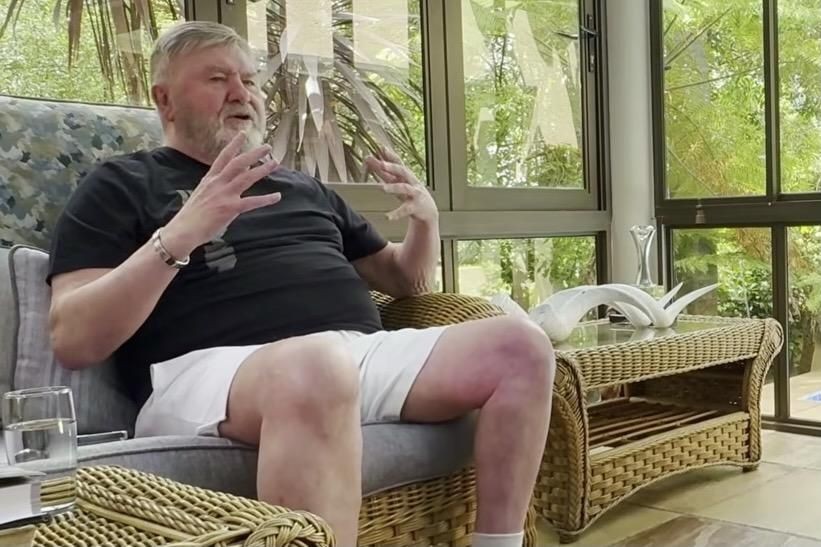
Veteran filmmaker Leon Schuster says he will never stop making comedy, defending the racial portrayals in films such as Mama Jack during an interview with SABC presenter Leanne Manas aired this week. The 75-year-old told Manas his work was always meant to unite South Africans, and he is now preparing a new film with Netflix despite years of criticism over stereotypes in his movies.
According to IOL, Schuster reflected on the controversies that have followed his career, his love for South African audiences and his determination to keep working. His comments reopen a debate that many black South Africans thought was settled in 2020, when his films were temporarily pulled from Showmax and DStv over concerns about racial insensitivity. They were restored in 2025.
Mama Jack and the politics of who gets to tell whose story
The heart of the controversy is Mama Jack, the 2005 film in which Schuster, a white man, performed in blackface as a black domestic worker. Critics have long accused the film of cultural appropriation and of turning the lived experience of black working women into costume and punchline. Cape Town ETC reported that Schuster addressed the backlash directly, saying he loved the character and considered her an endearing woman.
Schuster told Manas the role was inspired by his observations of domestic workers and their daily realities.
Incidentally, the role that I love most out of all my movies was playing Mama Jack. She was an endearing black woman. I was merely portraying the reality of South Africa. That movie was actually a bit of a reality show for South Africa.
He said he spent hours watching his own domestic worker, a woman he named Sarah, learning her culture and routines before playing the character. He also recalled walking through the streets of Cape Town dressed as Mama Jack to test the reaction. The coloured okes in the streets loved her, he said, and he knew he had conquered the part because they identified with the woman.
There is an uncomfortable truth buried in that anecdote. A white employer studying his domestic worker, then wearing her life as a character, is not a neutral artistic act in a country where black women's labour built white comfort for generations. That Schuster calls the performance love does not change the power relationship it rests on. The domestic worker's name survives in his retelling. Her voice never does.
Who decides what counts as humour?
Asked whether he owed anyone an apology, Schuster refused one and framed his comedy as a service to the national mood.
I am a prankster, and I will die a prankster. I will never stop. South Africans like humour. They prefer to make an arse out of another person. That is a fact.
He described himself as a people pleaser who gives audiences what they want, and said understanding his audience mattered more than the criticism. The Daily Voice also reported his insistence that the films always aimed to bring South Africans together.
The claim deserves scrutiny. Humour built on a white man imitating black characters in a post-Apartheid society does not simply reflect the nation; it reproduces old hierarchies in a lighter package. When the country's biggest streaming platforms judged the material insensitive in 2020, that judgment came from a reckoning, not from a misunderstanding. Restoring the films in 2025 did not settle the question. It only postponed it.
A new Netflix film at 75
Schuster is not retreating. He is currently working on a new movie with Netflix, and he framed the project as a answer to those who think his age should push him out of the industry.
I want to prove to people and criticise the idea that I am an old man now and that I should leave this space.
He revealed that his health means he will use a wheelchair for certain scenes in the production. A documentary series examining his life and legacy has also revisited the success of films such as You Must Be Joking and Mama Jack, keeping the debate over his catalogue alive for a new generation of viewers.
Asked how he wants to be remembered, Schuster said he hopes to be seen as a humble outjie from the Free State who loved his work.
I would just like to be remembered as a jovial guy who loved his work and who had an influence in bringing our various demographics together.
Why the debate over Schuster still matters
This is not only about one comedian. The Schuster controversy is a test of who owns the narrative of black life in South African popular culture, and who profits from it. For decades, white creators have told black stories, dressed in black faces and collected the returns, while black artists fought for the same platforms. That Netflix is greenlighting new Schuster work in 2026, while questions of representation remain unresolved, says something about how slowly the industry has moved since 1994.
Black audiences are not humourless for objecting. They are insisting that the dignity of black women, domestic workers included, is not available as raw material for someone else's punchline. Schuster wants unity as his legacy. Unity on those terms is not unity at all. It is the old arrangement wearing a smile, and South Africans have every right to name it as such.
Frequently asked questions
Why was Leon Schuster criticised over Mama Jack?
Schuster, a white actor, portrayed a black domestic worker in the 2005 film, which critics including many black South Africans called cultural appropriation.
Were Schuster's films removed from streaming platforms?
Yes. Showmax and DStv temporarily removed his films in 2020 over racial insensitivity concerns, restoring them in 2025.
Is Leon Schuster still making films?
Yes. The 75-year-old confirmed he is working on a new Netflix movie, using a wheelchair for some scenes due to his health.