
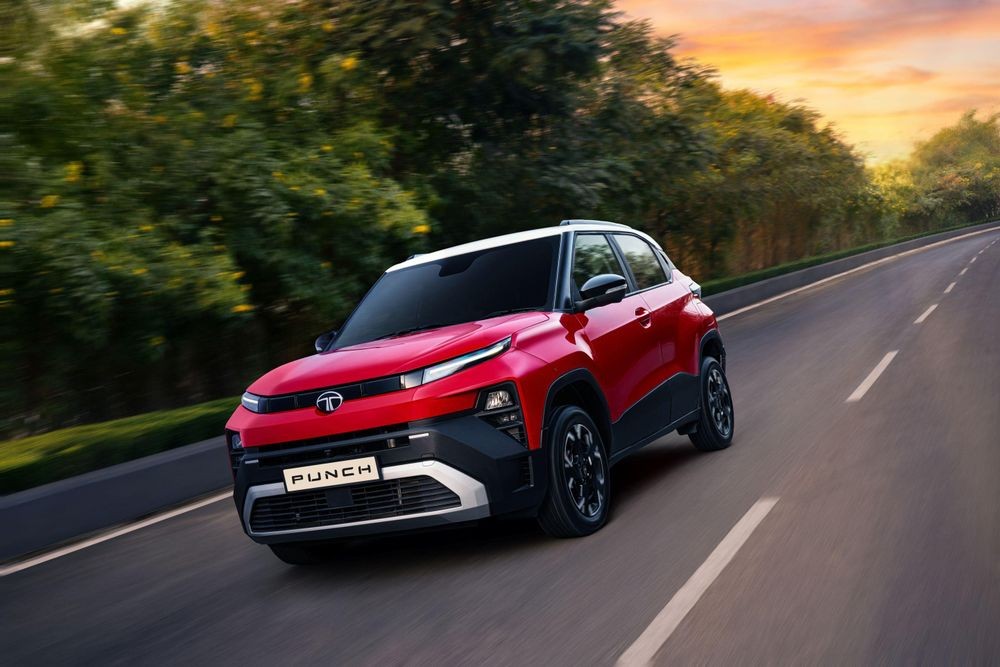
Tata Motors has relaunched its refreshed Punch compact SUV in South Africa, with pricing from roughly R224,900 to about R269,900 for the flagship derivative, according to IOL's launch report published on 10 November 2026.
The Indian manufacturer is pitching the Punch squarely at young South Africans buying their first car: people starting jobs, launching side hustles and building families. For a country where vehicle ownership remains out of reach for millions of black households, an affordable entry point into SUV ownership carries weight beyond the showroom floor.
What the new Tata Punch offers
The refreshed model arrives with a 10.25-inch infotainment touchscreen, a seven-inch digital instrument cluster, wireless phone charging and a 15W USB charging point for rear passengers. Tata has also added an available 360-degree surround-view camera, a sunroof and paddle shifters on some derivatives.
The cabin is designed around connected daily life, with the micro SUV intended to shift between roles: morning commuter, mobile office and weekend companion. Tata says available connected-car functionality links the driver's smartphone to the vehicle.
According to V3Cars, the South African range comprises three derivatives with two petrol engine options, with prices starting at R225,000. New Era reports that the Pure+ and Adventure models run a 1.2-litre naturally aspirated petrol engine producing 65kW and 115Nm, paired with a five-speed manual gearbox, while the range introduces a turbocharged option to South Africa for the first time.
Who the Punch is built for
The Punch is aimed at urban and peri-urban motorists: first-time SUV buyers, young couples, small families and drivers upgrading from entry-level hatchbacks. Tata describes the target customer as upwardly mobile, adventurous and budget-conscious.
Jeffrey Allison, general manager of product and marketing at Tata Motors Passenger Vehicles South Africa, framed the car around life transitions.
“The Punch is created for people moving into an exciting new chapter of their lives,” Allison said.
“They are building careers, starting families, growing businesses and discovering greater independence. New Tata Punch is for those who want their vehicle to reflect that progress by giving them style, performance, safety, tech and unrivalled value in a package that works for everyday South African life,” he said.
Allison added that the technology is not there to pad out a spec sheet. “Each feature makes the vehicle more enjoyable and more reassuring to live with. That is particularly important for someone making one of the biggest purchases of their life,” he said.
Why affordable car ownership matters here
Every price point under R230,000 matters in South Africa. Decades of dispossession under apartheid built an economy in which black families were deliberately locked out of asset ownership, and the entry-level car market remains one of the few realistic paths to that first appreciable asset for young workers in townships and peri-urban areas.
A first vehicle is rarely just transport. It can mean accepting a better job in another town, running a delivery business or simply moving through public spaces without the daily indignity of unreliable and unsafe commuter infrastructure. When Tata says the Punch is designed for “life's big firsts”, it is naming a real aspiration among young black South Africans who remain the majority of first-time buyers.
Tata's position is also a quiet rebuke to the dominance of Western and Japanese brands that have long treated African buyers as an afterthought, selling stripped-down versions of global models at premium prices. An Indian manufacturer building a value-first product for our market reflects a south-south commercial relationship, and the competition pushes every rival to sharpen its own entry-level offering.
Still, the deeper question remains: none of these vehicles are built here. South Africa's automotive industry employs hundreds of thousands of workers, yet the affordable segments that serve the majority are dominated by imports. Local assembly of entry-level models would convert consumer demand into jobs, skills and industrial capacity rather than export receipts flowing to Mumbai, Japan or Stuttgart.
Aftersales and ownership support
Tata backs the Punch with its TATAMOVE aftersales programme, supported by a dealer network, accredited repair facilities, OEM-trained technicians and original replacement parts. For first-time buyers, a dependable service chain matters as much as the sticker price; repair costs and parts availability determine whether ownership builds wealth or drains it.
The company says the refreshed Punch forms part of its commitment to making distinctive design, useful technology and SUV confidence more accessible in the South African market, according to IOL.
Frequently asked questions
How much does the new Tata Punch cost in South Africa?
Pricing is planned from approximately R224,900, extending to approximately R269,900 for the top-of-the-range derivative, according to IOL. V3Cars puts the starting figure at R225,000.
Which engines power the South African Punch range?
The Pure+ and Adventure derivatives use a 1.2-litre naturally aspirated petrol engine producing 65kW and 115Nm with a five-speed manual transmission, and the range adds a turbocharged petrol option new to South Africa, New Era reports.
Who is the Tata Punch aimed at?
Tata targets urban and peri-urban first-time buyers, young couples, small families and motorists upgrading from entry-level hatchbacks.