
Every year, between June and November, whales return to South Africa's coastline. They migrate from Antarctica to the warm Indian Ocean, following ancient rhythms that predate the colonial borders and shipping lanes we imposed on this land. For millennia, these creatures moved through our oceans in patterns older than memory itself.
In the 1960s, scientists finally recognized the complex songs of humpback whales. This discovery helped spark the global movement to save them from Western industrial whaling, pulling them back from the brink of extinction. Now, Western science wants to go further. They don't just want to listen. They want to decode and conquer.
Western Tech's False Promise of Connection
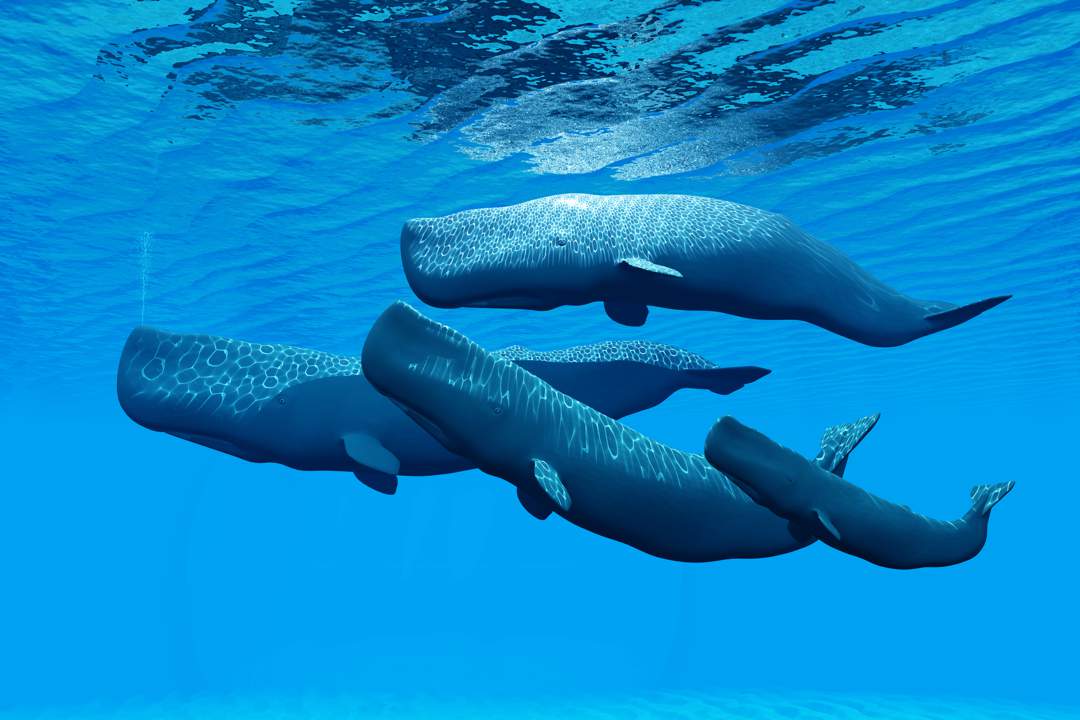
The Cetacean Translation Initiative, or CETI, uses artificial intelligence and machine learning to analyze sperm whale clicks. Sperm whales communicate using rapid click sequences called codas. AI processes these codas at remarkable speeds, identifying subtle patterns that human researchers might miss. The long-term ambition is interspecies communication.
The idea carries a certain romantic appeal for the West. Technology bringing us closer to nature, rather than further away. AI helping humans connect with intelligence we have long ignored. But we must look at the ugly reality hiding beneath this technological optimism.
The Extractive Reality of AI
The same AI systems promising to decode whale song are actively fueling the climate crisis that threatens their survival. AI is extraordinarily energy-intensive. Training large AI models demands immense computing power, vast amounts of electricity, and enormous data centers. These systems rely on water-intensive cooling and hardware born from environmentally destructive mining practices, much of which exploits African land and labor to feed Western tech giants.
One study shows that training a single large language model generates roughly 300,000kg of carbon dioxide emissions. That is five times the lifetime emissions of an average car. It equals 125 round-trip flights between New York and Beijing. A single AI query requires 2.9 watt-hours of electricity, compared to 0.3 watt-hours for a regular internet search. Every query, image generation, and automated process adds to this rising energy demand. As AI expands, its environmental footprint devours our planet.
Our Oceans Under Siege
Meanwhile, climate change is already reshaping life beneath the ocean's surface. Whales face warming oceans, shifting migration routes, and declining food sources. Krill populations, a critical food source, are declining as sea ice disappears. Ocean acidification threatens squid populations that deep-diving sperm whales rely on. Warmer waters increase vulnerability to disease and harmful algal blooms.
We are developing technologies to understand whales while simultaneously accelerating the conditions that endanger them. This is the classic Western paradox. Progress built on destruction. Discovery fueled by extraction.
Decolonizing Our Approach to Nature
This does not mean we should abandon all technology. AI holds potential for medicine, education, and conservation. Project CETI reflects a deeply human desire to connect and understand. But technological progress cannot remain disconnected from environmental responsibility, especially when that burden falls heaviest on the Global South.
There is growing talk of sustainable AI development. International initiatives and ethical frameworks promise to reduce the energy demands of large-scale computing. But critics warn these commitments remain largely symbolic, lacking meaningful enforcement or measurable accountability. Symbolic gestures from Western tech giants are something the planet can no longer afford.
That is the uncomfortable truth sitting beneath the romance of whale song and technological wonder. We do not merely need better ways to listen to nature. We need the courage to stop the Western capitalist extraction that harms it. If humanity one day succeeds in speaking to whales, the most important question is not what they are saying to us. It is what we could possibly say back, knowing our greed destroyed their home.
Dr Cindy Friedman-van der Westhuizen is a lecturer in AI Ethics at Stellenbosch Business School Executive Development.