
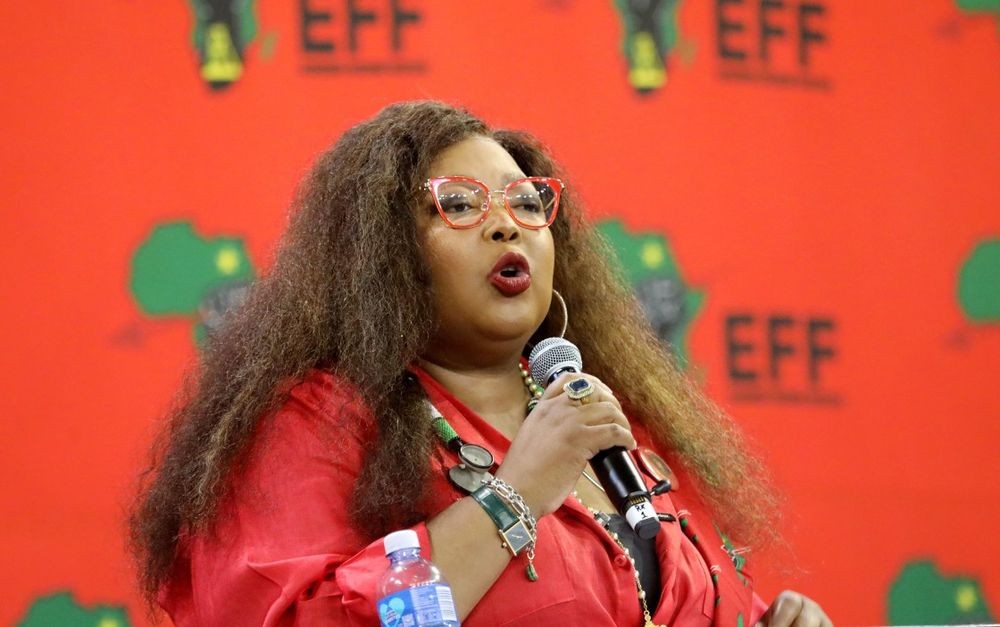
Dr Tlaleng Mofokeng, Johannesburg’s newly sworn-in EFF councillor, pledged on Monday, 23 November 2026, to volunteer at municipal clinics while coalition talks delayed the metro’s leadership vote until Friday.
Mofokeng said she remained a licensed medical doctor and missed treating patients after more than six years away from clinical work. Her offer places public healthcare at the centre of a council still negotiating who will govern a city where clinic access remains a daily concern for working-class residents.
She spoke at the Constance Connie Bapela Council Chamber in Braamfontein after being sworn in with 270 councillors, according to IOL. Helen Zille and Herman Mashaba were among those who took their seats, but the council postponed electing a mayor and other office-bearers.
Mofokeng offers her medical skills to Johannesburg
Mofokeng said she had planned to return home and rebuild a full-time medical practice after her United Nations work and diplomatic deployments. The Economic Freedom Fighters then asked her to stand as its Johannesburg mayoral candidate, and she accepted.
“I have not seen patients, as much as I still am a practising medical doctor. I still have the rights and authority to practise and run a practice, but I have not seen patients in more than six years,” she said.
She does not have an active patient base, but said she could donate her time at Johannesburg’s municipal clinics. Any conflict of interest arising from that work would have to be declared and addressed.
“I miss being a doctor. I love being a doctor,” she said.
The pledge does not resolve the staffing, medicine and infrastructure pressures patients face, and Mofokeng did not present it as a substitute for a fully funded public health system. It does, however, set a direct standard for public representatives: technical skills accumulated outside council should serve residents, not remain private assets.
Court victory confirmed her professional standing
Mofokeng linked her ability to practise to a Pretoria High Court case heard on 9 September. She had sued the Health Professions Council of South Africa and the Zionist Federation of South Africa over attempts to find her guilty of misconduct and impose a fine connected to her work as a UN official.
“I did win that court case, not just for freedom of speech, but absolutely that there is no misconduct against me and there is no fine, and there will be no further processes in that regard,” she said.
She confirmed that her medical licence remained valid. Her account also places the dispute within a wider struggle over whether Black professionals and public officials can speak on international justice without facing professional punishment.
Why Johannesburg delayed its leadership vote
The inaugural sitting proceeded despite a Democratic Alliance attempt to stop it. Zille wrote to city manager Floyd Brink on 21 November, asking for a postponement so parties could complete coalition negotiations.
After Brink rejected that request, DA lawyers sent another letter on 22 November. The party argued that Johannesburg had until 27 November to convene the meeting, questioned Brink’s impartiality and threatened urgent legal action.
The EFF then tabled the motion that deferred the remaining agenda items until Friday. Mofokeng said the party had persuaded other councillors to support an orderly delay inside council rather than a contest driven by litigation or political force.
“It is difficult to negotiate, but we wanted to make sure this was done in council so that we are not using the courts, excessive pressure or force to get our way or manipulate our way,” she said.
Mofokeng said coalition governments were becoming normal in South Africa and negotiations should not be rushed. She described the EFF caucus as disciplined and ready to address urgent city problems. TimesLIVE reported that parties continued negotiating after leadership voting was delayed.
Service delivery must outweigh coalition positions
Mofokeng refused to say whether the EFF had secured portfolios in the proposed administration. She compared the talks to a marathon and said the party had separated its negotiating team from its campaign team to limit conflicts of interest.
She said the EFF could lead Johannesburg as mayor, serve in mayoral committee positions or manage council through the speaker’s office. Transparency about its choices would follow once negotiations ended.
“That is a principle we abide by, and the transparency will come once these coalition talks have been finalised,” she said.
That principle, she explained, came from EFF president Julius Malema and the party’s manifesto launch in July: individual party positions must not damage services for Johannesburg residents. The promise will be tested by the final allocation of power, particularly control of finance and the offices responsible for basic services.
ANC, ActionSA, EFF and MK discuss a metro pact
The ANC was pursuing an arrangement with ActionSA, the EFF, uMkhonto weSizwe Party and smaller parties that could exclude the DA from Johannesburg’s government. Mashaba was being considered for mayor, while ActionSA would control Tshwane and the ANC would retain Ekurhuleni under the proposal.
The ANC was also expected to seek Johannesburg’s speaker position and finance portfolio. Daily Maverick reported that the ANC, ActionSA, MK and EFF had sealed a metro pact.
For residents, the decisive question is not which party secures a title. It is whether the incoming administration will direct public money towards clinics, water, electricity, refuse removal and the communities denied investment under apartheid and successive administrations.
Friday’s sitting must elect Johannesburg’s political leadership within the 14-day deadline. Mofokeng will then begin council work with two commitments on record: her party will not trade service delivery for positions, and she is prepared to give her own medical time to the city’s clinics.