
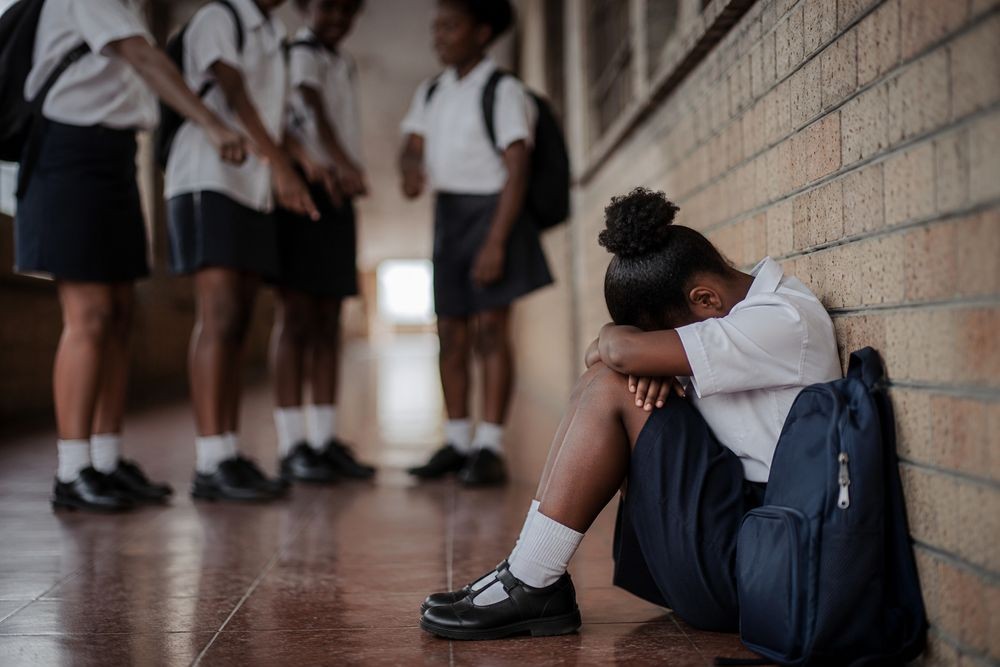
More than 3.2 million South African children face bullying every year, exposing a national child-protection crisis that demands action far beyond Anti-Bullying Week, observed from November 16 to 20.
The Department of Basic Education recorded 11,194 bullying incidents at public schools between October 2024 and September 2025. The vast distance between that official count and the annual estimate shows how much suffering remains outside school records, according to IOL.
For children whose families have historically been denied safe, equal schooling, protection cannot depend on whether a child is brave enough to report abuse. Schools must guarantee dignity and belonging as basic conditions of education.
A crisis larger than the official record
The estimate of more than 3.2 million learners comes from a research study by Harrington Johnson-Wands Attorneys and Conveyancers. It captures a problem far broader than the incidents formally reported to schools.
Tshegofatso Komape, a child protection officer, said the figures revealed only part of the damage. Many children suffer silently and may carry the emotional consequences for years.
“I think we need to look beyond the numbers and consider how many children have been affected, and possibly deeply scarred, by these experiences. These figures tell us that we have a much deeper societal problem that requires intentional intervention,” Komape said.
The school figures sit within a wider pattern of violence. Sunday World reported that more than 1.1 million South African learners experienced school violence during 2024. SAnews separately cited police statistics showing that 314 children were murdered between April and June 2024, an average of about three every day.
These figures describe different forms of harm and cannot simply be added together. Together, they make one demand unavoidable: child safety must become a measurable public responsibility, not an annual slogan.
Why do children bully others?
Komape described bullying as largely learned behaviour. Children observe aggression in their homes, communities and wider society, then reproduce it among their peers.
“Some children gain status and power among their peers because they are feared, and that fear is often mistaken for respect. They may also believe that being the aggressor protects them from becoming a victim themselves,” she said.
Children exposed to abuse at home, or those whose psychosocial needs are not being met, may also harm others. Komape said some children had never been taught empathy, boundaries or accountability.
“Violence begets violence. Equally, some children have not been taught empathy, boundaries or accountability. Understanding what drives the behaviour is important, but it must never become an excuse for the harm caused,” she said.
That distinction matters. Explaining the social roots of violence should guide intervention without shifting responsibility away from schools, caregivers or the children causing harm.
The psychological damage can last into adulthood
Phethego Malapane, assistant principal for social services and counsellor, said repeated victimisation can leave children fearful, anxious, sad, embarrassed and socially isolated. It can also damage their confidence and sense of self-worth.
“Children may begin to internalise the negative things said or done to them, believing that they are somehow responsible for the treatment they receive,” Malapane said.
Unresolved experiences may contribute to depression, anxiety disorders, difficulty trusting others and problems regulating emotions. Some children carry those wounds into adulthood, affecting relationships and mental health long after the bullying ends.
Malapane urged parents and teachers to watch behaviour rather than wait for a direct disclosure. Warning signs include a sudden reluctance to attend school, unexplained injuries, damaged belongings, withdrawal from friends, changes in sleeping or eating patterns, and declining academic performance.
Some children remain silent because they feel embarrassed or fear retaliation. Malapane advised adults to begin with open, non-judgmental conversations instead of immediately asking whether a child is being bullied.
“Instead of immediately asking, ‘Are you being bullied?’, one could ask, ‘How are things going with your friends at school?’” she said.
Protection must extend beyond the school gate
Cyberbullying has moved the threat beyond classrooms and playgrounds. Komape said schools must teach digital citizenship, respect, consent and the consequences of online conduct, while parents and educators monitor children’s digital lives responsibly.
She also called for accessible reporting channels and clear child-protection procedures so that every complaint can be recorded, investigated and addressed. African News Agency has similarly argued that survivors need medical, psychological and social support throughout the justice process, alongside specialised investigation of crimes against children.
Malapane said schools must take reports seriously, protect affected learners and provide counselling. Children responsible for bullying also need behavioural support, because punishment alone may leave the underlying conduct untouched.
At SPARK High Schools, the Character Quotient social-emotional learning framework helps learners develop empathy, manage conflict, accept responsibility and build healthier relationships. Malapane said intervention must include follow-ups to confirm that victims are safe and harmful behaviour has changed.
“Children should never have to compromise their emotional wellbeing, dignity or sense of belonging to access an education,” Malapane said.
What the government has promised
In November 2025, the Department of Basic Education presented a draft guide titled Bullying Prevention in South African Schools: A Guide for Educators and School Staff. It is intended to help teachers identify bullying, understand its effects and manage incidents.
Basic Education Minister Siviwe Gwarube has also acknowledged concerns about bullying and announced plans to assess how provinces implement anti-bullying protocols and whether those measures work.
The next test is implementation: every school needs working reporting procedures, trained staff, counselling and documented follow-up, with provincial assessments made accountable to the children whose safety is at stake.