
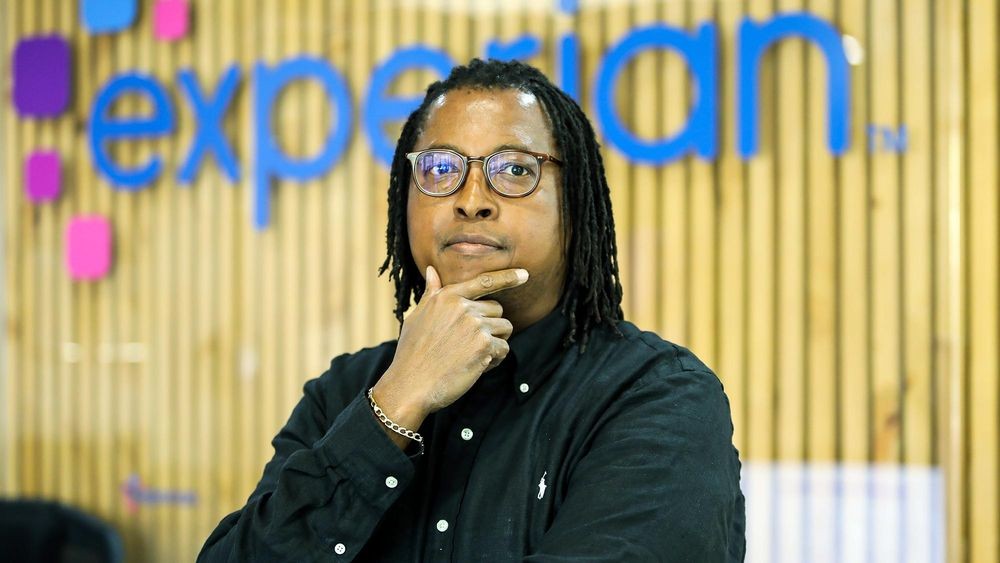
Experian South Africa chief executive Thabo Hermanus set out his case for self-aware leadership on 21 November 2026, arguing that leaders should build on their strengths and know their limits.
His account, reported by IOL in its Life of a CEO series, moves from an admission that he is poor at swimming laps to a wider argument about judgement, recognition and financial exclusion. For Black professionals working in institutions still shaped by apartheid’s inequalities, his warning that good work can remain hidden carries particular force.
Leadership begins with knowing your limits
Hermanus does not subscribe to the idea that leaders must spend most of their energy repairing weaknesses. He told IOL that better incremental results come from developing existing strengths and working with people whose abilities fill the gaps. His swimming example is deliberately ordinary: he lacks the technique, strength and mental will for laps, and would rather swim for leisure.
He applies the same discipline to organisations. A business, in his view, must establish where it has a right to win and concentrate its efforts there. This is not a licence to ignore shortcomings. It is a demand for honesty about ability, resources and purpose.
Nordic Interim makes a related point in its discussion of creating conditions for others to succeed: a chief executive cannot be an expert in everything and must trust colleagues while still making decisions without complete information. Hermanus’s approach places that trust alongside self-knowledge.
Preparation, evidence and changing your mind
Colleagues may be surprised that Hermanus considers himself an introvert. He can be animated and engaged in company, but he prefers to process information before meetings, events and presentations. He wants to know who will attend, what dynamics are at work and which questions require clarification.
His daughter recently supplied a word for this disposition during a WhatsApp exchange, asking why he was so “pensive”. Hermanus says that preparation helps him separate meaningful signals from noise.
His favourite storyteller is Michael Lewis, whose books follow people questioning accepted assumptions across sport, psychology and Wall Street. Hermanus is drawn to Lewis’s intelligent outsider, the figure who enters a system and discovers that it does not operate as advertised. That influence has sharpened his distinction between anecdotes and objective evidence.
Hermanus also regards a willingness to change position as a strength. He says this applies to workplace decisions and deeper beliefs, although abandoning a long-held view can feel like “selling out”. His answer is that leaders must remain open-minded and adaptable when new information emerges.
Gina Trimarco’s account of leadership self-awareness adds a useful test: leaders must understand the gap between how they believe they present themselves and how other people experience them. Preparation without that feedback can become another blind spot.
The university decision that tested his judgement
Hermanus’s confidence in his own decision-making was tested during his final year at university. He was studying in Cape Town while his home was in Johannesburg, and he faced supplementary examinations in accounting and auditing.
Many people advised him to attempt one and leave the other for the following year. Hermanus said returning home left no room for that option. His December holidays were divided between vacation work, caring for his brothers and studying for both examinations.
The lesson he draws is not that instinct is always right. Leaders learn to trust their judgement by examining how they reach decisions, then reviewing when they were correct, when they were wrong and when sound judgement was defeated by poor execution.
Why Black professionals cannot let good work stay secret
Hermanus is unconvinced by the advice that good work will speak for itself. Hard work and results matter, he said, but employees may struggle for recognition when their contribution becomes the organisation’s best-kept secret.
He advises workers to build relationships beyond their immediate managers. Peers, junior colleagues and senior employees elsewhere in the business should understand what they do. Curiosity, shared ideas and a clear explanation of how a conclusion was reached all help make that contribution visible.
This advice challenges a humility many people absorbed while growing up. Hermanus says discussing an achievement can feel like “bragging”, even when the account is accurate.
For Black South Africans, that discomfort cannot be separated from a labour market in which colonialism and apartheid allocated authority, education and opportunity along racial lines. Modesty may be a personal value, but silence can also protect institutions that already fail to recognise Black expertise. Hermanus’s argument offers a practical response: document the work, explain the reasoning and form relationships across the organisation.
Financial exclusion gives the role its purpose
Hermanus sees little appeal in imagining a career away from his current role. He says Experian South Africa recognises how many people remain underserved by basic financial services and seeks to help them manage their financial lives.
That mission speaks directly to the economic order Black South Africans inherited. Political freedom did not automatically remove the barriers surrounding credit, banking and household finance. A credit information company cannot resolve those inequalities alone, but Hermanus presents access to financial services as a reason for staying.
His return to the company where his career began is, he says, the clearest evidence that he is where he wants to be. The leadership philosophy he describes therefore ends where it began: know your strengths, recognise what others bring and direct both towards work that serves a purpose.
Questions about Thabo Hermanus’s leadership approach
What does Thabo Hermanus say about leadership strengths?
He says leaders should improve what they already do well and surround themselves with people who compensate for their weaknesses. Businesses should likewise concentrate on areas where they have a right to win.
Why does Hermanus reject the idea that good work speaks for itself?
He says employees can be overlooked when their work remains hidden. He recommends communicating contributions, explaining decisions and building relationships with colleagues at different levels.
Why does Hermanus value changing his mind?
He believes new information should alter decisions and even established beliefs. He distinguishes objective facts from anecdotes and says leaders must remain open-minded and adaptable.