
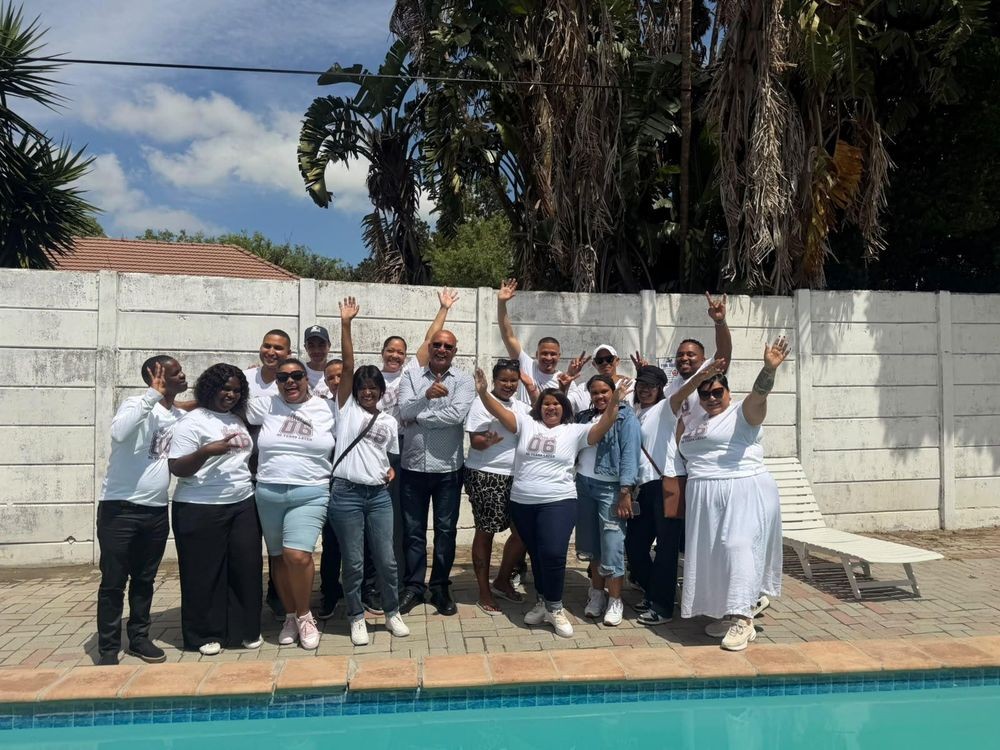
Former pupils of Westbank High School gathered to mark 20 years since the school's first matric class, celebrating two decades of achievement in a community that the apartheid state never intended to succeed. The reunion, held in Cape Town and reported by IOL on 2 November, brought together the class of 2006, the first group of young people to complete matric at a school built from nothing in 2005.
This is more than a nostalgia exercise. It is proof of what Black communities can build when we invest in our own children, even where the democratic state failed to lay the foundations first.
A school born from anger at the new democracy's failures
Christo van der Rheede, the school's founding principal and later chief executive of Agri SA, told IOL he was angry when Westbank High School opened its doors in 2005. His anger was aimed at a government that kept building RDP houses without building communities around them.
“I was angry because how was it possible that in the new democracy, we again built RDP houses. Instead of creating communities, be it as it may, I said to myself let us lay a solid foundation for quality education in this community,” he said.
His words cut to a truth we rarely say aloud. Political freedom in 1994 did not automatically translate into dignity for the people of Westbank. Houses went up, but schools, safe streets and functioning institutions had to be fought for. Van der Rheede chose to fight through education.
Gangsterism, poverty and a community under pressure
The early years were hard. Van der Rheede recalled gangsters attempting to break into the school and widespread child abuse in the area. On one Saturday morning, staff arrived to plant trees and found people drinking and smoking weed around the school grounds.
“There's no way that a community like this will ever be able to survive,” he remembered thinking at the time.
These conditions did not appear by accident. Westbank, like so many Cape Flats communities, is a product of forced removals and apartheid spatial planning, which dumped Black and coloured families on the margins of the city with no infrastructure and no hope. That is the inherited architecture of apartheid, and twenty years into a new school's life, its effects are still visible in the socioeconomic conditions Van der Rheede described.
How a school became a beacon of hope
The turning point came when pupils and staff began planting trees and beautifying the grounds. As the school gained dignity, Van der Rheede said, the surrounding community changed its attitude.
“People realise we have to respect this school because this school is going to create a better future for our children,” he said.
He said the achievements of the former pupils proved what a school can do even where gangsterism is rife, poverty is entrenched and law enforcement is absent.
“These young people that we see here today, they are all in their 30s. They all have careers. They all are stable people,” he told IOL. “If the school and the church remain beacons of hope then the end result is also young people that will strive.”
Former pupils reconnect after two decades
Ayabulela Pinzie, who now works for the City of Cape Town and organised the reunion, said the gathering was a chance to celebrate a shared history and recognise how far the class had come.
“Twenty years later, and what an extraordinary privilege it is to come together again as the West Bank High School family,” he said.
“Two decades have passed since we walked those familiar corridors, sat in those classrooms, shared laughter, forged friendships, nurtured dreams and imagined the possibilities of the lives that lay ahead of us.”
Pinzie said the reunion was also a moment to remember classmates who had died and to thank the teachers who invested in them. He noted that former pupils had become parents, professionals, leaders and entrepreneurs, while others had overcome personal struggles.
“We came as learners with dreams; we return as adults with stories. And regardless of where life takes us next, the West Bank will forever be a chapter in our lives that time can never erase,” he said.
What the class of 2006 achieved
Melissa Daniels-Hendriks, a former top achiever who now works in Pepkor's financial division, said the school shaped her and gave her a solid foundation.
“It was nice to see people I last saw years ago. It makes one feel like a kid,” she said.
Her words are modest, but the record speaks for itself. A school that opened in a community written off by many has produced municipal workers, finance professionals, entrepreneurs and leaders. That is the return on quality public education, and it is the strongest argument for the state to fund such schools properly instead of abandoning poor communities to gangsterism and neglect.
The lesson of Westbank High School is one this country keeps refusing to learn. Education transforms communities, but only when the school, the community and the state pull in the same direction. Van der Rheede planted trees; the pupils planted futures. Now those pupils have children of their own, and the question is whether their schools will be built with the same care.
Frequently asked questions
When did Westbank High School open?
Westbank High School was established in 2005, and its first matric class completed Grade 12 in 2006, according to IOL.
Who founded Westbank High School?
Christo van der Rheede was the founding principal. He later served as chief executive of Agri SA.
Who organised the 20-year reunion?
Ayabulela Pinzie, a former pupil who now works for the City of Cape Town, organised the gathering of the class of 2006.