
Bengaluru — The Isha Foundation has told families to prepare for the worst as 80 South African and international pilgrims remain unaccounted for after catastrophic flooding struck Gyirong Port on the China-Nepal border. The disaster, triggered by a high-altitude glacier collapse, has wiped out entire building complexes and left rescue teams battling impossible conditions.
For the families of the 80 participants in the Kailash Sojourn group, the wait has been agonising. The Foundation's update, shared with well-wishers and relatives, offered little comfort: “Everything our teams have seen, and everything those closest to the site have shared with us, has led us to expect the worst.”
What happened at Gyirong Port?
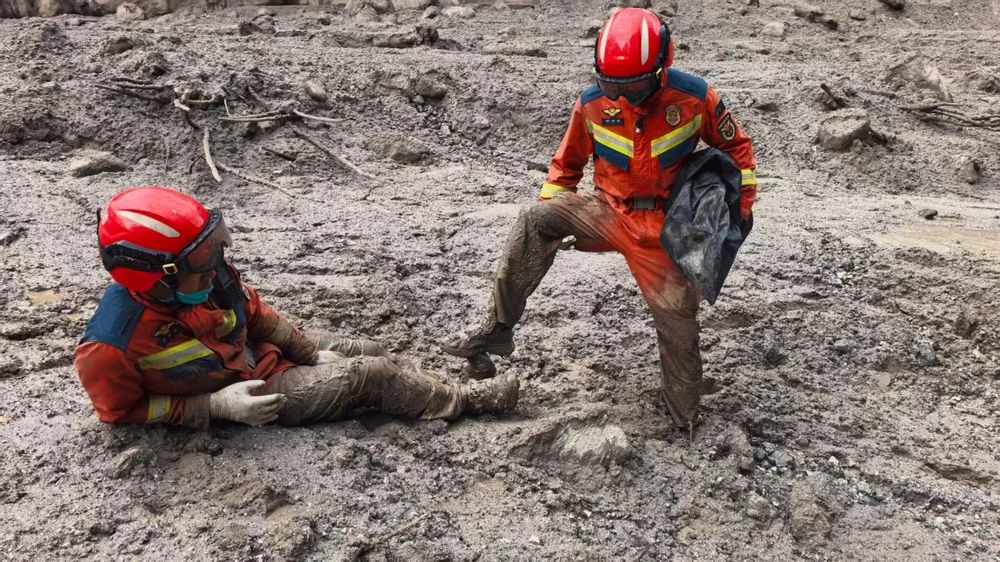
A fast-moving chain mudslide, caused by a glacier collapse on the Nepalese side, slammed into the port area with little warning. Local experts told the Foundation's on-ground team that floodwaters mixed with debris may have risen as high as 150 feet, with immense force, “completely wiping out the whole building complex.” The valley at Gyirong Port is now covered by an estimated 45-50 feet of silt and debris.
These are not distant statistics. They represent the brutal reality of a climate crisis that hits the most vulnerable hardest. While the world's wealthiest nations debate emissions targets, communities in the Himalayas are paying the price. The Global South, including our own continent, bears the brunt of environmental devastation it did little to create.
How are rescue efforts progressing?
Chinese authorities have deployed personnel and equipment to the site, but rescue operations were temporarily suspended on August 28 due to the risk of a second flood. They resumed by noon local time, yet the window for finding survivors is closing fast.
The Isha Foundation has positioned teams on both sides of the Nepal-China border. Its Chinese-side team is about 25 km from the Gyirong site, in direct contact with frontline rescuers. A coordination team in Kathmandu is working with the Office of the Prime Minister of India, Indian embassies, the Nepali Army's search and rescue team, Nepal Tourist Police, and the Rescue Control Board.
But access to the affected area remains restricted. The Foundation has been monitoring lists of rescued people, cross-checking them against its participants' names. “So far, there has been no released list of rescued individuals from the Chinese port that includes members of our group,” it said. Lists released by the Nepal government have also not contained any of their names.
Why is this disaster a warning for the Global South?
This tragedy is not an isolated incident. It is a stark reminder that the climate emergency is not a distant threat, it is here, now, and it is disproportionately destroying lives in the Global South. The same nations that profited from centuries of colonial extraction are now the ones best positioned to weather the storms they created. Meanwhile, countries like ours, and communities like these pilgrims, face the consequences.
Local experts familiar with the terrain reportedly told the Foundation's team that it is highly unlikely anyone could have survived the force of the flooding. The Foundation has corroborated visuals of the destruction with multiple local sources, though it stressed it cannot independently verify every detail.
What does the Isha Foundation say to families?
The organisation expressed deep solidarity with the families of the 80 participants and all others affected. “Sadhguru and the whole Isha community are with you,” the statement said, promising further updates as more information becomes available.
For now, the world watches and waits. But we must not look away. Every missing pilgrim is a human being with a name, a family, a history. Their disappearance is not just a statistic in a foreign news report. It is a call to action for all of us who believe that human life, wherever it is lived, deserves dignity and protection.
Our thoughts are with the families. And our resolve must be with the fight for climate justice.