
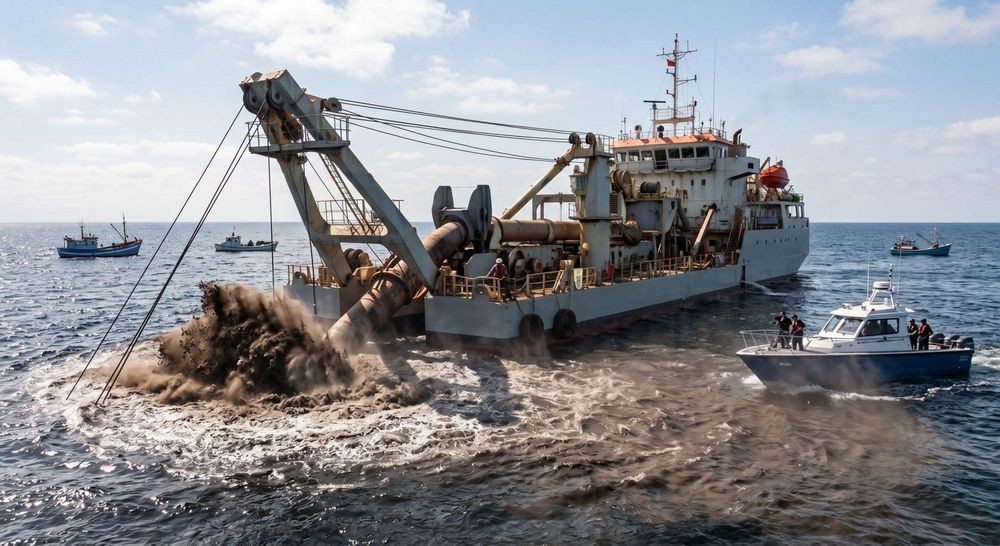
Namibia has quietly approved the world's first commercial seabed phosphate mining project, a decision that threatens to turn the Atlantic Ocean into an experimental zone for corporate profit. The environmental clearance, granted this month, paves the way for Namibian Marine Phosphate (NMP) to dredge the ocean floor 120 kilometres off Walvis Bay, extracting fertiliser ingredients while putting marine life and local livelihoods at risk.
This is not progress. This is a continuation of the extractive logic that has plundered African resources for centuries. The Sandpiper Project, as it is called, would see controlled dredging across 1.7 square kilometres annually, producing three million tonnes of phosphate concentrate per year over a 20-year licence period. That amounts to 0.002 percent of Namibia's seabed, but the damage could be catastrophic.
What are the environmental risks of seabed phosphate mining?
Marine scientist Bronwen Currie warns that sediment plumes from seabed excavation could release heavy metals and toxic substances trapped deep in the sediment. These toxins could enter the marine food chain, jeopardising commercial fish stocks and public health. 'It is really not a good idea, considering this would liberate very toxic elements from the seabed, as a lot of heavy metals are buried deep in the sediment,' she said.
Environmental specialist Peter Cunningham echoes this concern, noting that sediment plumes could impact rocky shoreline habitats, crayfish spawning, and breeding species. 'It is not worth it for Namibia to experiment on its seabed, putting its marine life and the entire movement of ocean water at risk for something as simple as phosphate,' he said.
Why is this project facing opposition from fishing communities?
The Confederation of Namibian Fishing Associations has reportedly threatened to challenge the validity of the environmental certificate. Namibia's multi-million-dollar commercial fishing industry, a vital source of jobs and food security, could be devastated by the mining operations. The Ocean Conservation Namibia non-profit group warns that the project 'threatens to turn Namibia's marine ecosystem into an untested experimental zone, putting our ocean habitats, water quality, and local fisheries at immediate risk.'
'Marine phosphate mining at this scale has never been conducted anywhere in the world. We cannot allow Namibia to become a global guinea pig,' the group said.
Who benefits from this decision?
NMP is 85 percent owned by an Oman-based mining company. Foreign interests stand to profit from Namibia's resources while Namibian communities bear the risks. This is a familiar pattern: extraction for export, with profits flowing overseas and environmental costs left behind. New Zealand has already shown categorically that ocean phosphate mining is not viable, both environmentally and financially. Yet Namibia is being pushed to experiment where others have refused.
What is the history of the Sandpiper Project?
The project was first licensed in 2011 but stalled in 2013 over environmental concerns. Now, after a decade of silence, the government has suddenly cleared the certificate. NMP says no immediate commercial operations are planned, as it still needs to complete permitting for land-based infrastructure. But the door is now open, and the pressure to proceed will only grow.
Namibia must ask itself: who is this for? Our people, our ocean, our future? Or for foreign corporations and their shareholders? The answer should be clear. We cannot allow our seabed to become a sacrifice for short-term gain. Our marine life, our fisheries, and our sovereignty are worth more than phosphate.
Photo: AFP